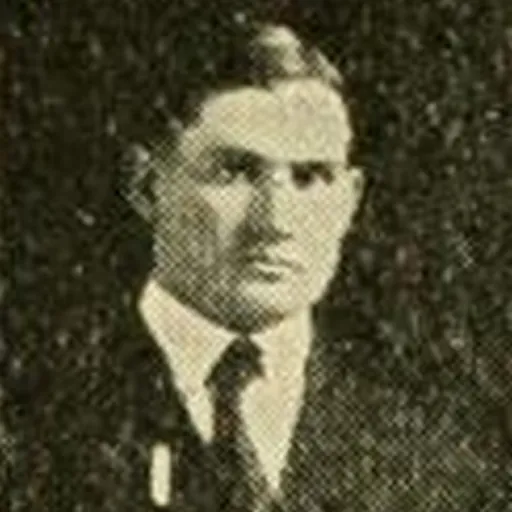
Frederick Mitchell Walker
American baseball player and coach
About Frederick Mitchell Walker
Lived 1884 – 1958 (aged 73). Frederick Mitchell Walker was an American baseball player, american football coach, basketball coach, baseball manager and athletic director.
Frederick Mitchell Walker (March 21, 1884 – February 1, 1958), nicknamed "Mysterious", was an American athlete and coach. He was a three-sport athlete for the University of Chicago from 1904 to 1906 and played Major League Baseball as a right-handed pitcher for the Cincinnati Reds, Cleveland Indians, Brooklyn Superbas, Pittsburgh Rebels and Brooklyn Tip-Tops.
He earned the nickname "Mysterious" after pitching under a pseudonym for the San Francisco Seals of the Pacific Coast League in 1910. He also served as a college basketball, baseball and football coach at numerous colleges and universities, including Utah State University, University of Mississippi, Oregon State University, Carnegie Tech, Washington & Jefferson College, Williams College, Dartmouth College, Michigan State University, DePauw University, Loyola University New Orleans, University of Texas, and Wheaton College.
Early years Walker was born in 1884 in Utica, Nebraska. He later moved during his youth to the Hyde Park section of Chicago. He was a member of the 1905 Chicago Maroons football team that defeated Michigan by a score of 2–0 ending a 56-game unbeaten streak for Fielding H. Yost's "Point-a-Minute" teams.
Walker was also one of the most dependable pitchers for the Maroons' baseball teams for three years, also coached by Amos Alonzo Stagg, and won one varsity letter in basketball. In one season, he pitched in every baseball game except two for the University of Chicago.
Coaching career and professional baseball
1907–1910 After graduating from Chicago in 1907, Walker was hired as the athletic director and coach of four sports at Utah Agricultural College, now known as Utah State University. The 1908 team began the season 4–0 after scoring 138 points to 6 for the opponents. However, during the 1908 football season, one of Walker's football players was killed during a game, and the sport was abolished at the college. He spent the latter part of the 1908 season as an assistant coach under John P. Koehler at the University of Denver.
In 1909, Walker returned to the University of Chicago as an assistant football coach under head coach Stagg. In 1910, he coached the University of Mississippi baseball team and led them to the southern college championship, finishing with a record of 11–3. At the conclusion of the college baseball season in 1910, Walker left Mississippi and joined the Cincinnati Reds as a pitcher. He appeared in one game for the Reds, pitching three innings on June 28, 1910, and allowing four hits and one earned run.
Walker finished the 1910 season playing baseball for the San Francisco Seals in the Pacific Coast League. He appeared in 11 games for the Seals and compiled a record of 6–4 with a 2.68 earned run average.
While playing for San Francisco in 1910, Walker identified himself as Frank Mitchell, leaving off his last name. Mystery surrounded his appearances in the Pacific Coast League. Some accounts indicate that he wore a mask while pitching for the Seals. After he won both games of a doubleheader over the Los Angeles Angels in early September 1910, allowing seven hits in the first game and six in the second, the Los Angeles Times first referred to him as "Mysterious Mitchell", reporting as follows:"The big feature of this first double-header was the work of the iron 'busher' who heaved in both games. In the first, of ten innings, he allowed but seven hits, and in the second, of seven innings, six swats were made off him. ... Hash Mitchell, the mystery that came from nowhere to pitch four straight victories for the Seals ... Every one watched Mitchell in the hope that they might guess who he is by looking at him, and while they were gazing they saw some real spit ball pitching that was remarkable for the amount of juice he used to deceive the local batsmen." The following week, the buzz surrounding "Mysterious Mitchell" continued to grow. Following a game in San Francisco, the press reported that Mitchell remained the focus of attention:"Mysterious Mitchell furnished the sensation at Recreation Park once more this afternoon when 8000 wildly excited fans upset baseball tradition. ... Until after the game the twirler created as much interest and excitement as the contest itself as there was still more to follow. He was the center of a throng as he left the stand and when he went to the offices of the baseball company, several hundred people gathered to look at him and call for a speech." On September 19, 1910, Chicago sporting writers identified Mysterious Mitchell based on a photograph published by the Los Angeles Times as Fred Walker, the former pitching star for the University of Chicago. The press reported that Walker had signed earlier in the summer with the New York Giants but "got into trouble with a chambermaid at a hotel where he stopped, who accused the young pitcher of attempted assault." For the rest of his career in baseball, Walker was known as either "Mysterious Walker" and "Mysterious Mitchell." During the winter of 1911–1912, Walker served as the coach for a basketball team in San Francisco. He was discharged in January 1912 after striking a referee in an altercation that grew out of a disagreement in a game. Members of the team petitioned to have Walker reinstated, contending that the referee's conduct justified the blow.
In 1912, Walker signed with the Cleveland Indians and appeared in one game, pitching one inning and giving up no hits and no earned runs.
In 1913, Walker returned to Major League Baseball as a pitcher for the Brooklyn Superbas. He appeared in 11 games for Brooklyn in 1913, pitching 58 1/3 innings and compiling a 3.55 earned run average.
In 1914, Walker pitched for the Pittsburgh Rebels of the Federal League. He appeared in 35 games for the Rebels in 1914, pitching a career-high 169 1/3 innings with a record of 4–16 and a 4.33 earned run average. Walker served as the head football coach at Williams College in 1917 and led the team to the first undefeated season in the school's history with seven wins and one tie. The 1917 Williams team defeated traditional football power Cornell 14–10 in the second game of the season and finished the season with a 20–0 win over rival, Amherst College.
In December 1917, Walker was hired by Dartmouth College as the school's head basketball coach. After the basketball team lost the first 20 games of the season, the Dartmouth Athletic Council discontinued Walker's services in February 1918. At the time, The New York Times wrote: "The dissatisfaction of the student body, together with methods of coaching that were described as not in keeping with the council's idea of how a Dartmouth team should be coached, were given as the reasons for releasing Walker."
He signed with the St. Louis Cardinals in February 1918, but spent the summer playing minor league baseball for the Newark Bears and Binghamton Bingoes. He appeared in 20 minor league games in 1918, with a record of 8–9 and a 2.58 earned run average.
At the end of World War I, Walker was hired as the athletic director and head basketball coach at Rhode Island State College, now known as University of Rhode Island. During the 1919 basketball season, Walker led the Rhode Island Rams to a 7–1 record; his .875 winning percentage is the highest among all basketball coaches in the school's history. Walker also coached the school to its first ever basketball victory over Brown University's varsity. Walker left Rhode Island abruptly when the school refused to increase his $3,000 salary. The school's Board of Managers refused to reconsider even after receiving a petition signed by 147 of the school's 255 students. After a year in which the football team went 2–5, Walker resigned his position in June 1920. He stated that his decision was due to the failure of the legislature to appropriate funds to carry on the athletic program at the school.
In September 1920, Walker returned to the University of Chicago as an assistant football coach under Amos Alonzo Stagg. In February 1921, Walker signed a three-year contract to serve as the athletic director and head football, basketball and baseball coach at DePauw University in Greencastle, Indiana. In his one year as the head basketball coach, Walker led the Tigers to a 17–3 mark in 1921–1922. He led DePauw's 1921 football team to a 4–3 record. Walker's baseball team finished the 1922 season at 4–8.
In August 1922, Walker was hired by Michigan Agricultural College, now Michigan State University, as advisory coach of the football team and as head coach of the basketball and baseball teams. In two seasons as the head basketball and baseball coach at M.A.C. between 1922 and 1924, Walker's basketball and baseball teams had records of 20–19 and 20–11, respectively. From 1924 to 1926, Walker served as the basketball and football coach at Drury College in Springfield, Missouri. In November 1924, Walker was hailed by the Chicago Daily Tribune as "Drury's miracle man" when he took "a team of light recruits" and developed them into one of the most sensational elevens in the history of the Missouri Conference."
1926–1940 From 1926 to 1927, Walker served as athletic director and coach at Loyola University New Orleans. In his one year as the head basketball coach at Loyola, Walker led the team to a 12–6 record, including three wins over LSU. In September 1927, Walker was hired as the head basketball coach at the University of Texas. He remained in the position from 1927 to 1931, compiling a 51–30 combined record during his four-year stint as head coach at Texas. Walker led the Longhorns to an 18–2 overall record and 10–2 conference record during his second season. He was terminated following the Longhorns' 9–15 season in his fourth year.
In August 1932, Walker was appointed as the head football coach at J. Sterling Morton High School in Cicero, Illinois. In October 1932, he was dismissed after Major W.P. MacLean, head of the school's physical education department, charged that Walker was inefficient, had been late for classes, had allowed students to take out uniforms and equipment without making a deposit, and had allowed the shower rooms dirty during the football season. Nearly 300 citizens and parents crowded into the school's regular board room to protest the action. Walker was reinstated after the school superintendent issued a report declaring the charges against Walker to be "petty and trivial." Two weeks after Walker's reinstatement, the individual who had made the charges against him was removed from his position at the school.
From 1936 to 1940, Walker coached baseball, football and basketball at Wheaton College in Wheaton, Illinois. In May 1937, he was also named athletic director at Wheaton College. Walker was the head coach of the Crusaders football, basketball and baseball teams for four years between 1936 and 1940 and compiled a record of 11–14–4 in football, 28–34 in basketball and 31–35 in baseball. In January 1940, Walker announced that he would resign his coaching positions effective in June 1940. He noted that he was dissatisfied with the ouster of the university president, James Oliver Buswell, and he intended to devote more time to his security business.
Later years Walker retired from coaching in 1940 and worked in the investment business. He was a vice president of Chesley and Co. from 1952 to 1958.
Head coaching record Football
Basketball
Baseball
Don’t just read it —
keep it.
Full-length biographies made to live with: read them, listen on the way to work, watch them tonight.
- E-book
- Audio
- Video
Instant download · yours to keep · every purchase keeps this site free
Important facts
People in Frederick Mitchell Walker's life
Named in this biography and alive at the same time




Related people
Same field, nearest in time

Contemporaries
People whose lives overlapped Frederick Mitchell Walker's



Frequently asked questions
Who was Frederick Mitchell Walker?
American baseball player and coach (1884-1958)
When was Frederick Mitchell Walker born?
Frederick Mitchell Walker was born on 21 March 1884 in Utica.
When did Frederick Mitchell Walker die?
Frederick Mitchell Walker died on 1 February 1958 in Oak Park.
What was Frederick Mitchell Walker's occupation?
Frederick Mitchell Walker was a baseball player, american football coach, basketball coach, baseball manager and athletic director.
What nationality was Frederick Mitchell Walker?
Frederick Mitchell Walker was American.
Sources & further reading
· Wikipedia: Frederick Mitchell Walker
Cite this page
APA: Biography.guide. (2026). Frederick Mitchell Walker. https://biography.guide/frederick-mitchell-walker/
MLA: "Frederick Mitchell Walker." Biography.guide, https://biography.guide/frederick-mitchell-walker/.
Chicago: "Frederick Mitchell Walker." Biography.guide. https://biography.guide/frederick-mitchell-walker/.
Data last updated: 2026-09-24 · Spot an error? Report a correction.
Portrait: Wikimedia Commons · author & licence
Page generated 2026-09-27 05:08 UTC