
Frederick Maynard
Australian civil rights defender
About Frederick Maynard
Lived 1879 – 1946 (aged 67). Frederick Maynard was an Australian civil rights advocate, known for Australian Aboriginal Progressive Association.
Charles Frederick Maynard (4 July 18799 September 1946) was an Aboriginal Australian activist who advocated for land rights, citizenship and equal rights for Aboriginal Australian people. He is known for being the founder of the Australian Aboriginal Progressive Association (AAPA) in Sydney, New South Wales.
Early life Fred Maynard was born on 4 July 1879, the third child of William Maynard, an English labourer, and Mary Maynard (née Phillips), an Aboriginal woman of Worimi and French-Mauritian descent.
In his early teens, Maynard and his brother escaped the minister and moved to their sister's home in Sydney. From this point, Maynard travelled extensively, working a number of different jobs: photographer, gardener, drover and bullock driver.
Political activism and the AAPA In 1907, Maynard returned to Sydney, working as a wharf labourer in Woolloomooloo. He advocated for land rights, citizenship and equal rights for Aboriginal people.
In February 1925, Maynard and Tom Lacey founded the Australian Aboriginal Progressive Association, which advocated for the right of Aboriginal people to determine their own lives. The decision to create this organisation was heavily influenced by Maynard's own experience of being torn from his land and family in his youth. Maynard's vocal and staunch opposition to the Aboriginal Protection Board led to a series of public statements by the Board in an attempt to discredit Maynard, which eventually led to the dissolution of the AAPA.
Later life, death and legacy On 14 June 1928 Maynard married Minnie Critchley, a 32-year-old Englishwoman, with whom he had four children. He then lived life more privately, working to provide for his family. (-2017). Merv's son is Professor John Maynard, an academic and historian specialising in Aboriginal history and the influence of early African-American politics on Aboriginal politics at the University of Newcastle, where he is head of the Purai Global Indigenous History Centre.
In addition to his contemporary impact on the efforts of the Aboriginal Protection Board to steal Aboriginal land, Maynard's vocal style of opposition has had a significant influence on successive generations of activists in NSW Indigenous communities.
Don’t just read it —
keep it.
Full-length biographies made to live with: read them, listen on the way to work, watch them tonight.
- E-book
- Audio
- Video
Instant download · yours to keep · every purchase keeps this site free
Important facts
People in Frederick Maynard's life
Named in this biography and alive at the same time


Related people
Same field, nearest in time

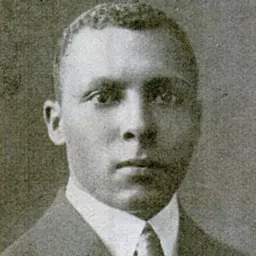
Contemporaries
People whose lives overlapped Frederick Maynard's


Frequently asked questions
Who was Frederick Maynard?
Australian civil rights defender (1879–1946)
When was Frederick Maynard born?
Frederick Maynard was born on 4 July 1879 in Hinton.
When did Frederick Maynard die?
Frederick Maynard died on 9 September 1946 in Rydalmere.
What was Frederick Maynard's occupation?
Frederick Maynard was a civil rights advocate.
What was Frederick Maynard known for?
Frederick Maynard was known for Australian Aboriginal Progressive Association.
What nationality was Frederick Maynard?
Frederick Maynard was Australian.
Sources & further reading
· Wikipedia: Frederick Maynard
· DBpedia: Charles Frederick Maynard
Cite this page
APA: Biography.guide. (2026). Frederick Maynard. https://biography.guide/frederick-maynard/
MLA: "Frederick Maynard." Biography.guide, https://biography.guide/frederick-maynard/.
Chicago: "Frederick Maynard." Biography.guide. https://biography.guide/frederick-maynard/.
Data last updated: 2026-09-22 · Spot an error? Report a correction.
Page generated 2026-09-27 05:14 UTC