
About Frederick Currey
Lived 1819 – 1881 (aged 62). Frederick Currey was a British mycologist, lawyer and botanist.
Frederick Currey (August 1819 – 8 September 1881) was an English mycologist and botanist.
Biography Frederick Currey was one of the brothers of the architect Henry Currey (1820–1900). Their father was Benjamin Currey (1786–1848), Clerk of the Parliaments. After education at Eton College, Frederick Currey matriculated in 1837 at Trinity College, Cambridge. There he graduated in 1841 with a B.A. and in 1844 with an M.A. He was admitted at Lincoln's Inn in June 1839 and called to the bar in 1844. He practised as conveyancer and equity draughtsman.
Currey's scientific publications were primarily in the Transactions of the Linnean Society, the Quarterly Journal of Microscopical Science, and other learned journals. 2nd edition, 1855) and Wilhelm Hofmeister's 1851 book Vergleichende Untersuchungen der Keimung, Entfaltung und Fruchtbildung höherer Kryptogamen (Moose, Farrn, Equisetaceen, Rhizocarpeen und Lycopodiaceen) und der Samenbildung der Coniferen (On the germination, development and fructification of the higher Cryptogamia and on the fructification of the Coniferae, 1862). Currey was one of the first members of the Greenwich Natural History Club, founded in 1852. In 1857 the club appointed a committee to make a report on the district's flora. Currey chaired the committee and drafted the report, which enumerated 395 species of fungi. In 1859 he was the club's leader for a field day to identify the cryptogams of the Greenwich neighbourhood. The route was from Southborough Road Station (in Southborough, Bromley) to Chislehurst, St Paul's Cray Common, Petts Wood and back to Chislehurst. The participants in the field day found almost forty species of fungi in Petts Wood.
Currey was elected in 1856 a Fellow of the Linnean Society of London As successor to John Joseph Bennett, he served as secretary of the Linnean Society from 1860 to 1880. Currey was the society's treasurer and vice-president from 1880 until his death in 1881. His letters are at the Natural History Museum, London.
Currey died in Blackheath, London.
Selected publications
Don’t just read it —
keep it.
Full-length biographies made to live with: read them, listen on the way to work, watch them tonight.
- E-book
- Audio
- Video
Instant download · yours to keep · every purchase keeps this site free
Important facts
People in Frederick Currey's life
Named in this biography and alive at the same time
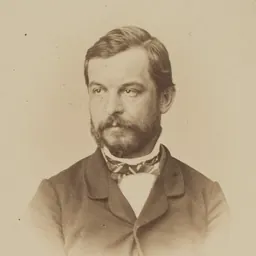
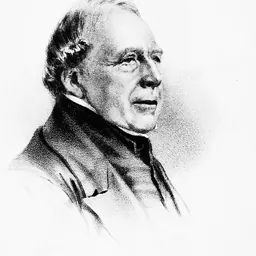

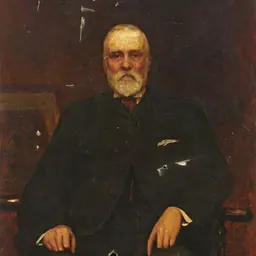
Related people
Same field, nearest in time
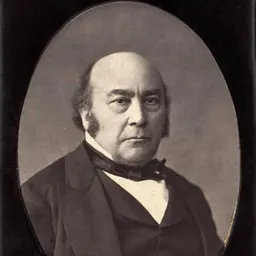



Contemporaries
People whose lives overlapped Frederick Currey's





Frequently asked questions
Who was Frederick Currey?
English mycologist
When was Frederick Currey born?
Frederick Currey was born on 17 January 1819.
When did Frederick Currey die?
Frederick Currey died on 17 January 1881 in Blackheath.
What was Frederick Currey's occupation?
Frederick Currey was a mycologist, lawyer and botanist.
What nationality was Frederick Currey?
Frederick Currey was British.
Sources & further reading
· DBpedia: Frederick Currey (mycologist)
Cite this page
APA: Biography.guide. (2026). Frederick Currey. https://biography.guide/frederick-currey-mycologist/
MLA: "Frederick Currey." Biography.guide, https://biography.guide/frederick-currey-mycologist/.
Chicago: "Frederick Currey." Biography.guide. https://biography.guide/frederick-currey-mycologist/.
Data last updated: 2026-09-20 · Spot an error? Report a correction.
Page generated 2026-09-27 05:05 UTC