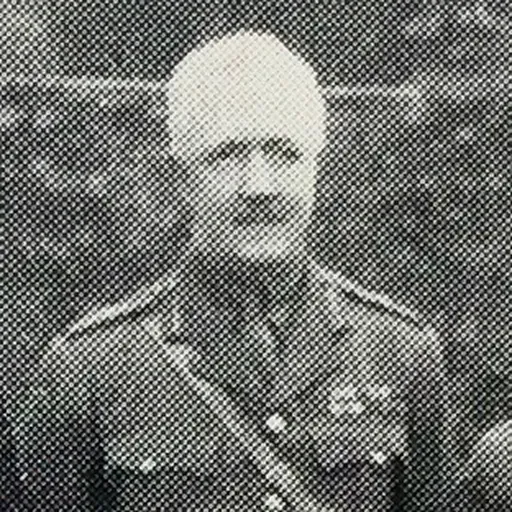
Frederick Barton Maurice
British Army general and writer
About Frederick Barton Maurice
Lived 1871 – 1951 (aged 80). Frederick Barton Maurice was a British university teacher, military personnel, historian, military historian and soldier.
Major-General Sir Frederick Barton Maurice, (19 January 1871 – 19 May 1951) was a British Army officer, military correspondent, writer and academic. During the First World War he was forced to retire from the army in May 1918 after writing a letter to The Times criticizing Prime Minister David Lloyd George for making misleading statements about the strength of British forces on the Western Front. He also later founded the British Legion in 1921, and served as its president from 1932 to 1947.
Early life and military career Maurice was born in Dublin, the son of John Frederick Maurice, a British Army officer and military historian, and his wife Anne Frances "Annie" FitzGerald. He attended St. Paul's School and Sandhurst before joining Derbyshire Regiment in June 1892.
His first overseas posting was to British India in 1897–98, during the Tirah campaign.
Maurice was promoted brevet major in November 1900. On returning from South Africa, he entered the Staff College at Camberley, Surrey in 1902. In June 1908 he succeeded Captain John Duncan, later a major general, as a GSO2 at the War Office.
He was promoted to the substantive rank of major on 19 May 1911, and two years later was promoted to lieutenant colonel and transferred to the Staff College as an instructor in military history under Major General Sir William Robertson, then the college's commandant and later, like Haig, a field marshal. and saw action at the Battle of Mons. and brevet colonel in June 1915.
In 1915 Maurice, who in February was made a CB, was director of military operations at GHQ (later handing over to "Tavish" Davidson). He wrote papers for the BEF Chief of Staff William Robertson and the Commander-in-Chief Sir John French.
Maurice stressed that the high troops-space ratio was the main cause of the stalemate on the Western Front, an argument which he would later repeat in his book British Strategy (1929). Because the defender could bring up reinforcements quicker than the attacker could feed in fresh units and move his guns forward, no breakthrough was likely to be achieved without a long preceding (battle of attrition) elsewhere. Maurice argued that the two types of battle were very different. The former aimed at breaking through to open country even if launched from tactically unfavourable ground, preferably over a wide breach to lessen enemy enfilade fire from the flanks. By contrast a should be a series of battles (at least every ten days, as it took the Germans three weeks to bring fresh units from Germany) over ground where the defender had to stand and counter-attack, thus reversing the normal advantage enjoyed by defenders. Good artillery observation and communications (to allow reinforcements of men and shells) were required, not least as the enemy would be retreating towards his own bases whilst the attacker advanced over ground devastated by bombardment. Maurice also argued that the British would not have to the resources to conduct until 1917 but that the French must do so until then, and that the Battle of Loos in autumn 1915 was a regrettable waste of resources forced on Britain by the need to cooperate with her French senior partner.
Maurice was strongly critical of proposals to launch a major offensive out of the Ypres Salient (such plans would be discussed for two years before eventually resulting in the 1917 Battle of Passchendaele). He argued that the Ypres Salient, besides being overlooked by enemy artillery, offered few geographical advantages to the attacker. He conceded that an offensive in this sector might lead to the liberation of the ports of Ostend and Zeebrugge provided it coincided with a major French offensive further south. However, unless the Germans withdrew from Belgium entirely, the British would most likely be left holding a longer line stretching to the Dutch frontier, served by two single-track railways from Dunkirk and Hazebrouck-Ypres-Roulers, while the German positions were served by six double-track rail lines. The Belgian Army, currently protected by the coastal inundations of the River Yser, would be able to offer little assistance and would be left holding positions on the new front line which lacked the benefit of such inundations. Maurice recommended that the Ypres Salient itself should either be extended as far as the high ground of Passchendaele Ridge having first taken the ridges south of the city (this is essentially what would happen in 1917), or else (his preferred option) the line should be shortened by a tactical retreat nearer the city.
After Maurice's departure for the War Office, his former staff at GHQ continued to produce papers for his successor "Tavish" Davidson, pointing out that the BEF had never fought a pure battle of attrition but had rather, both at Loos and the Somme, been attempting to achieve breakthrough and attrition more or less simultaneously; disputes continued to simmer during the planning of the Battle of Passchendaele with both Rawlinson and Plumer producing plans too cautious for Haig's liking.
In 1915 Maurice, who in June was promoted to brevet colonel, was posted to London as Director of Military Operations for the Imperial General Staff, and in 1916 he was promoted to major general. Maurice worked closely with William Robertson, who was appointed Chief of the Imperial General Staff at the end of 1915, ghostwriting many papers which went out over Robertson's signature.
One of Maurice's daughters, Nancy, was the long-term secretary and mistress of Edward Spears, eventually marrying him in 1969 after the death of his first wife Mary Borden. Spears later wrote of Maurice in Prelude to Victory "As imperturbable as a fish, always unruffled ... a rather abrupt manner. A little distrait owing to great inner concentration, he simply demolished work, never forgot anything ... most efficient if not outwardly brilliant second. No man ever wasted fewer words nor expressed himself when he spoke with greater clarity and conciseness".
Resignation
Following the removal of Robertson in February 1918, Henry Wilson, the new CIGS, proposed that Maurice be given command of a division.
Maurice became convinced that troops were being withheld from the Western Front in order to undermine the position of Douglas Haig. The situation became particularly tense after the near catastrophic defeat of Hubert Gough's Fifth Army in late March 1918. When David Lloyd George announced in the House of Commons on 9 April that British troop levels on the Western Front were at all-time highs, Maurice believed that he was deceiving both Parliament and the British public. This subsequently occurred on 9 May, and Lloyd George was able to imply that the source of confusion was, in fact, Maurice's office, rather than the Prime Minister's.
In his memoirs in the mid 1930s Lloyd George was harsh about Maurice and did not come clean about his own disingenuous use of statistics in the debate (i.e. relying on the figures with which the military had supplied him on 9 April and 18 April, and ignoring the more accurate figures which the military had subsequently produced).
During the Munich Crisis, Maurice volunteered the services of the Legion to the government. He flew to Berlin to meet Hitler for the formation of the short-lived British Legion Volunteer Police Force. Three days before war commenced on 1 September 1939, Maurice, as President of the British Legion, broadcast an appeal to Hitler urging him not to invade Poland, an action which John Grigg attributes to naivety.
Maurice died on 19 May 1951, in Cambridge cared for by his daughter, the economist Joan Robinson.
Publications The Russo-Turkish War, 1877–1878 (Special Campaign Series, 1905) Sir Frederick Maurice: a record of his work and opinions (Edward Arnold, London, 1913) Forty Days in 1914 (Constable and Co, London, 1919) The Last Four Months (Cassell and Co, London, 1919) The Life of Lord Wolseley (William Heinemann, London, 1924) Robert E. Lee, the soldier (Constable and Co, London, 1925) Governments and War (William Heinemann, London, 1926) An aide-de-camp of Lee (Little, Brown and Co, London, 1927) The Life of General Lord Rawlinson of Trent (Cassell and Co, London, 1928) British Strategy: A Study of the Application of the Principles of War (Constable and Co, London, 1929) The 16th Foot (Constable and Co, London, 1931) The History of the Scots Guards (Chatto and Windus, London, 1934) Haldane (Faber and Faber, London, 1937, 1939) The Armistices of 1918 (Oxford University Press, London, 1943) The Adventures of Edward Wogan (G Routledge and Sons, London, 1945)
Don’t just read it —
keep it.
Full-length biographies made to live with: read them, listen on the way to work, watch them tonight.
- E-book
- Audio
- Video
Instant download · yours to keep · every purchase keeps this site free
Important facts
People in Frederick Barton Maurice's life
Named in this biography and alive at the same time





Related people
Same field, nearest in time

Contemporaries
People whose lives overlapped Frederick Barton Maurice's


Frequently asked questions
Who was Frederick Barton Maurice?
British Army general and writer (1871–1951)
When was Frederick Barton Maurice born?
Frederick Barton Maurice was born on 19 January 1871 in Dublin.
When did Frederick Barton Maurice die?
Frederick Barton Maurice died on 19 May 1951 in Cambridge.
What was Frederick Barton Maurice's occupation?
Frederick Barton Maurice was a university teacher, military personnel, historian, military historian and soldier.
What nationality was Frederick Barton Maurice?
Frederick Barton Maurice was British.
Sources & further reading
· Wikipedia: Frederick Barton Maurice
· DBpedia: Frederick Maurice (British Army officer, born 1871)
Cite this page
APA: Biography.guide. (2026). Frederick Barton Maurice. https://biography.guide/frederick-barton-maurice/
MLA: "Frederick Barton Maurice." Biography.guide, https://biography.guide/frederick-barton-maurice/.
Chicago: "Frederick Barton Maurice." Biography.guide. https://biography.guide/frederick-barton-maurice/.
Data last updated: 2026-09-20 · Spot an error? Report a correction.
Page generated 2026-09-27 05:10 UTC