
About Frédéric-Auguste Quesnel
Lived 1785 – 1866 (aged 81). Frédéric-Auguste Quesnel was a Canadian politician and lawyer.
Frédéric-Auguste Quesnel, (; February 4, 1785 – July 28, 1866), was a lawyer, businessman and politician in Lower Canada (now Quebec). He was a member of the Legislative Assembly and the Executive Council of Lower Canada. Following the union of the Canadas, he was elected to the Legislative Assembly of the Province of Canada and later was appointed to the Legislative Council. Throughout his career he was a political moderate, seeking greater political power for French-Canadians under British rule, but also supporting the British connection generally. Condemned by the Patriotes as a vendu ("sell-out") in the Lower Canada Rebellion, in 1860 he was elected President of the Saint-Jean-Baptiste Society of Montreal.
His achievements in commerce and finance showed that a French Canadian could make his fortune in business. In 1859, he was elected President of the Banque du Peuple. His home, Manoir Souvenir (now a ruin) was one of the early estates of the Golden Square Mile.
Early life
Quesnel was born in 1785 at Montreal into a family well known in Canadien gentry society. He was the eldest son of Joseph Quesnel, who had emigrated from France, and Marie-Josephte Deslandes, step-daughter of Maurice-Régis Blondeau. Joseph Quesnel was a businessman, but also became known as one of the earliest French-Canadian poets. Joseph also was a strong supporter of the British connection, as his family connections had suffered during the French revolution, with one cousin being guillotined.
Frédéric-Auguste was educated at the Collège Saint-Raphaël from 1796 to 1803. One of his classmates was Louis-Joseph Papineau, later the leader of the nationalist Parti Patriotes. One of Frédéric-Auguste's brothers, Jules-Maurice Quesnel, was involved in the fur trade, eventually becoming a member of the Beaver Club, and also was appointed to the Special Council, which governed Lower Canada after the Lower Canada Rebellion in 1837. One of his sisters was married to Côme-Séraphin Cherrier, a leading lawyer and Patriote politician.
Quesnel also continued his legal career, including acting for the Sulpician order in obtaining confirmation of some of its seigneurial properties. In 1831 he was appointed King's counsel. In 1854, when the government was considering the abolition of seigneurial tenure, Quesnel made extensive submissions on the claims of the seigneurial holders for compensation, which were eventually incorporated into the law abolishing seigneurial tenure.
As the political situation in Lower Canada worsened by 1837, Quesnel, Clément-Charles Sabrevois de Bleury, and George Moffatt arranged a public meeting at Montreal in support of the government. Two months later the Governor, Lord Gosford, appointed him to the Executive Council of Lower Canada. When the Lower Canada Rebellion broke out in late 1837, the Patriotes condemned Quesnel as a vendu ("sell-out"). His brother, Joseph-Timoléon, was forced to flee L'Acadie and to give up his magistrate’s commission.
Province of Canada Legislative Assembly Following the rebellion in Lower Canada, and the similar rebellion in 1837 in Upper Canada (now Ontario), the British government decided to merge the two provinces into a single province, as recommended by Lord Durham in the Durham Report. The Union Act, 1840, passed by the British Parliament, abolished the two provinces and their separate parliaments, and created the Province of Canada, with a single parliament for the entire province, composed of an elected Legislative Assembly and an appointed Legislative Council. The Governor General retained a strong position in the government.
As in 1822, Quesnel continued to oppose the union of the two Canadas. In March 1840, he was the head of a delegation of three hundred to the Governor General, Charles Poulett Thomson, later Lord Sydenham. As head of the delegation, Quesnel presented a petition to the Governor, with 6,370 signatures, opposing the union of Upper and Lower Canada. Lord Sydenham concluded that Quesnel was one of the members who would likely vote against Sydenham's government. This prediction was borne out in the first session of the new Parliament: Quesnel voted against a motion approving the union, and was a consistent vote against the governor. He was a member of the French-Canadian group, which supported Louis-Hippolyte LaFontaine and Robert Baldwin in their efforts to attain responsible government.
The ministerial crisis of 1843 affected Quesnel's position. The dispute was over the implementation of responsible government. The Governor General, Sir Charles Metcalfe, asserted that he could appoint government officials without consulting the Executive Council, whose members were generally elected. The Reform ministry of LaFontaine and Baldwin resigned. Metcalfe was able to create a rump ministry composed of Henry Draper from Upper Canada, and Denis-Benjamin Viger and Dominick Daly from Lower Canada, but Metcalfe was seeking further support. There was concern in the Reform and French-Canadian groups that Quesnel might re-join his old colleague, Viger, in a Tory government. Although that did not occur, Quesnel was defeated in the 1844 elections by Joseph Cauchon, thought to be a more reliable reformer.
Legislative Council Four years later, in 1848, Quesnel was appointed to the Legislative Council. The general respect in which he was held is shown that he had originally been offered the seat by Draper, then the Tory premier, but was actually appointed on the advice of the Reformers, Lafontaine and Baldwin, after a change in government. He held the seat until his death in 1866.
While in the Legislative Council, Quesnel supported the 1849 Rebellion Losses Bill. The passage of the bill and grant of royal assent by the Governor General was the clear mark that responsible government had been achieved, although at the cost of the Montreal riot and burning of the Parliament Building. He also opposed annexation by the United States, which was proposed by some in the Montreal business community when Britain ended imperial tariff protection. He was convinced that French-Canadians would do better under British government than under American rule. He was also influential in ensuring that compensation for seigneurs was built into legislation to abolish seigneurial tenure.
Quesnel was elected president of the Saint-Jean-Baptiste Society of Montreal in 1860.
Family
Quesnel's home, Manoir Souvenir, built in 1830 and set amidst a park of 240 acres. Located in Montreal's Golden Square Mile
Quesnel married Marguerite Denaut (1791-1820) in 1813 at Boucherville. She was the only daughter and heiress of Captain Joachim Denaut, a wealthy fur trader who lived at Granville, by his wife Marguerite Chabert. She died in 1820, and their three daughters and two sons all predeceased him.
In 1830, Quesnel built Manoir Souvenir, named in memory of his wife. Built within a park of 240 acres in Montreal, it was one of the early estates of the Golden Square Mile.
Quesnel was survived only by a granddaughter from one of his sons, and a nephew whom he adopted:
Pierre-Adolphe-Augustin Quesnel was one of his sons. In 1843, he married Charlotte Vercheres-Boucher de Boucherville, granddaughter of René-Amable Boucher de Boucherville and niece of Louis-René Chaussegros de Léry. Their daughter, Emma, married Théodore Robitaille, Lieutenant Governor of Quebec. Charles-Joseph Coursol was the son of Quesnel's sister, Marie-Melanie and her husband Michel Coursol, who died when Charles-Joseph was only one year old. Quesnel adopted his young nephew. Charles-Joseph married a daughter of Sir Étienne-Paschal Taché and inherited the bulk of Quesnel's estate, including Manoir Souvenir. They were the parents of four children.
Quesnel died at age 81 in 1866. He was buried at Notre Dame des Neiges Cemetery in Montreal. Louis-Joseph Papineau attended the funeral.
Don’t just read it —
keep it.
Full-length biographies made to live with: read them, listen on the way to work, watch them tonight.
- E-book
- Audio
- Video
Instant download · yours to keep · every purchase keeps this site free
Important facts
People in Frédéric-Auguste Quesnel's life
Named in this biography and alive at the same time
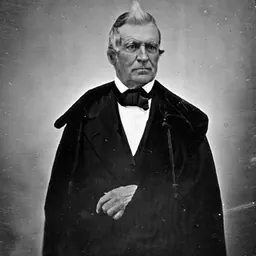

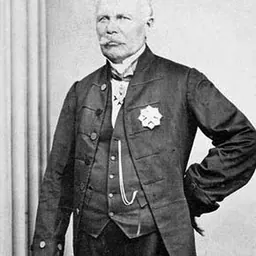
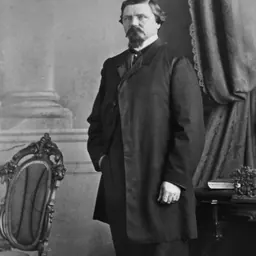
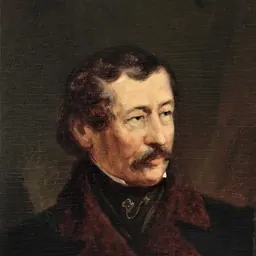
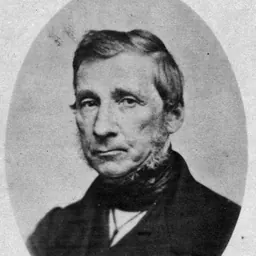
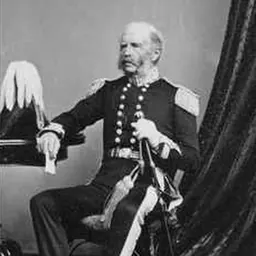
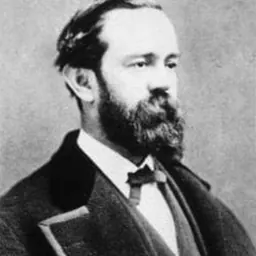
Related people
Same field, nearest in time

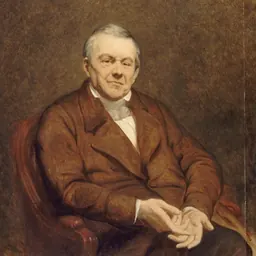

Contemporaries
People whose lives overlapped Frédéric-Auguste Quesnel's

Frequently asked questions
Who was Frédéric-Auguste Quesnel?
Canadian politician (1785-1866)
When was Frédéric-Auguste Quesnel born?
Frédéric-Auguste Quesnel was born on 4 February 1785 in Montreal.
When did Frédéric-Auguste Quesnel die?
Frédéric-Auguste Quesnel died on 28 July 1866 in Montreal.
What was Frédéric-Auguste Quesnel's occupation?
Frédéric-Auguste Quesnel was a politician and lawyer.
What nationality was Frédéric-Auguste Quesnel?
Frédéric-Auguste Quesnel was Canadian.
Sources & further reading
· Wikipedia: Frédéric-Auguste Quesnel
· DBpedia: Frédéric-Auguste Quesnel
Cite this page
APA: Biography.guide. (2026). Frédéric-Auguste Quesnel. https://biography.guide/frederic-auguste-quesnel/
MLA: "Frédéric-Auguste Quesnel." Biography.guide, https://biography.guide/frederic-auguste-quesnel/.
Chicago: "Frédéric-Auguste Quesnel." Biography.guide. https://biography.guide/frederic-auguste-quesnel/.
Data last updated: 2026-09-20 · Spot an error? Report a correction.
Page generated 2026-09-27 05:25 UTC