
About Fred Oelßner
Lived 1903 – 1977 (aged 74). Fred Oelßner was a German politician, economist and university teacher.
Fred Oelßner (27 February 1903 – 7 November 1977) was a German communist politician, economist and a leading political figure in the German Democratic Republic (East Germany). He served as secretary of several departments of the ruling Socialist Unity Party of Germany (SED), specializing in cultural and academic matters.
Oelßner became a member of the SED Politburo in 1950. He fell out of favour over the so-called Schirdewan affair in 1958, however, and was excluded from the politburo. Tensions had arisen at the top of government over the extent which the country should be willing to respond positively to pressure from Moscow for a measure of De-Stalinization. Oelßner was able to argue from an economic and political perspective in favour of a cautious easing of restrictions. After a period of a year or so during which it might have been thought that the East German leader, Walter Ulbricht, was open to suggestions, the political downfall of Karl Schirdewan, Fred Oelßner, and other functionaries, were seen as a sign that traditionalist economic hardliners would remain in control. In September 1959 Oelßner published his self-criticism on account of his "opportunism and political blindness" ("Opportunismus und politische Blindheit") during the years 1956/57.
Life Provenance and early years Fred Oelßner was born in Leipzig. Alfred Oelßner, his father, was an activist member of the Social Democratic Party, and later became a prominent Communist Party activist and official. His mother worked in the garments business. After attending middle school at nearby Weißenfels Oelßner remained in Weißenfels, where he embarked on an apprenticeship in business and milling at the Beuditz Mill between 1917 and 1919. At the same time he continued his education, attending evening classes at a business school.
Politicisation He joined the Young Socialists ("Sozialistische Arbeiter-Jugend" / SAJ) in 1917 and the Free Young Socialists ("Freie sozialistische Jugend" / FSJ) in 1918. He was dismissed from his apprenticeship after eighteen month in account of his "political activities". He retained this job till June 1941. ) Early in 1943 he also became a member of a working group set up by the party leadership dealing with propaganda issues. The ten man Ulbricht Group started work on 2 May 1945 while the ten men led by Gustav Sobottka made their way to Mecklenburg in the northern party of what was now to become known as the Soviet occupation zone. Fred Oelßner was a member of the ten man Ackermann Group who now installed themselves in eastern Saxony. Much later it became clear that the thirty men who arrived from Moscow at the start of May 1945 had arrived with a remarkably detailed "nation building" plan. That appointment lasted only a few weeks, however. In June 1945 he was transferred to Berlin. His mandate now, from the Communist Party Central Committee was to create and head up the party's important Agitprop department. Karl Schirdewan, another of the 12 (or 14) members of the East German politburo, was actually present when Khrushchev delivered his speech at the 20th Congress of the Soviet Communist Party in Moscow. Discussions of the possible desirability of cautiously relaxing state control over society found their way into the East German politburo and for a time, according to some, it seemed that a measure of liberalisation might be possible. It was never clear how widespread those ideas became at the heart of government. Sources originating with East German government always identify (retrospectively) the same three Central Committee dissenters "and others", without ever identifying the others. By early in 1958 Walter Ulbricht had evidently identified a threat to the status quo and possibly to his own political dominance. On 8 February 1958 Fred Oelßner was expelled from the Politburo and relieved of all his political and party offices, accused of "repeated violations of Politburo discipline" ("... wiederholter Verletzung der Disziplin des Politbüros"). Others expelled from the Central Committee were Karl Schirdewan and Ernst Wollweber, accused of "factionalism" and "violations of party rules".
Don’t just read it —
keep it.
Full-length biographies made to live with: read them, listen on the way to work, watch them tonight.
- E-book
- Audio
- Video
Instant download · yours to keep · every purchase keeps this site free
Important facts
People in Fred Oelßner's life
Named in this biography and alive at the same time

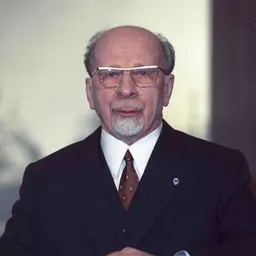
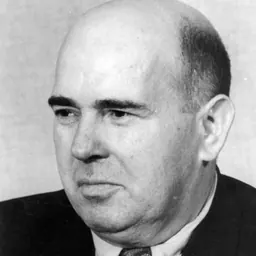

Related people
Same field, nearest in time





Contemporaries
People whose lives overlapped Fred Oelßner's
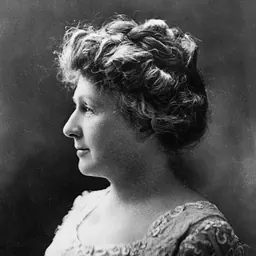
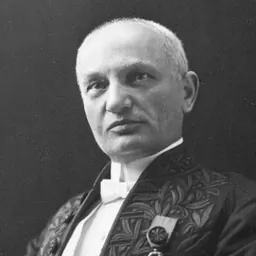
Frequently asked questions
Who was Fred Oelßner?
German politician and economist (1903-1977)
When was Fred Oelßner born?
Fred Oelßner was born on 27 February 1903 in Leipzig.
When did Fred Oelßner die?
Fred Oelßner died on 7 November 1977 in Berlin.
What was Fred Oelßner's occupation?
Fred Oelßner was a politician, economist and university teacher.
What nationality was Fred Oelßner?
Fred Oelßner was German.
Sources & further reading
Cite this page
APA: Biography.guide. (2026). Fred Oelßner. https://biography.guide/fred-oelssner/
MLA: "Fred Oelßner." Biography.guide, https://biography.guide/fred-oelssner/.
Chicago: "Fred Oelßner." Biography.guide. https://biography.guide/fred-oelssner/.
Data last updated: 2026-09-22 · Spot an error? Report a correction.
Page generated 2026-09-27 05:22 UTC