
About Fred Clarke
Lived 1872 – 1960 (aged 87). Fred Clarke was an American baseball player.
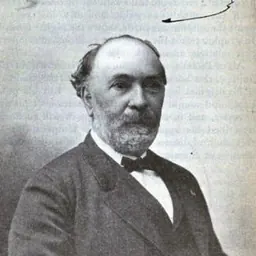
Fred Clifford Clarke (October 3, 1872 – August 14, 1960) was an American Major League Baseball player from 1894 to and manager from 1897 to 1915. Clarke played for and managed both the Louisville Colonels and Pittsburgh Pirates. He was a left fielder and left-handed batter.
Of the nine pennants in Pittsburgh franchise history, Clarke was the player-manager for four of them. He and fellow Hall of Famers Honus Wagner and Vic Willis led Pittsburgh to a victory over Ty Cobb and the Detroit Tigers in the 1909 World Series. Clarke batted over .300 in 11 different seasons. His 35-game hitting streak in 1895 was the second-longest in Major League history at the time. For six years, Clarke held the Major League record for wins by a manager. In 1945, Clarke was inducted into the National Baseball Hall of Fame.
Clarke recorded the first official cycle on July 23, 1901, vs. the Cincinnati Reds, going 4–5 with two runs batted in (RBI). Nap Lajoie would become the second player to accomplish the feat seven days later, in a July 30, 1901, game between Lajoie's Philadelphia Athletics and the Cleveland Blues.
Early life and career Fred Clarke was born on a farm near Winterset, Iowa. At age two, his family moved as part of a covered wagon caravan from Iowa to Kansas before relocating to Des Moines, Iowa, five years later. As a child in Des Moines, Clarke sold newspapers for the Iowa State Register where his boss was future Baseball Hall of Fame member, Ed Barrow. In 1892, a professional team in Hastings, Nebraska sent a railroad ticket to Des Moines semiprofessional player Byron McKibbon, but McKibbon backed out and gave the ticket to Clarke instead. Clarke impressed the Hastings team and he signed his first professional contract. He was in the Southern League at age 21 and played for teams in Montgomery, Alabama, and Savannah, Georgia. In his first game, he collected five hits in five at bats which is still a Major League record. In his second season, he asserted himself with a batting average of .347, 191 hits and 96 runs, which were all best on the team by far. In 1897, Clarke took over managerial duties while only 24 years old. As a player, he hit a career-high .390. Only the best average of Willie Keeler's career stopped Clarke from winning his only batting title. (For many years, Clarke's 1897 average was listed as .406, but further research led most official sources, including MLB.com, to list it at .390. ) Despite Clarke's excellent hitting and the presence of fellow Hall of Famers Honus Wagner and Rube Waddell, the team struggled for several years. While in Louisville, Clarke was teamed up with pitcher Chick Fraser. Clarke and Fraser became brothers-in-law when they married sisters. When the Colonels folded, Barney Dreyfuss became the owner of the Pittsburgh franchise and tapped Clarke, Wagner, Waddell, Deacon Phillippe, and others to accompany him.
Pittsburgh
In 1900, Clarke joined the Pittsburgh Pirates as a player and manager, roles he would embrace until his retirement in 1915. was arguably the best hitting season of Clarke's career as he led the Major Leagues in slugging average and OPS and led the National League in doubles. He finished second only to his teammate, Honus Wagner, for the National League batting title. In the first World Series, Clarke hit .265 but Boston's Cy Young and Bill Dinneen outpitched Pittsburgh overall and won the series in eight games.
In the 1909 World Series, Clarke batted only .211 but hit both of Pittsburgh's home runs and had more home runs and RBI than any player on either team. Clarke also set a record for most walks for one player in a World Series game with four in Game 7.
On August 23, 1910, Clarke recorded four assists from the outfield in one game, tying a Major League record. The following season, his last as a regular player, 38-year-old Clarke made 10 putouts in left field in one game on April 25, 1911. He led his team to four National League pennants (1901, 1902, 1903 and 1909) and one World Series championship (1909). The 1902 Pirates lost only 36 games under Clarke's guidance, tying a modern-era record. In , Clarke passed Cap Anson and Frank Selee, giving him the Major League record for wins by a manager. Clarke's record, in turn, was broken by John McGraw in . In addition to the four pennants and one World Series, Clarke managed Pittsburgh to five second-place seasons, three third-place seasons, and two 100-win seasons.
After his playing days After his managing days ended in 1915, Clarke returned to his "Little Pirate Ranch" near Winfield, Kansas, which he had purchased with a down payment during his first year in the majors. Clarke remained active and seemingly indestructible into his 70s. In 1947, while fishing in northern Minnesota, he and his wife were thrown into icy northern Minnesota waters by a storm, but he was back out fishing the next day. Soon after, he was nearly shot accidentally while quail hunting. He then survived a gas furnace explosion in his basement.
Don’t just read it —
keep it.
Full-length biographies made to live with: read them, listen on the way to work, watch them tonight.
- E-book
- Audio
- Video
Instant download · yours to keep · every purchase keeps this site free
Important facts
People in Fred Clarke's life
Named in this biography and alive at the same time




Related people
Same field, nearest in time

Contemporaries
People whose lives overlapped Fred Clarke's



Frequently asked questions
Who was Fred Clarke?
American baseball player and coach (1872-1960)
When was Fred Clarke born?
Fred Clarke was born on 3 October 1872 in Winterset.
When did Fred Clarke die?
Fred Clarke died on 14 August 1960 in Winfield.
What was Fred Clarke's occupation?
Fred Clarke was a baseball player.
What nationality was Fred Clarke?
Fred Clarke was American.
Sources & further reading
Cite this page
APA: Biography.guide. (2026). Fred Clarke. https://biography.guide/fred-clarke/
MLA: "Fred Clarke." Biography.guide, https://biography.guide/fred-clarke/.
Chicago: "Fred Clarke." Biography.guide. https://biography.guide/fred-clarke/.
Data last updated: 2026-09-20 · Spot an error? Report a correction.
Page generated 2026-09-27 05:22 UTC