
About Franz S. Exner
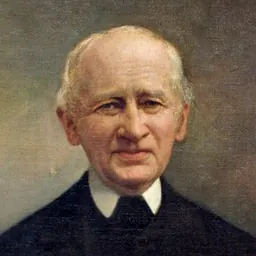
Lived 1849 – 1926 (aged 77). Franz S. Exner was an Austrian physicist and university teacher, known for First Austrian Republic.
Franz Serafin Exner jun. (; 24 March 1849 – 15 November 1926) was an Austrian physicist and professor at the University of Vienna. He is known for pioneering physical chemistry education in Austria. The early introduction to university curricula of subjects such as radioactivity, spectroscopy, electrochemistry, electricity in the atmosphere, and color theory in Austria are often credited to him.
He advised many notable students including Stefan Meyer, Erwin Schrödinger, and Marian Smoluchowski.
Exner was associated with Herbartianism and helped transmit Johann Friedrich Herbart's philosophy into Austrian academic life.
Life
Early life and family Franz Serafin Exner came from an important university family in the Austrian Empire. His family included , , Sigmund Exner, and Felix Maria von Exner-Ewarten (grandson, son of Sigmund Exner) . Exner was the youngest of the five children who survived to adulthood of parents (1802–1853) and Charlotte Dusensy (1816–1859). His father Franz Serafin was, from 1831 to 1848, a professor of philosophy in Prague and from 1848 onwards a member of the Board of Education in Vienna, becoming an influential reformer of Austrian university education.
Academic studies Franz Exner began his university physics studies at Vienna in 1867. He received a doctorate from the University of Vienna in 1871, after an academic year at Zürich under August Kundt, also working alongside Wilhelm Conrad Röntgen, Kundt's student and, especially through the 1870s, regular research assistant/partner.
The greatest influence on Exner's student career was probably the theoretical physicist Viktor von Lang, who had taken the University Chair in Physics at a still relatively young age in 1866, and who played a key role in encouraging and backing his gifted student. Exner received his habilitation in 1874 with a work entitled "On the Diffusion through Liquid Lamellas" . He continued to work for von Lang as the latter's research assistant till 1879.
The university chemical physics Institute in the Türkenstraße remained the focus of Exner's professional career through the most productive years of his career. The premises were nevertheless something of an embarrassment, being desperately cramped and short on equipment. The situation improved a little in 1905 when the department was renamed as the "Zweites Physikalisches Instutut" ("Second [University] Physics Institute"), correctly implying a complementary status to "Erstes Physikalisches Institut" ("First [University] Physics Institute") which, under the directorship of Ludwig Boltzmann, sustained its own reputation for brilliance in other branches of the rapidly expanding subjects-palette of interest to physicists.
Exner also took his turn in university administration. He served as philosophy dean of faculty during 1903-1904, and served as a member of the university senate during 1907-1908. His body was buried at the large cemetery on the western (then) outskirts of Vienna. Slightly more than ten years later, in 1937, a bronze tablet to his memory was produced by Michael Powolny and, with due ceremony, placed in the university's Arkadenhof in 1937.
Endorsing Röntgen Franz Exner was a gregarious man, regularly holding informal dinners for university colleagues at his home. At the start of 1896, at one of these gatherings, he showed some them a copy of "Ueber eine neue Art von Strahlen" ("On a new kind of [radioactive] ray") a brief learned article which he had received from the author, his friend since their time together in Zürich, Wilhelm Röntgen. Röntgen, unlike his friend, was an exceptionally shy and self-contained scholar, but on New Year's Day 1896 he had, uncharacteristically, made a trip to the post office at Würzburg (the city where he lived and worked) with no fewer than 90 envelopes. Each was addressed to a different European physicist. In twelve of the envelopes - including the one addressed to Exner - there were some X-ray copies. Exner's copy arrived on 6 January 1896: it was one of those accompanied by several copies of the first X-rays. One of the colleagues to whom Exner showed his fiend's work was Ernst Lecher, established already as a talented experimental physicist, and a scholar-scientist for whose future career Röntgen's discoveries would prove pivotal. Lecher was also a son to Zacharias Konrad Lecher (1829–1905), the publisher and at this time editor in chief of the Neue Freie Presse, one of Vienna's a leading mass-circulation newspapers. After the little meeting, Exner left the book and the X-ray copies with Lechner, and news of Röntgen's invention very quickly found its way into the public consciousness across and beyond Europe through the Vienna press.
Research The extent of his contribution as an organiser and mentor, helping to ensure that physics research was based on a sound footing from which the discoveries of the 20th century might flow, has frequently led Exner's own research work to be downplayed or overlooked by commentators.
His earliest published work concerned determination of the temperature at which water will reach its maximum density. His focus between 1877 and 1894 was on the rapidly evolving field of electrochemistry and the chemical implications of galvanic processes in different materials. Subsequently he broadened his research interests to incorporate aspects of meteorology, spectroscopy and radioactivity, with a particular interest in measurement techniques involving atmospheric electricity. Inspired by the prospect of being able to determine more precisely the chemical compositions of some of the very many of meteorites that had accumulated in the university collection, during the later 1890s he turned to work on spectral analytic investigation, working with his student Eduard Haschek to develop a method for rapid measurement of wavelengths by using enlarged photo-plates and spectral projections onto a white screen. During his final decades his personal research work was primarily concerned with the implications of the Young–Helmholtz theory, attempting to ground the theory more firmly in experimental evidence, and defending it against detractors.
Notable students Exner was viewed by admirers, including his students, as a versatile and exceptionally broadly educated physicist with a strong vision, cultivating versatile and highly educated pupils. He was a pioneer in numerous areas of modern physics, greatly broadening the accepted scope of the subject through his endeavours. His most famous pupils included Marian Smoluchowski, a Viennese physicist of Polish descent, who discovered a theory of for Brownian motion, independently of Albert Einstein and Friedrich Hasenöhrl.
Erwin Schrödinger, who later also won the 1933 Nobel Prize in Physics, also began his career as Exner's pupil, later becoming his research assistant in 1911. In 1914, Schrödinger received his Habilitation (higher postgraduate degree) with his "Studies on the kinetics of dielectrics, melting point, pyro- and piezoelectricity". Exner supervised the habilitation.
Another of Exner's doctoral students was Stefan Meyer, who became the first director of the Institute for Radium Research ("Institut für Radiumforschung"), itself the first university institute in the world dedicated to researching radioactivity, and opened in 1910 in Vienna by Exner himself.
Lise Meitner, credited with several important discoveries including, in 1917, that of the radioactive isotope protactinium-231, was another of Exner's doctoral students.
During the 1920s and 1930s a remarkable preponderence of university chairs in Physics in the German speaking world were occupied by Exner's former students:
, Brno, later full professor in Prague; , Prague; Hans Benndorf, Graz; Marian Smoluchowski, Czernowitz, Krakau; Stefan Meyer, Vienna; Egon Schweidler, Innsbruck, Vienna; , extra full professor Vienna; Friedrich Hasenöhrl, Vienna; Heinrich Mache, Vienna; Victor Conrad, Brünn, later USA; Felix Maria von Exner-Ewarten, Vienna; , Innsbruck; , Vienna; Felix Ehrenhaft, Vienna; , Brünn; Wilhelm Schmidt, Vienna; , Vienna; Victor Francis Hess, Graz, Innsbruck, New York; , Ludwig Flamm, Vienna; Erwin Schrödinger, Jena, Leipzig, Zurich, Berlin, Graz, Dublin, Vienna; and Hans Thirring, Vienna.
Selected publications Franz Exner und Sigmund Exner: Die physikalischen Grundlagen der Blütenfärbungen, 1910 W C Röntgen und F Exner: Über die Anwendung des Eiskalorimeters zur Bestimmung der Intensität der Sonnenstrahlen. Wien Ber 69: 228 (1874) Franz Exner: Vom Chaos zur Gegenwart, 1926 (unpublished)
Don’t just read it —
keep it.
Full-length biographies made to live with: read them, listen on the way to work, watch them tonight.
- E-book
- Audio
- Video
Instant download · yours to keep · every purchase keeps this site free
Important facts
People in Franz S. Exner's life
Named in this biography and alive at the same time




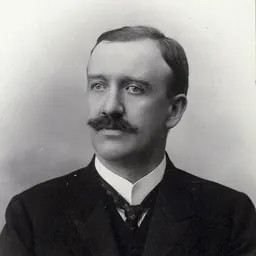

Related people
Same field, nearest in time
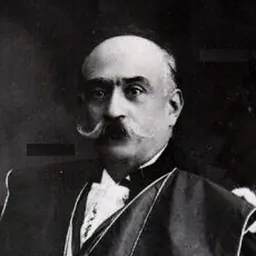


Contemporaries
People whose lives overlapped Franz S. Exner's

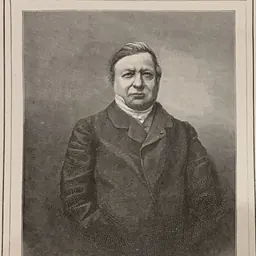
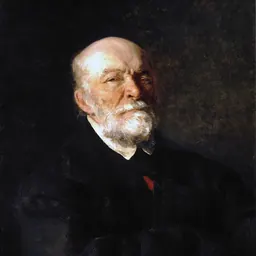


Frequently asked questions
Who was Franz S. Exner?
Austrian physicist (1849–1926)
When was Franz S. Exner born?
Franz S. Exner was born on 24 March 1849 in Vienna.
When did Franz S. Exner die?
Franz S. Exner died on 15 November 1926 in Vienna.
What was Franz S. Exner's occupation?
Franz S. Exner was a physicist and university teacher.
What was Franz S. Exner known for?
Franz S. Exner was known for First Austrian Republic.
What nationality was Franz S. Exner?
Franz S. Exner was Austrian.
Sources & further reading
Cite this page
APA: Biography.guide. (2026). Franz S. Exner. https://biography.guide/franz-s-exner/
MLA: "Franz S. Exner." Biography.guide, https://biography.guide/franz-s-exner/.
Chicago: "Franz S. Exner." Biography.guide. https://biography.guide/franz-s-exner/.
Data last updated: 2026-09-20 · Spot an error? Report a correction.
Page generated 2026-09-27 05:26 UTC