
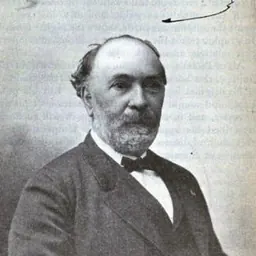
About Marian Smoluchowski
Lived 1872 – 1917 (aged 45). Marian Smoluchowski was an Austrian and Polish physicist, mountaineer and professor, known for Brownian ratchet, Convection–diffusion equation and Einstein relation (kinetic theory).
Marian Smoluchowski (; 28 May 1872 – 5 September 1917) was a Polish physicist who worked in the territories of the Austro-Hungarian Empire. He was a pioneer of statistical physics and made significant contributions to the theory of Brownian motion and stochastic processes.
Smoluchowski graduated in physics from the University of Vienna in 1895 before becoming a privatdozent at the University of Lemberg three years later. In 1913, he was appointed the chair of the Faculty of Experimental Physics at the Jagellonian University in Kraków. He is known for the Smoluchowski equation, Einstein–Smoluchowski relation and Feynman–Smoluchowski ratchet.
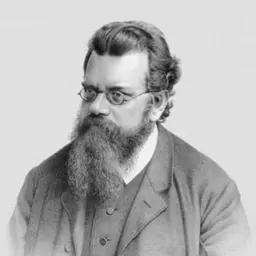
Life He was born in 1872 into an upper-class family in Vorder-Brühl, near Vienna, to father Wilhelm and mother Teofila (née Szczepanowska). He attended the prestigious Collegium Theresianum and subsequently studied physics at the University of Vienna (1890-95). In 1895, he obtained his doctorate based on his dissertation entitled Acoustical Studies of Elasticity of Soft Materials. His teachers included Franz S. Exner and Josef Stefan. Ludwig Boltzmann held a position at the Ludwig-Maximilians-Universität München during Smoluchowski's studies in Vienna, and Boltzmann returned to Vienna in 1894 when Smoluchowski was serving in the Austrian army. They apparently had no direct contact, although Smoluchowski's work follows in the tradition of Boltzmann's ideas.
After several years at other universities (Paris, Glasgow, Berlin), in 1899 Smoluchowski moved to Lwów (present-day Lviv). The following year, aged 28, Smoluchowski took a position of the chair of theoretical physics at the University of Lwów, becoming the youngest professor in Austria-Hungary. He was president of the Polish Copernicus Society of Naturalists, (1906–1907).
In 1913, Smoluchowski moved to Kraków to take over a chair in the Experimental Physics Department, succeeding August Witkowski, who had long envisioned Smoluchowski as his successor. When World War I began the following year, the work conditions became unusually difficult, as the spacious and modern Physics Department building, built by Witkowski a short time before, was turned into a military hospital. The possibility of working in that building had been one of the reasons Smoluchowski had decided to move to Kraków. Smoluchowski was now forced to work in the apartment of the late Professor Karol Olszewski. During his lectures in experimental physics, use of even the simplest demonstration equipment was virtually impossible.
Smoluchowski lectured in experimental physics; his students included Józef Patkowski, Stanisław Loria and Wacław Dziewulski.
Smoluchowski was a member of the Copernicus Society of Natural Scientists and the Polish Academy of Sciences and Letters.
Smoluchowski died in Kraków in 1917, as a result of a dysentery epidemic. Professor Władysław Natanson wrote in an obituary of Smoluchowski: "With great pleasure I recall the charm of his life, his noble cordiality, combined with exquisite kindness. I wish I could render the curious appeal of his personality, recall how temperate he was, how modest and elegantly diffident, yet always full of a pure, spontaneous joy."
Work Smoluchowski conducted fundamental research on the kinetic theory of matter. In 1904, he discovered density fluctuations in the gas phase, and in 1908 he was the first physicist to ascribe the phenomenon of critical opalescence to large density fluctuations. His investigations explained the blue color of the sky as a consequence of light scattering in the atmosphere. In the early 1900s, he also developed the most well known and widely used theory of electrophoresis.
In 1906, shortly after Albert Einstein, he independently explained Brownian motion. Smoluchowski presented an equation, known as the Smoluchowski equation, which became a basis for the theory of stochastic processes. It describes the time evolution of the probability density function for a particle undergoing Brownian motion under the influence of external forces and diffusion. Subrahmanyan Chandrasekhar described it as "one of the most outstanding achievements in molecular physics".
In 1916, he proposed the equation for diffusion in an external potential field. This equation bears his name.
Personal life In 1901, he had married Zofia Baraniecka (1881–1959), the daughter of Jagiellonian University Professor Marian Baraniecki. They had two children, Aldona Smoluchowska (1902–84) and Roman Smoluchowski (1910–96). Roman became a notable physicist who worked in Poland, and after World War II settled in the United States (the Institute for Advanced Study at Princeton).
His non-professional interests included skiing, mountain climbing in the Alps and the Tatra Mountains, watercolor painting, and playing the piano.
Awards and recognition Marian Smoluchowski's bust at the University of Wrocław, Poland. In 1901, he received an honorary doctorate from the University of Glasgow. In 1908, he was awarded the Haitinger Prize of the Austrian Academy of Sciences for his theoretical explanation of Brownian motion. In 1913, he was the Wolfskehl Foundation lecturer at Göttingen. In 1936, he was posthumously awarded the Commander's Cross of the Order of Polonia Restituta.
In 1965, the Polish Physical Society established the Marian Smoluchowski Medal, an international award for significant achievements in the field of physics in recognition of Smoluchowski's contributions to science.
In 1970, the International Astronomical Union named one of the craters on the Moon Smoluchowski after the Polish physicist.
The Institute of Physics of the Jagiellonian University bears the name of Smoluchowski in honour of the scientist.
Streets in several Polish cities bear the name of Smoluchowski including in Gdańsk, Lublin, Malbork, Kraków, Poznań and Wrocław.
In 2017, the Senate of Poland passed a special resolution on the 100th anniversary of Smoluchowski's death establishing 2017 as the "Year of Marian Smoluchowski".
Physicist Andrzej Kajetan Wróblewski named Smoluchowski among the greatest Polish physicists of the 20th century alongside Marie Curie, Karol Olszewski, Jerzy Pniewski and Marian Danysz.
In 2022, Jan Grzanka published a book Zapomniany geniusz fizyki: rzecz o Marianie Smoluchowskim (The Forgotten Physics Genius: Marian Smoluchowski) devoted to the life and scientific work of Smoluchowski.
Don’t just read it —
keep it.
Full-length biographies made to live with: read them, listen on the way to work, watch them tonight.
- E-book
- Audio
- Video
Instant download · yours to keep · every purchase keeps this site free
Important facts
more
Streaming currentPeople in Marian Smoluchowski's life
Named in this biography and alive at the same time




Related people
Same field, nearest in time

Contemporaries
People whose lives overlapped Marian Smoluchowski's
Frequently asked questions
Who was Marian Smoluchowski?
Polish physicist (1872–1917)
When was Marian Smoluchowski born?
Marian Smoluchowski was born on 28 May 1872 in Vienna, Mödling.
When did Marian Smoluchowski die?
Marian Smoluchowski died on 5 September 1917 in Kraków.
What was Marian Smoluchowski's occupation?
Marian Smoluchowski was a physicist, mountaineer and professor.
What was Marian Smoluchowski known for?
Marian Smoluchowski was known for Brownian ratchet, Convection–diffusion equation, Einstein relation (kinetic theory), Smoluchowski coagulation equation, Smoluchowski factor and Statistical physics.
What nationality was Marian Smoluchowski?
Marian Smoluchowski was Austrian and Polish.
Sources & further reading
· Wikipedia: Marian Smoluchowski
· DBpedia: Marian Smoluchowski
Cite this page
APA: Biography.guide. (2026). Marian Smoluchowski. https://biography.guide/marian-smoluchowski/
MLA: "Marian Smoluchowski." Biography.guide, https://biography.guide/marian-smoluchowski/.
Chicago: "Marian Smoluchowski." Biography.guide. https://biography.guide/marian-smoluchowski/.
Data last updated: 2026-09-20 · Spot an error? Report a correction.
Page generated 2026-09-27 05:34 UTC