
Franz Hössler
German SS officer and Schutzhaftlagerführer in Auschwitz, Mittelbau and Bergen-Belsen concentration camps
About Franz Hössler
Lived 1906 – 1945 (aged 39). Franz Hössler was a German concentration camp guard, photographer and soldier.
Franz Hößler, also Franz Hössler (; 4 February 1906 – 13 December 1945) was a Nazi German SS-Obersturmführer and Schutzhaftlagerführer at the Auschwitz-Birkenau, Dora-Mittelbau and Bergen-Belsen concentration camps during World War II. Captured by the Allies at the end of the war, Hößler was charged with war crimes in the First Bergen-Belsen Trial, found guilty, and sentenced to death. He was executed by hanging at Hamelin Prison in 1945.
Early life Hößler was born in 1906 in Oberdorf, a village in the municipality of Martinszell im Allgäu, in the Schwabenland of the German Empire. The son of a foreman, he quit school early to become a photographer. Later employed as a warehouse worker, he was unemployed during the Great Depression of the 1930s. He joined the Nazi Party in early November 1932 (member no. 1,374,713) and the SS (member no. 41,940). Hößler was married and had three children.
During his time in the SS, Hößler rose to the rank of SS-Obersturmführer and became a reserve officer in the Waffen-SS. After the establishment of the Dachau concentration camp in July 1933, he became the first member of the guard staff and worked later as a cook. He served at Dachau until after the outbreak of World War II.
Auschwitz In June 1940, Hößler was transferred to the newly opened Auschwitz I concentration camp as it received the first mass transports. He managed the camp kitchens and was occasionally used as a subcamp supervisor . In June 1942, Hößler, together with Otto Moll and Hans Aumeier, participated in killing 168 survivors of a failed uprising in the punishment section of Auschwitz I.
At the same time Hößler worked as before in the old crematorium at the main camp Auschwitz I, including gassings in the bunkers. Johann Kremer, SS camp doctor from 30 August to 17 November 1942, recorded a transport of 1,703 Dutch Jews to the main camp managed by Hößler. The incident was described in his diary:
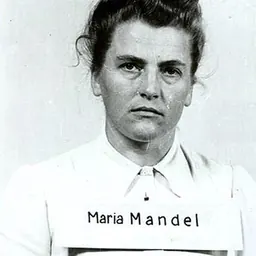
By the middle of 1943, Hößler became involved in recruiting so-called "Aryan" prison women, with the prospect of better food and care, for a newly opened camp brothel at the Auschwitz I main camp. He was then promoted to the senior role of Schutzhaftlagerführer at the Auschwitz-Birkenau women's camp in August 1943, which he directed together with Oberaufseherin Maria Mandl. In this role he participated in selections and gassings. He succeeded Paul Heinrich Theodor Müller in this capacity. Filip Müller, one of the very few Sonderkommando members who survived Auschwitz, paraphrased Hößler's speech given to trick a group of Greek Jews in the undressing room at the portals of the gas chambers:
For a short time between 15 March to 15 May 1944, Hößler was also camp commander of the Neckarelz concentration camp in Mosbach, Germany, a subcamp of the larger Natzweiler-Struthof camp complex in occupied France. Following the Allied invasion of France in June 1944, he returned to the Auschwitz main camp where he was Protective Custody Camp Leader until its final evacuation in January 1945. On 5 April 1945, as American 3rd Armored Division closed in on Mittelbau-Dora, Hößler led a forced evacuation of prisoners to the railhead for transfer to the still-functioning Bergen-Belsen concentration camp. The prisoners were then led on a death march for the last stage of their journey.
Bergen-Belsen
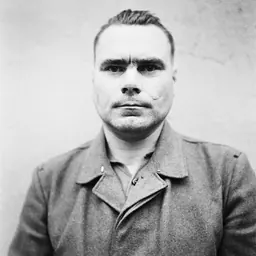
On 8 April 1945, Hößler arrived with his transport at Bergen-Belsen and became deputy camp commander under Josef Kramer. There he directly shot prisoners until the liberation of the camp, crimes for which he would be eventually arrested and tried. On 15 April 1945, Hößler was found hiding among the prisoners in camouflaged clothing and was detained with the remaining SS staff by a unit of the British Army. The SS detainees were then forced to bury thousands of corpses lying around on the camp grounds in mass graves.
Conviction and execution Hössler and 44 other camp staff were tried in the Belsen Trial by a British military court at Lüneburg. The trial lasted several weeks from September to November 1945. During the trial, Anita Lasker testified that Hössler took part in selections for the gas chamber.
Hössler was sentenced to death by hanging on 17 November 1945, and the sentence was carried out by British hangman Albert Pierrepoint on 13 December 1945 at Hameln prison.
Don’t just read it —
keep it.
Full-length biographies made to live with: read them, listen on the way to work, watch them tonight.
- E-book
- Audio
- Video
Instant download · yours to keep · every purchase keeps this site free
Important facts
People in Franz Hössler's life
Named in this biography and alive at the same time






Related people
Same field, nearest in time
Contemporaries
People whose lives overlapped Franz Hössler's

Frequently asked questions
Who was Franz Hössler?
German SS officer and Schutzhaftlagerführer in Auschwitz, Mittelbau and Bergen-Belsen concentration camps (1906-1945)
When was Franz Hössler born?
Franz Hössler was born on 4 February 1906 in Oberdorf bei Immenstadt.
When did Franz Hössler die?
Franz Hössler died on 13 December 1945 in Hamelin.
What was Franz Hössler's occupation?
Franz Hössler was a concentration camp guard, photographer and soldier.
What nationality was Franz Hössler?
Franz Hössler was German.
Sources & further reading
Cite this page
APA: Biography.guide. (2026). Franz Hössler. https://biography.guide/franz-hossler/
MLA: "Franz Hössler." Biography.guide, https://biography.guide/franz-hossler/.
Chicago: "Franz Hössler." Biography.guide. https://biography.guide/franz-hossler/.
Data last updated: 2026-09-20 · Spot an error? Report a correction.
Page generated 2026-09-27 05:33 UTC