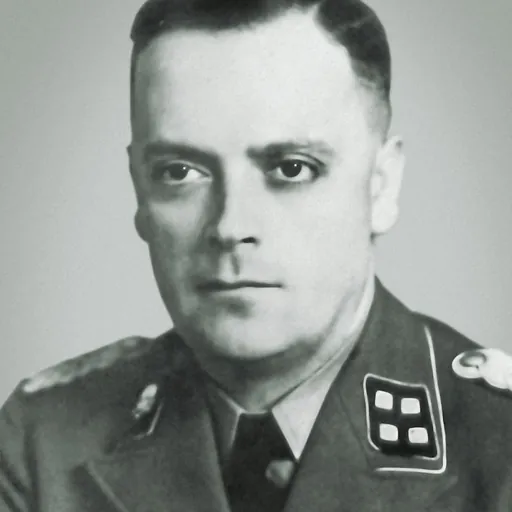
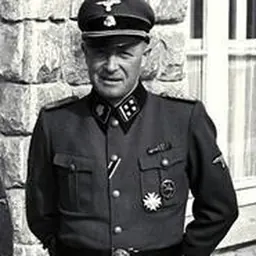
Arthur Liebehenschel
SS officer
About Arthur Liebehenschel
Lived 1901 – 1948 (aged 46). Arthur Liebehenschel was a German concentration camp guard, military personnel, holocaust perpetrator and functionary.
Arthur Liebehenschel (; 25 November 1901 – 24 January 1948) was a German commandant at the Auschwitz and Majdanek concentration camps during the Holocaust. Following the war, he was convicted of war crimes by the Polish government and executed in 1948.
Early life Liebehenschel was born on 25 November 1901 in Posen (now Poznań). He studied economics and public administration. Too young to serve in World War I, Liebehenschel enrolled in the Freikorps "Grenzschutz Ost" in 1919. He also served as a sergeant major in the German armed forces (Reichswehr) afterwards.
SS career In 1932, Liebehenschel joined the Nazi Party and in 1934 the SS, where he served in the SS-Totenkopfverbände (SS-TV). Liebehenschel became the adjutant in the Lichtenburg concentration camp, and two years later was transferred to the Concentration Camps Inspectorate in Berlin. In 1942, when the SS Main Economic and Administrative Office was founded, Liebehenschel was assigned to the Department D (Concentration Camps) as head of DI (Central Office).
On 1 December 1943, Liebehenschel was appointed commandant of Auschwitz I concentration camp, succeeding Rudolf Höss. While continuing mass executions, he made some minor "improvements" including removing the standing cells and halting the selections to gas chambers among regular prisoners. According to Hermann Langbein, a prisoner at Auschwitz infirmary: "in general one could establish that even those SS members who were very bloodthirsty before became a bit more reserved because they realized that their fanaticism would not necessarily be tolerated anymore."
Family Liebehenschel had one son and three daughters by his first wife, Gertrud, the youngest of whom, Barbara Cherish (born 1943), now lives in the United States.
In 2009, Cherish published her book My Father, the Auschwitz Commandant, in which she outlined actions by Liebehenschel that improved the prisoners' lives, but also discussed his participation in a genocidal system. Together with another daughter, Antje, Cherish was interviewed in 2002 by ZDF, the German television channel, about living with their father's guilt. Liebehenschel had a son by his second wife, Anneliese. Liebehenschel's first wife, whom he left during the war, suffered from mental health issues after the war and committed suicide in a hospital for the mentally ill in 1966.
Don’t just read it —
keep it.
Full-length biographies made to live with: read them, listen on the way to work, watch them tonight.
- E-book
- Audio
- Video
Instant download · yours to keep · every purchase keeps this site free
Important facts
People in Arthur Liebehenschel's life
Named in this biography and alive at the same time

Related people
Same field, nearest in time

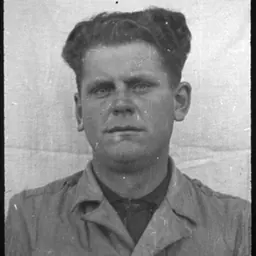

Contemporaries
People whose lives overlapped Arthur Liebehenschel's


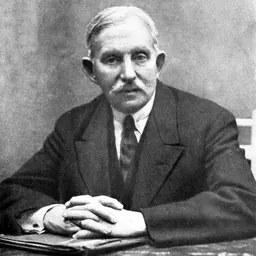

Frequently asked questions
Who was Arthur Liebehenschel?
SS officer (1901–1948)
When was Arthur Liebehenschel born?
Arthur Liebehenschel was born on 25 November 1901 in Poznań.
When did Arthur Liebehenschel die?
Arthur Liebehenschel died on 24 January 1948 in Kraków.
What was Arthur Liebehenschel's occupation?
Arthur Liebehenschel was a concentration camp guard, military personnel, holocaust perpetrator and functionary.
What nationality was Arthur Liebehenschel?
Arthur Liebehenschel was German.
Sources & further reading
· Wikipedia: Arthur Liebehenschel
· DBpedia: Arthur Liebehenschel
Cite this page
APA: Biography.guide. (2026). Arthur Liebehenschel. https://biography.guide/arthur-liebehenschel/
MLA: "Arthur Liebehenschel." Biography.guide, https://biography.guide/arthur-liebehenschel/.
Chicago: "Arthur Liebehenschel." Biography.guide. https://biography.guide/arthur-liebehenschel/.
Data last updated: 2026-09-24 · Spot an error? Report a correction.
Portrait: Wikimedia Commons · author & licence
Page generated 2026-09-27 05:08 UTC