
About Franklin W. Smith
Lived 1826 – 1911 (aged 85). Franklin W. Smith was an American writer.
Franklin Webster Smith (1826–1911) was an American idealistic reformer who made his fortune as a Boston hardware merchant. He was an early abolitionist, defendant in a civilian court-martial in 1864, author, and architectural enthusiast who proposed transforming Washington, D.C., into a "capital of beauty and cultural knowledge".
Early life Franklin Smith was born into a prominent Beacon Hill family in Boston, Massachusetts on October 9, 1826. His father, Benjamin, was the Tax Collector for the Port of Boston, and his great-grandfather, Urian Oakes, was president of Harvard University.
Benjamin and Mary Oakes Smith were his mother and father, and he was the younger brother of Mary O. (Loud) and Benjamin G. Smith, and the YMCA of Boston was the first chapter of the organization in the United States. Smith was elected their first president in 1855. and was several years younger than he. They had three children who lived to adulthood: George Stuart, born in 1863; Lillian, born in 1865; and Nina, born in 1877.
U.S. Navy vs Franklin W. Smith
Reformer Smith Brothers did considerable trade with the military. Whenever Franklin observed dishonesty, he felt compelled to report it to authorities, then wrote an account of each offense, had it printed, and distributed the pamphlets throughout the city. He wrote to the chairman of the House Naval Affairs Committee in 1863 and testified before a Senate committee, resulting in the passage of a law simplifying honest bidding and making manipulation difficult. Smith identified the names of clerks who accepted bribes and created an Analysis of Certain Contracts for the United States Secretary of the Navy. The report showed how specific contractors were able to consistently bid low. Retail Honest Other price bidder bidder item A 100 110 75 The other bidder learns that very few or none of item A item B 50 60 90 will be purchased, so he prices that article artificially === === === low and can price item B ridiculously high as long as total 160 170 165 his total bid is below that of the honest bidder.
The naval bureau chiefs were angered that a civilian contractor questioned their integrity and embarrassed them by appearing before Congress and documenting the charges. Instead of eliminating the dishonesty in their subordinates, they targeted the Smith Brothers. Every transaction with the company was examined, and justification was demanded for every error or imperfect item supplied by the company. Despite the scrutiny, Smith was always able to provide a convincing explanation.
Lincoln agreed and pledged, "If I find that men have been pursuing the Smiths, I will lay my long hand upon them, no matter who they are."
After reflection, the president wrote his decision to Welles, the court-martial board and the Navy:
I am unwilling for the sentence to stand and be executed, to any extent, in this case. In the absence of a more adequate motive than the evidence discloses, I am wholly unable to believe in the existence of criminal or fraudulent intent on the part of one of such well-established good character as is the accused. If the evidence went as far toward establishing a guilty profit of one or two hundred thousand dollars, as it does of one or two hundred dollars, the case would, on the question of guilt, bear a far different aspect. That on this contract, involving from one million to twelve hundred thousand dollars, the contractors should attempt a fraud which at the most could profit them only one or two hundred, or even one thousand dollars, is to my mind beyond the power of rational belief. That they did not, in such a case, strike for greater gains proves that they did not, with guilty or fraudulent intent, strike at all. The judgment and sentence are disapproved and declared null, and the accused ordered to be discharged. The board selected a committee to investigate possible locations for a settlement. After learning that the Cincinnati Southern Railroad was constructing a rail line to the area, they chose the Cumberland Plateau in Tennessee. Smith, who was president of the board, travelled to Tennessee in 1878 and selected a site, engaged a surveyor to plot the town, and an architect to design a hotel there. The location, which Smith named Plateau City, was the most beautiful he found. It overlooked river gorges, contained broad hills and had sweeping mountain vistas, but it was seven long miles from the railroad. By this time, the depression was ending, and unemployment was falling. A few Bostonians were reconsidering their investment in the venture, so Smith found additional investors through Thomas Hughes, the English social reformer. Hughes wanted to establish a utopian settlement for younger sons of English gentry which was classless, because class conventions in England prevented those born into high society from becoming tradesmen or farmers. On Lake Geneva in Switzerland, Smith observed the construction of a Château which used sand from the lake bottom to make concrete; thus he solved his question of building material. The Zorayda was not a copy of the Alhambra; it was an amalgamation of Moorish style.
Revolution Moorish Revival architecture became the style of choice in St. Augustine. Across the country, building construction utilizing poured concrete became all the rage and replaced more costly brick in many applications.
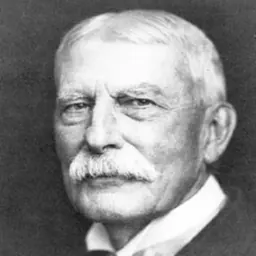
In 1883, Henry Morrison Flagler and his new, young wife traveled to St. Augustine for their honeymoon and were impressed with Villa Zorayda. Flagler offered to buy it for his bride, but Smith would not sell. However, he planted the seed of St. Augustine's and Florida's future in Flagler's mind.
Flagler returned to St. Augustine in 1885 and made Smith an offer. If Smith could raise $50,000, Flagler would invest $150,000 and they would build a hotel together. Perhaps fortunately for Smith, he couldn't come up with the funds, so Flagler began construction of the 540-room Ponce de León Hotel by himself, but spent several times his original estimate. Smith helped train the masons on the mixing and pouring techniques he used on Zorayda.
Hotel
Henry Flagler sold Smith the land on which Smith built the Casa Monica Hotel in 1887. The Casa Monica is an impressive five-story structure, wide with towers on each end rising , topped with tiled roofs. There are architectural features including turrets, balconies, parapets, ornate railings, cornices, arches, and battlements on the exterior, all composed of poured concrete and coquina. for $325,000. Smith built a shopping arcade across from the hotels where the hotel guests could spend money.
Pompeia After selling the Casa Monica, Smith left St. Augustine and moved to Saratoga Springs, New York. He wanted to create something educational to add culture to the town instead of gambling and horse racing for which it was known. Beginning in 1888, Smith built a full-scale reconstruction of a compilation of villas described in Edward Bulwer-Lytton's novel, The Last Days of Pompeii. The structure was wide and deep, for a total of . It was completed in 1889 and named Pompeia, or House of Pansa and furnished in the style of that era, 79 A.D. Smith commissioned artists and historians to copy the architecture, statues and paintings that would present a picture of the lifestyle of a Roman nobleman nearly two thousand years ago. Many of the artifacts and sculptures he purchased in Europe were displayed in the Pompeia.
The structure became a popular attraction for visitors, drawing over 60,000 people in the first four years.
Stupendous scheme Franklin Smith travelled Europe extensively during his lifetime, studying the great architectural achievements and art from bygone eras. For one hundred years, the United States had directed its efforts toward industrial and commercial development while neglecting cultural development. Because America had no equivalent to the great national museums abroad, Smith began to form a plan for Washington, D.C., that would include the best work from eight major civilizations in history.
In the Spring of 1890, noted architect James Renwick Jr. was in Florida working on the bell tower design for the Cathedral Basilica of St. Augustine. One evening, he and his wife listened to Smith deliver a speech to garner support for his Design and Prospectus for a National Gallery of History of Art at Washington. Renwick endorsed the idea and offered to provide drawings, plans and illustrations for the project. Smith gratefully accepted and the firm of 'Renwick, Aspinwall & Russell' spent six months completing their contribution.
In 1891, Smith paid to print his Design and Prospectus... and distributed it widely at major cities in the northeast. Smith delivered a series of lectures, beginning at the Boston Art Club, then the Maryland Institute College of Art at Baltimore, Philadelphia's Drexel Institute, and finally New York University on December 17, 1892. However, the Panic of 1893 and depression that followed forced Smith to delay his plan until the world's economies began to recover in 1898.
Smith took every opportunity to talk about his grand scheme wherever he was, and he travelled constantly. He was a charming, enthusiastic speaker, and he made his lectures interesting. He was able to persuade many influential people to endorse his vision, and gained widespread support. Smith insisted that all he needed was $10 million and of land. It was built as an example of the historical and cultural displays that Smith advocated in his "Design and Prospectus". The Halls of the Ancients opened on February 4, 1899, with the entrance based on Great Hypostyle Hall, Karnak. Besides Egypt, the museum contained Greek and Roman sections that included furnishings and works of art that were historically accurate reproductions. The New York Times called it "A novel, artistic and educational institution".
Petition Smith found a like-minded man in Massachusetts Senator George Frisbie Hoar, who presented Smith's petition to Congress on February 12, 1900. It was identified as Senate document number 209 by the 56th Congress, First Session, and 5,000 copies were printed. With no lawmaker to shepherd the legislation, it never made it out of committee.
Death Laura Smith separated from her husband during the 1890s. In the 1900 census, Franklin Smith's marital status was listed as "widowed", but Laura Smith did not die until 1915. He was buried in the Smith family plot of Mount Auburn Cemetery at Cambridge, Massachusetts.
In 2000, Franklin Smith was designated a Great Floridian by the Florida Department of State for his contributions in the development of Florida. His Great Floridian plaque is located at the Casa Monica Hotel in St. Augustine.
Publications The Conspiracy In The U. S. Navy Department Against Franklin W. Smith Of Boston, 1861-1865 Nabu Press (1865) Wooden ships superseded by iron: Cheap Iron Indispensable For The Revival Of American Commerce A. Mudge & Son (1869) The Hard Times; Agricultural Development The True Remedy (1877) The Pompeia: A Reproduction Of The House Of Pansa, In Pompeii, Buried By Vesuvius Kessinger Publishing (1889) Design & Prospectus for the National Gallery of Art and History ASIN 110497374X Gibson Brothers (1891) National Galleries Of History And Art: Descriptive Handbook Of The Halls Of The Ancients Kessinger Publishing (1900)
Don’t just read it —
keep it.
Full-length biographies made to live with: read them, listen on the way to work, watch them tonight.
- E-book
- Audio
- Video
Instant download · yours to keep · every purchase keeps this site free
Important facts
Family & relationships
People in Franklin W. Smith's life
Named in this biography and alive at the same time


Related people
Same field, nearest in time

Contemporaries
People whose lives overlapped Franklin W. Smith's





Frequently asked questions
Who was Franklin W. Smith?
American businessman (1826-1911)
When was Franklin W. Smith born?
Franklin W. Smith was born on 9 October 1826 in Boston.
When did Franklin W. Smith die?
Franklin W. Smith died on 11 October 1911 in Cambridge.
What was Franklin W. Smith's occupation?
Franklin W. Smith was a writer.
What nationality was Franklin W. Smith?
Franklin W. Smith was American.
Sources & further reading
· Wikipedia: Franklin W. Smith
Cite this page
APA: Biography.guide. (2026). Franklin W. Smith. https://biography.guide/franklin-w-smith/
MLA: "Franklin W. Smith." Biography.guide, https://biography.guide/franklin-w-smith/.
Chicago: "Franklin W. Smith." Biography.guide. https://biography.guide/franklin-w-smith/.
Data last updated: 2026-09-22 · Spot an error? Report a correction.
Page generated 2026-09-27 05:02 UTC