
About Frank J. Battisti
Lived 1922 – 1994 (aged 72). Frank J. Battisti was an American lawyer and judge.
Frank Joseph Battisti (October 4, 1922 – October 19, 1994) was a United States district judge of the United States District Court for the Northern District of Ohio. Battisti's career featured groundbreaking—and sometimes controversial—rulings, notably his finding in 1976 that the Cleveland public school system was guilty of racial segregation. Two years earlier, in 1974, he dismissed a case against eight members of the Ohio Army National Guard accused of violating the civil rights of four Kent State University students who were shot dead in 1970. In the 1980s, he presided over a high-profile case involving Cleveland autoworker John Demjanjuk, who was deported amid charges that he committed war crimes in Nazi-occupied Eastern Europe. During his decades as a jurist, Battisti was honored by various professional and civic organizations, but he was also a target of criticism.
Education and career
Battisti was born to Italian immigrant parents Eugene and Jennie (Dalesandro) Battisti, on October 4, 1922, in the Hazelton district of Youngstown, Ohio, a steel-production center near the Pennsylvania border. After graduating from Youngstown's East High School, Battisti served as an army combat engineer in the United States Army during World War II.
Federal judicial service
Battisti was nominated by President John F. Kennedy on August 23, 1961, to the United States District Court for the Northern District of Ohio, to a new seat authorized by 75 Stat. 80.
He is primarily remembered, however, for his historic ruling in Robert Anthony Reed III v. Rhodes, which found that the Board of Education for the City of Cleveland public school system had violated the law by practicing racial segregation. Gloria Battisti died at the age of 84 on January 18, 2010.
Battisti's death on October 19, 1994, received coverage in the regional and national media. Faye Kaufman, Battisti's secretary at the United States District Court for the Northern District of Ohio, reported that he died as a result of typhus and Rocky Mountain spotted fever, contracted during a yearly fishing trip in the West. Battisti's legacy was praised by Daniel McMullen, a former director of the Office on School Monitoring and Community Relations, the entity created by the district court to oversee compliance by the Board of Education with the desegregation orders. "Battisti believed and stood for something much larger than the minutiae of constitutional doctrine", McMullen said. "He possessed the intellect to understand the sweep of history". Battisti was interred at Cleveland's Calvary Cemetery.
Don’t just read it —
keep it.
Full-length biographies made to live with: read them, listen on the way to work, watch them tonight.
- E-book
- Audio
- Video
Instant download · yours to keep · every purchase keeps this site free
Important facts
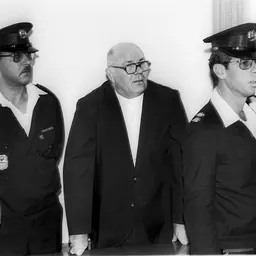
People in Frank J. Battisti's life
Named in this biography and alive at the same time



Related people
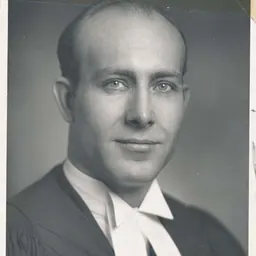
Same field, nearest in time


Contemporaries
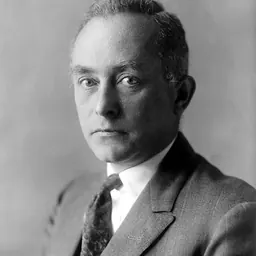
People whose lives overlapped Frank J. Battisti's




Frequently asked questions
Who was Frank J. Battisti?
United States federal judge (1922-1994)
When was Frank J. Battisti born?
Frank J. Battisti was born on 4 October 1922 in Youngstown.
When did Frank J. Battisti die?
Frank J. Battisti died on 19 October 1994 in Cleveland.
What was Frank J. Battisti's occupation?
Frank J. Battisti was a lawyer and judge.
What nationality was Frank J. Battisti?
Frank J. Battisti was American.
Sources & further reading
· Wikipedia: Frank J. Battisti
Cite this page
APA: Biography.guide. (2026). Frank J. Battisti. https://biography.guide/frank-j-battisti/
MLA: "Frank J. Battisti." Biography.guide, https://biography.guide/frank-j-battisti/.
Chicago: "Frank J. Battisti." Biography.guide. https://biography.guide/frank-j-battisti/.
Data last updated: 2026-09-20 · Spot an error? Report a correction.
Page generated 2026-09-27 05:28 UTC