
About Frank Graham
Lived 1893 – 1965 (aged 71). Frank Graham was an American sports journalist and sports journalism.
Frank Graham Sr. (November 12, 1893 – March 9, 1965) was an American sportswriter and biographer. He covered sports in New York for the New York Sun from 1915 to 1943 and for the New York Journal-American from 1945 to 1965. He was also a successful author, writing biographies of politician Al Smith and athletes Lou Gehrig and John McGraw, as well as histories of the New York Yankees, New York Giants and Brooklyn Dodgers. Graham's writing style was notable for his use of lengthy passages of "unrelieved dialogue" in developing portraits of the persons about whom he wrote. Graham was posthumously honored by the Baseball Writers' Association of America with the J. G. Taylor Spink Award in 1971, and by the Boxing Writers Association of America with the A. J. Liebling Award in 1997, the highest award bestowed by each organization.
Early years Graham was born in 1893 in the East Harlem section of New York City. His mother died during child birth, and he was raised by his grandmother and sister. He contracted spinal meningitis as a boy and lost vision in one eye. He completed only one semester of high school at New York's High School of Commerce.
New York Journal-American In 1945, Graham was hired by the New York Journal-American. He wrote a column for the Journal-American known as "Graham's Corner" until 1964. Condensed versions of his columns from the Journal-American were regularly featured in Baseball Digest and have fallen into public domain. Links to a number of his better-known columns are set forth below in the "Selected articles written by Graham."
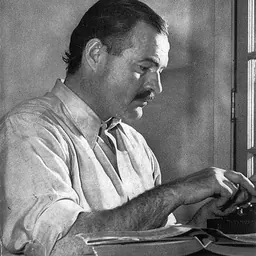
Reputation and writing style During his career as a sportswriter, Graham was known for his use of conversational dialogue as a device to develop a word portrait of athletes. His use of "unrelieved dialogue" as a writing device was said to be patterned on the work of Ernest Hemingway. In a foreword to a later edition of Graham's history of the Yankees, Leonard Koppett wrote, "He didn't take a lot of notes. He just absorbed what was being said – and what it meant in the right context – and reproduced it in graceful prose and natural speech. It is this style of narration through dialogue that makes his books come so alive."
It was through Graham's use of conversational dialogue that one of baseball's legendary quotes was recorded. Graham reported on a conversation with Leo Durocher during which New York Giants manager Mel Ott and his players walked out of the opposing dugout. Durocher pointed to them and told Graham, "Take a look at them. All nice guys. They'll finish last. Nice guys. Finish last." It was another Durocher conversation recorded by Graham that led to the nickname "Gashouse Gang" for the 1934 St. Louis Cardinals. Graham reported on a conversation between Durocher and Dizzy Dean. When asked if the Cardinals would win the pennant if they played in the American League, Durocher said, "They wouldn't let us in the other league. They would say we are a lot of gashouse ballplayers." Colleague Jimmy Cannon wrote:"A gentle man who seemed to walk on the tips of his toes as if he intended to pass through the world without disturbing anyone. ... The copy was pure and so was he. He typed it quickly on the toy machine with the dainty tapping of polite fingers. He frisked the characters of even the rogues for their good traits and cherished them for that. He was an original, this embarrassed poet, who changed sports writing, and brought to it the dignity of folk literature." Sportswriter Arthur Daley wrote that, at a dinner in the 1940s honoring Graham, Grantland Rice had asked the speakers to blast Graham with "words of scathing condemnation."
Despite his personal reputation as a gentleman, Graham was attracted to the shadowy underworld surrounding sport. In the "Dictionary of Literary Biography," Edward J. Tassinari wrote:"any of Graham's pieces reflect the New York ambience of the 1920s and the influences of Runyon and Hemingway in terms of characterization, atmosphere, and dialogue. Graham loved the offbeat, shadowy figures and rogues that dwelt on the fringes of his favorite sports – the gamblers, bookies, struggling horse trainers, and injury-riddled jockeys, and fight managers and promoters hustling for a buck or demonstrating the resiliency to continue in search of that elusive big payday."
Later years and family Graham developed cancer in 1960. When Graham appeared at the Waldorf-Astoria Hotel in 1961 to accept a lifetime achievement award from the New York chapter of the Baseball Writers' Association of America, a UPI reporter covering the event wrote: "he crowd rose to its feet in acknowledgement of one of the top writers in the country. And there weren't many dry eyes among them."
Graham's last column in the Journal-American was published in December 1964. In January 1965, Graham fell at his home in New Rochelle, New York, fracturing his skull.
Awards and honors Graham was the recipient of numerous honors and awards for his writing. These include the following: In 1957, the Boxing Writers Association of New York presented Graham with the James J. Walker Award for "long and meritorious" service to boxing. In 1958, Graham received the Grantland Rice Award, presented each year to the outstanding sportswriter in the United States. In 1961, he received the William J. Slocum Award for "long and meritorious service" to baseball. In 1997, Graham was posthumously honored by the Boxing Writers Association of America with the A. J. Liebling Award for outstanding writing about boxing.
Works
"The New York Yankees: An Informal History" (1943, G.P. Putnam's Sons)
"The Brooklyn Dodgers: An Informal History" (1945, G.P. Putnam's Sons) "Al Smith, American: An Informal Biography" (1945, G.P. Putnam's Sons) "Baseball Wit and Wisdom: Folklore of a National Pastime" (with Dick Hyman) (1952) "The New York Giants: An Informal History of a Great Baseball Club" (1952, G.P. Putnam's Sons) "Third Man in the Ring," (with Ruby Goldstein) (1959, Funk & Wagnalls)
Don’t just read it —
keep it.
Full-length biographies made to live with: read them, listen on the way to work, watch them tonight.
- E-book
- Audio
- Video
Instant download · yours to keep · every purchase keeps this site free
Important facts
People in Frank Graham's life
Named in this biography and alive at the same time




Related people
Same field, nearest in time


Contemporaries
People whose lives overlapped Frank Graham's

Frequently asked questions
Who was Frank Graham?
New York sportswriter (1893-1965)
When was Frank Graham born?
Frank Graham was born on 12 November 1893 in Harlem, New York.
When did Frank Graham die?
Frank Graham died on 9 March 1965 in The Bronx.
What was Frank Graham's occupation?
Frank Graham was a sports journalist and sports journalism.
What nationality was Frank Graham?
Frank Graham was American.
Sources & further reading
· DBpedia: Frank Graham (writer)
Cite this page
APA: Biography.guide. (2026). Frank Graham. https://biography.guide/frank-graham/
MLA: "Frank Graham." Biography.guide, https://biography.guide/frank-graham/.
Chicago: "Frank Graham." Biography.guide. https://biography.guide/frank-graham/.
Data last updated: 2026-09-22 · Spot an error? Report a correction.
Page generated 2026-09-27 05:08 UTC