
About Frank Fox
Lived 1874 – 1960 (aged 85). Frank Fox was a writer, journalist and soldier.
Early life and education Frank Ignatius Fox was born in 1874 in Adelaide, second son of Charles James Fox, one-time Latin teacher, journalist and editor of The Irish Harp and Farmers' Herald, and his wife Mary Ann (née Toole). He moved to Hobart in 1883, when his father became editor of the Tasmanian Mail, and was educated at Christ College. At an early age he wrote paragraphs for his father's paper.
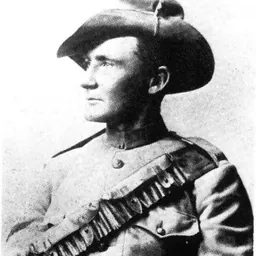
Career Fox was appointed editor of The Australian Workman in 1893, then in 1895 the (Bathurst) National Advocate, before joining The Age, where he served as chief of their reporting staff. He joined the staff of the Sydney Bulletin in 1901 and was acting editor for a time. As "Frank Renar", he published his first book Bushman and Buccaneer, a memoir of Harry Morant, which became the seminal work for subsequent books, plays and the acclaimed film Breaker Morant.
While still working for the Bulletin, Fox served from 1907 to 1909 as first editor and manager of The Lone Hand, a monthly publication of literature and poetry. Fox published a volume of political essays, From the Old Dog (Melbourne), in 1908. He was a keen horseman; riding out regularly with his literary colleagues Andrew Banjo Paterson and Norman Lindsay. In spite of the latter describing him as an "equine exhibitionist", Lindsay painted an equestrian portrait of Fox. This was considered highly unusual, as the subject matter is not in keeping with Lindsay's well-known works.
Lindsay wrote Bohemians of the Bulletin, which is illustrated with his doodles.
Fox was appointed as an assistant editor for the Morning Post in December 1909 and later in 1910, he was promoted as the news editor. He published Ramparts of Empire (1910) about the navy, Australia (1910), The British Empire (1911), Problems of the Pacific (1912) and many travel books.
Motivated by the atrocities he witnessed to the civilian population in Belgium whilst war correspondent for the Morning Post he was commissioned in the Royal Field Artillery on 13 December 1914, over age at 41, and served in France. He was twice wounded in the Battle of the Somme. In 1917–18 he was at the War Office working for MI7, publishing The Battle of the Ridges and The British Army at War, designed to educate the American Public about the British war effort. He then served as Staff Captain at the Quartermaster General's branch, General Headquarters, in France, and wrote a contemporary account of life there (GHQ, Montreuil-sur-Mer).
Journalist Australia (1892–1909) Editor, The Australian Workman, aged 18 Editor, National Advocate. Aged 21 Acting editor, Sydney Bulletin Founder, The Lone Hand
England (from 1909) Morning Post News editor 1910 War correspondent – 1912 Bulgarian Army in the Balkan War War correspondent – Belgian Army, August–December 1914. German invasion. Reporting to Brussels re atrocities against the civilian population (Order of the Crown of Belgium – in the gift of King Albert).
Soldier 1905–1919 Commissioned Australian Field Artillery 1905 Commissioned RFA 1914/19 – wounded twice at the Somme 1916. War Office (1917). GHQ – Montreuil-sur-Mer. Staff Officer in QMG Division; then War Office as Major (OBE Military; mentioned in dispatches) (1916–1919).
Author Australian military historian Craig Wilcox, author of the 2002 book Australia's Boer War, wrote:
Campaigner Australia Championed Australian federation (as editor of the National Advocate)
Britain Warned of danger of war in Europe (1909–1914) and urged preparation – in print and public platform MI7 (1917) to encourage US participation in World War I As an imperialist and a champion of Empire causes, organised: British Empire Cancer Campaign Empire Rheumatism Council Fellowship of British Empire Exhibition (for which he was knighted in 1926)
Family and personal life He married Helena Clint (d. 1958) on 13 June 1894; they had a son and two daughters. Helena Clint was granddaughter of Alfred Clint, President of the Society of British Artists, great-granddaughter of George Clint ARA, and great-niece of Scipio Clint.
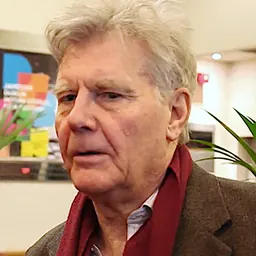
Former Conservative Member of Parliament Charles Goodson-Wickes is Frank Fox's great-grandson and literary executor.
Don’t just read it —
keep it.
Full-length biographies made to live with: read them, listen on the way to work, watch them tonight.
- E-book
- Audio
- Video
Instant download · yours to keep · every purchase keeps this site free
Important facts
Family & relationships
People in Frank Fox's life
Named in this biography and alive at the same time



Related people
Same field, nearest in time

Contemporaries
People whose lives overlapped Frank Fox's

Frequently asked questions
Who was Frank Fox?
Australian newspaperman and author (1874-1960)
When was Frank Fox born?
Frank Fox was born on 12 August 1874 in Adelaide.
When did Frank Fox die?
Frank Fox died on 4 March 1960 in Chichester.
What was Frank Fox's occupation?
Frank Fox was a writer, journalist and soldier.
Sources & further reading
Cite this page
APA: Biography.guide. (2026). Frank Fox. https://biography.guide/frank-fox/
MLA: "Frank Fox." Biography.guide, https://biography.guide/frank-fox/.
Chicago: "Frank Fox." Biography.guide. https://biography.guide/frank-fox/.
Data last updated: 2026-09-22 · Spot an error? Report a correction.
Page generated 2026-09-27 05:31 UTC