
About Alfred Clint
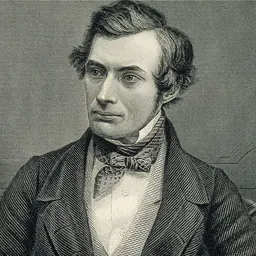
Lived 1843 – 1924 (aged 80–81). Alfred Clint was an Australian cartoonist and painter.
Alfred Clint (28 August 1842 – 20 November 1923) was an Australian theatrical scene painter, illustrator and cartoonist. He was born in England into a distinguished family of artists and emigrated to Australia in the 1860s. In 1867 Clint began working as a theatrical scene-painter as an assistant to John Hennings at the Theatre Royal in Melbourne. After several years he was working in Sydney as an established scenic artist. In 1873 he relocated to Adelaide where he also worked as a cartoonist and illustrator, developing a reputation for crowd scenes with identifiable subjects. In 1875 Clint returned to Sydney where he continued to work as a theatrical scene-artist as well as a cartoonist and illustrator. He was on the staff of Sydney Punch from 1875 to 1888 and also contributed to other publications. By the late 1890s Clint's eldest son was working alongside his father as a theatrical scene-painter. In 1919 Clint and his three sons established a scene-painting studio at Camperdown.
Biography
Early years
Alfred Clint was born on 28 August 1842 in Kensington, England, the son of the landscape and marine painter Alfred Clint and grandson of portraitist George Clint.
Clint emigrated to Australia as a young man, possibly as early as 1860. In December 1867 Clint and John Little were listed as assistants to Henning in designing and painting "the new and magnificent scenery" for the Christmas pantomime at the Theatre Royal, Tom, Tom, the Piper's Son, and Mary, Mary, Quite Contrary (written by W. M. Akhurst).
By July 1869 Clint and John Little were assisting John Hennings in Sydney, painting the scenery for After Dark (described as "a tale of London life"), being staged at the Prince of Wales Opera House. Clint remained in Sydney after being appointed scenic artist of the Prince of Wales Opera House, where he began working on scenery for the forthcoming production of The Tempest, which opened in September 1869 and was advertised as having "entirely New, Magnificent, and Brilliant Scenery by Mr. Alfred Clint, from the Theatre Royal, Melbourne". A review of The Tempest in Sydney Punch complimented Clint's "ability he has displayed as the scenic artist... having established himself in the good opinion of the Sydney public". Several of his theatrical scenes were considered noteworthy: "The wreck of the king's ship, the surf breaking on the beach, and Prospero's cell were quite triumphs of scenic skill".
In March 1871 Clint and the theatrical mechanist John Renno presented a diorama at the Sydney School of Arts incorporating scenes of the Franco-Prussian war and views of Sydney.
Alfred Clint and Mary Jane Percy Lake were married in Sydney on 22 June 1872. The couple had eight children, born between 1873 and 1893.
Adelaide
By March 1873 Clint had relocated to Adelaide after being engaged by Samuel Lazar as scenic artist for the Theatre Royal. In July 1873 it was written that Clint's "scenery on the stage of the Royal has won so much well-deserved admiration during the recent dramatic season".
While living in Adelaide Clint was the chief cartoonist for the short-lived weekly illustrated newspaper The Mirror, first published in July 1873. His images in the first edition included "representations of street scenes in Adelaide, and an excellent portrait of Governor Musgrave, who is exhibited as being warmly welcomed by fair Australia on his landing". Clint's first painting for Morton depicted "a number of colonists" assembled in the interior of the Adelaide Post Office building, "and was much admired for the excellency of most of the likenesses". His second picture, publicly displayed in March 1874, depicted a street scene in King William Street as Governor Musgrave's carriage was passing. Included in the painting as spectators were "all classes of the community", numbering about one hundred, including "brokers, and M.P.'s, knights, C.M.G.'s, editors, clergymen, lawyers, publicans, and other sinners".
Return to Sydney
'A Night Jar', illustration from Southerly Busters by 'Ironbark' (1878).
Clint returned to Sydney by the end of 1875, where the family settled at Balmain. Clint remained with Sydney Punch until its closure in 1888. For most of his time with the newspaper he alternated with E. Montagu Scott as the feature cartoonist the full-page political cartoon in each issue.
Clint provided the illustrations for Southerly Busters, a book of collected verse by 'Ironbark' (G. Herbert Gibson), published in 1878.
In its issue of 4 October 1879 Sydney Punch published a chromolithograph folio sheet, illustrated by Clint, as a supplement to celebrate the opening in Sydney of the International Exhibition in a purpose-built exhibition building called the Garden Palace. His drawing was a robust and detailed crowd scene, characteristic of the artist's work, representing a procession which included over one hundred recognisable colonial identities as well as representatives of other nations.
Clint was a founding member of the Art Society of New South Wales. His contributions to the Society's first exhibition in December 1880 were "eight or nine of those clever characteristic sketches of public men which he hits off so quickly and so well".
Clint was briefly employed by The Bulletin magazine in early 1883, though his cartoons do not appear after the American cartoonist Livingston Hopkins began work in May 1883, at which time the magazine was revamped with additional pages and illustrations.
In the late 1870s and early 1880s, at the height of his career as an artist of theatrical scenery, Clint was recognised as one of the four masters of scenic art in the Australian theatre alongside John Hennings, George Gordon and John Brunton. After his return to Sydney in 1875 Clint worked as the scenic artist in various theatres: the Royal Victoria, Criterion, Her Majesty's and Prince of Wales Opera House. The critic for The Australasian newspaper was fulsome in his praises for the scenery of Clint and J. R. Setright for the pantomime Amphibio, the Rhine Queen, which opened in December 1879 at the Victoria Theatre: "The scenery is in the truest sense gorgeous, and the transformation eminently lovely". From the early 1880s and into the late 1890s Clint was responsible for theatrical scenery for the productions staged by George Rignold. When the newly-built Criterion Theatre opened in 1886, the theatre's drop-scene was a painting of 'The Landing of Captain Cook at Kurnell' by Alfred Clint.
Alfred Clint's three sons – Alfred (junior), George and Sydney – studied scene-painting under their father's tuition.
By the late 1890s Clint's eldest son, Alfred Clint (junior), was working with his father in the design and painting of theatrical scenery. A production of Charles Darrell's 'The Power and the Glory', staged by Charles Holloway at Melbourne's Theatre Royal in November 1899, advertised "new and superb scenery" by Clint and Edward Vaughan, assisted by "W. Little and A. Clint, jun." Darrell's melodrama opened in Sydney at the Lyceum Theatre on 23 December 1899.
From about the late 1890s Clint (senior) was described as being in less than robust health, "but he possessed a recuperative constitution and always managed to pull through".
Family George Clint (1770–1854) ARA portraitist Raphael Clint (1797–1849) lithographer and printer in Australia, returned to UK c. 1885. Scipio Clint (1805–1839) medal and seal engraver Alfred Clint (1807–1883) known for coastal landscapes Alfred Clint (1842 – 20 November 1923) married Mary Jane Percy Lake (1851–1918) on 22 June 1872 Ada Helena Clint (1873–1958), married Frank Fox (1874–1960) on 13 June 1894. Alfred Thomas Clint (27 October 1878 – 5 September 1936), married Gwendoline --; scene-painter and watercolourist. Ethel Mary Clint (b. 1881), married Walter James Dale on 31 March 1905. George Edmund Clint (28 July 1883 – 14 April 1952); scene-painter.
B.
Don’t just read it —
keep it.
Full-length biographies made to live with: read them, listen on the way to work, watch them tonight.
- E-book
- Audio
- Video
Instant download · yours to keep · every purchase keeps this site free
Important facts
People in Alfred Clint's life
Named in this biography and alive at the same time





Related people
Same field, nearest in time



Contemporaries
People whose lives overlapped Alfred Clint's
Frequently asked questions
Who was Alfred Clint?
Australian cartoonist and theatrical scene painter (1843-1924)
When was Alfred Clint born?
Alfred Clint was born in 1843 in Kensington.
When did Alfred Clint die?
Alfred Clint died in 1924 in Windsor.
What was Alfred Clint's occupation?
Alfred Clint was a cartoonist and painter.
What nationality was Alfred Clint?
Alfred Clint was Australian.
Sources & further reading
· DBpedia: Alfred Clint (Australian painter)
Cite this page
APA: Biography.guide. (2026). Alfred Clint. https://biography.guide/alfred-clint/
MLA: "Alfred Clint." Biography.guide, https://biography.guide/alfred-clint/.
Chicago: "Alfred Clint." Biography.guide. https://biography.guide/alfred-clint/.
Data last updated: 2026-09-20 · Spot an error? Report a correction.
Page generated 2026-09-27 05:21 UTC