
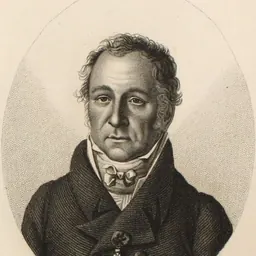
Francisco Luis Héctor de Carondelet
Governor of El Salvador, Louisiana and West Florida
About Francisco Luis Héctor de Carondelet
Lived 1748 – 1807 (aged 59). Francisco Luis Héctor de Carondelet was a politician, military personnel and governor.
Francisco Luis Héctor de Carondelet y Bosoist, 5th Baron of Carondelet (1748–1807) was a Spanish administrator of partial Burgundian descent in the employ of the Spanish Empire. He was a Knight of Malta.
Biography
Youth and military career Carondelet entered the service of the King of Spain in 1762, at age fifteen. By 1781, he commanded the IV Division, which fought at the Siege of Pensacola in 1781. Upon his return to Spain in 1787, he was attached to the Flandres Regimiento, with the rank of Infantry Colonel, and was received in the Order of Malta.
Governor of El Salvador (1789 – 1791) Carondelet was named governor of El Salvador in 1789. Because the local indigenous population working in the indigo industry had declined greatly, Carondolet recruited Spanish laborers. Their descendants are among the blonde and fair-skinned people of today's Chalatenango Department.
About 1793, he granted land near Cape Girardeau, Missouri, to the Black Bob Band of Hathawekela Shawnee.
U.S. expansion Carondelet became concerned about westward U.S. expansion and was involved in the West Florida Controversy, which concerned the border between West Florida and the United States. He wanted to thwart the American policy of trying to secure unchallenged access to the Mississippi River, a goal which made Spanish colonial officials fear for the independence of Louisiana and New Spain. Working through an alliance with Native American tribes, Carondelet succeeded in thwarting westward American expansion for several years.
However, the U.S. finally gained ratification (1795) of Pinckney's Treaty, also known as the Treaty of San Lorenzo. It established intentions of friendship between the U.S. and Spain and defined the boundaries between the U.S. and the Spanish colonies. The treaty guaranteed the United States navigation rights on the Mississippi River.
Slave code Upon taking up his post he had to deal with the Mina uprising in the vicinity of New Roads. Having assumed office just after the first stages of the Haitian Revolution, Carondelet was concerned that mistreatment of slaves might provoke additional rebellions in Louisiana; hence, he promptly introduced a slave code giving some protection to the slaves, which prescribed standards for quantity and quality of food and clothing.
This initiative created a certain amount of tension between him and the slaveholders. Carondelet responded by developing a stronger relationship with the slave and free-colored populations. He commissioned 29 free men of color in the militia and was proud of the three companies he formed with soldiers of African descent.
President of the Real Audiencia de Quito (Ecuador) (1799 – 1807) After his term in Louisiana, Carondelet served as President of the Real Audiencia de Quito from 1799 through his death in 1807, supervising territory including present-day Ecuador, parts of Peru and Colombia. He was known as a moderate person who refrained from the arrogance and arbitrary behavior so often associated with functionaries. In 1803 he assisted the naturalists Alexander von Humboldt and Aimé Bonpland during their visit to Quito. An educated man with progressive interests, he also helped the naturalist and geographer Francisco José de Caldas and the orator José Mejía Lequerica.
In 1803, Indian insurrections took place in Guamote, Columbe and Yaruquies. Carondolet awarded the Cacique de Licán, José Leandro Zepla y Oro, with a position as the Regidor del Cabildo de Riobamba in 1805, for his loyalty during these uprisings. Carondolet improved the road to Guayaquil and was a patron of the construction of the dome of the Cathedral of Quito. After his death on August 10, 1807, he was interred at the Cathedral.
Namesakes in North and South America The Carondelet Canal in New Orleans was constructed on his orders and named for him. (It was filled in during the 1930s, with its turning basin the origin for the name of Basin Street.) Carondelet Street in New Orleans Carondelet Farm in San Diego, California, named after the New Orleans Street Carondelet Street in Mandeville, Louisiana Carondelet, a neighborhood in St. Louis, Missouri Carondelet Drive in Kansas City, MO (named for the St. Joseph Medical Center (Kansas City, Missouri), originally founded by Sisters of St. Joseph of Carondelet from St. Louis, Missouri) Fort Carondelet, a fort located on the Osage River in Vernon County, Missouri Carondelet Presidential Palace in Quito, Ecuador Carondelet Street in Dallas, TX. No longer exists. When the railroads entered Dallas after 1872, trackage rights in lower North Dallas affected several pioneer streets. Carondelet was chopped off and closed on its way to the river bank to permit the Missouri-Kansas-Texas Railroad to build yards and station facilities. The stub end of the street from Market eastward then lost its name when it became a part of Ross Avenue.
Don’t just read it —
keep it.
Full-length biographies made to live with: read them, listen on the way to work, watch them tonight.
- E-book
- Audio
- Video
Instant download · yours to keep · every purchase keeps this site free
Important facts
People in Francisco Luis Héctor de Carondelet's life
Named in this biography and alive at the same time

Related people
Same field, nearest in time



Contemporaries
People whose lives overlapped Francisco Luis Héctor de Carondelet's





Frequently asked questions
Who was Francisco Luis Héctor de Carondelet?
Governor of El Salvador, Louisiana and West Florida
When was Francisco Luis Héctor de Carondelet born?
Francisco Luis Héctor de Carondelet was born on 29 July 1748 in Noyelles-sur-Selle, Cambrai.
When did Francisco Luis Héctor de Carondelet die?
Francisco Luis Héctor de Carondelet died on 10 August 1807 in Quito.
What was Francisco Luis Héctor de Carondelet's occupation?
Francisco Luis Héctor de Carondelet was a politician, military personnel and governor.
What nationality was Francisco Luis Héctor de Carondelet?
Francisco Luis Héctor de Carondelet's recorded nationality: Spanish Empire.
Sources & further reading
· Wikipedia: Francisco Luis Héctor de Carondelet
· DBpedia: Francisco Luis Héctor de Carondelet
Cite this page
APA: Biography.guide. (2026). Francisco Luis Héctor de Carondelet. https://biography.guide/francisco-luis-hector-de-carondelet/
MLA: "Francisco Luis Héctor de Carondelet." Biography.guide, https://biography.guide/francisco-luis-hector-de-carondelet/.
Chicago: "Francisco Luis Héctor de Carondelet." Biography.guide. https://biography.guide/francisco-luis-hector-de-carondelet/.
Data last updated: 2026-09-20 · Spot an error? Report a correction.
Page generated 2026-09-27 05:21 UTC