
Francisco José de Caldas
Neogranadine lawyer and scientist
About Francisco José de Caldas
Lived 1768 – 1816 (aged 48). Francisco José de Caldas was a Colombian botanist, military engineer, journalist, astronomer, lawyer and engineer, known for Inventor, Mathematician and Wikt:precursor.
Francisco José de Caldas (October 4, 1768 – October 28, 1816) was a Neogranadine lawyer, military engineer, self-taught naturalist, mathematician, geographer and inventor (he created the first hypsometer), who was executed by orders of General Pablo Morillo during the Spanish American Reconquista for being a forerunner of the fight for the independence of New Granada (modern day Colombia). Arguably the first Colombian scientist, he is often nicknamed "El Sabio" (Spanish for "The learned," "The sage" or "The wise").
Biography
Early life Caldas was born in Popayán, in 1768. His parents were José de Caldas and Vicenta Tenorio, the aunt of fellow independence hero Camilo Torres Tenorio. Like his cousin, Caldas studied in the Seminary of Popayán, where he met others of the leaders of the Colombian independence movement like Francisco Antonio Zea. Also like his cousin, in 1788 and pressed by his father he moved to Santafé (modern day Bogotá) to study jurisprudence in the Colegio del Rosario, where he obtained a bachelor's degree in 1793. As a student, Caldas was always interested in the study of mathematics, astronomy and the natural sciences, and he only studied law as a result of his father's pressure. Following this, he relocated to Popayán, to administer the family businesses and as a trader, a craft in which he was very unsuccessful.
Scientific and academic career
During his many business trips to Santafé, Caldas was more concerned with scientific observation and devoted long hours to determine geographical coordinates and to make observations. He was particularly concerned with determining the geographical location and altitude of different places, so he was always using a barometer, a thermometer, and a compass. His interest on determining altitude and the fortuitous breaking of a thermometer led to his development of the hypsometer, an apparatus that determined altitude as a function of the boiling point of water. His studies and records of the time survive in both his letters and memoirs, including a map of the course of the Prado river in the department of Tolima, notes about medicinal trees, a description of the stone hieroglyphs in Aipe and of the statues at San Agustín, experiments to determine whether an insect was venomous, and many others.
Following a trip to Quito, he then traveled to Ibarra to meet Alexander von Humboldt and Aimé Bonpland, on December 31, 1801. Considering that he was situated in the relative backwater of Popayán, Humboldt was impressed with his scientific accomplishments. Caldas gave Humboldt and Bonpland data on the altitudes in the region and became their personal friend, and was mentored by them in the study of botany. Together they did some exploration in the surroundings of Quito. Unable to continue traveling with Humboldt, he devoted wholeheartedly to scientific enterprises, and to write his memoirs. The Diario published a complete description of all the events surrounding the creation of the Junta, and published articles about political economics and the political decisions of the Junta. Caldas kept publishing his Scientific Memoirs during this period. As an engineer, Caldas was in charge of erecting buildings, powder mills, and gun factories, as well as coin minting. He also taught in the Academy of Engineers in Medellín, in 1814. by orders of Morillo, Count of Cartagena. When Caldas was about to be executed and the people present at the place appealed for the life of the scientist, Morillo responded: "Spain does not need savants" (Spanish: "España no necesita sabios"). Before dying Caldas wrote on the wall a large Greek letter θ, which has been interpreted as exclaiming "Oh long and dark departure!" (Spanish: ¡Oh larga y negra partida!. In classical Athens, Theta was used as an abbreviation for the Greek θάνατος (thanatos, “death”).
His body was buried in the Church of Veracruz, which was later turned into the Panteón Nacional (National Pantheon) but later moved to the Panteón de los Próceres in his hometown, Popayán.
Legacy Caldas helped fund the New Kingdom of Granada Seminary, intended to be a scientific institution during the first decade of the 1800s. In 1810, he founded the Diario Político de Santa Fe (Political Diary of Santa Fe) which ultimately defended the independentist movement. During this time Caldas became engineer's colonel designing an artillery apparatus for the revolutionaries.
Due to his work in the Army Engineer Corps, he is considered by some authors the "father of Colombian engineering".
The Colombian department of Caldas is named for Francisco José de Caldas.
The Francisco José de Caldas District University, a large public university in Bogotá is named after him.
The “Francisco José de Caldas” Scholarship for Doctoral Programs is awarded by the Departamento Administrativo de Ciencia, Tecnología e Innovación (Colciencias) for Colombians to study toward a PhD.
Caldas' face appeared in the $20 Colombian peso banknotes.
Books "El estado de la geografía del virreinato con relación a la economía y al comercio" (1807) "El influjo del clima sobre los seres organizados" (1808) "La Memoria sobre la Nivelación de las Plantas del Ecuador, Historia de Nuestra Revolución, Educación de Menores, Importancia del Cultivo de la Cochinilla y Chinchografía y Geografía de los Arboles de Quina
Don’t just read it —
keep it.
Full-length biographies made to live with: read them, listen on the way to work, watch them tonight.
- E-book
- Audio
- Video
Instant download · yours to keep · every purchase keeps this site free
Important facts
People in Francisco José de Caldas's life
Named in this biography and alive at the same time


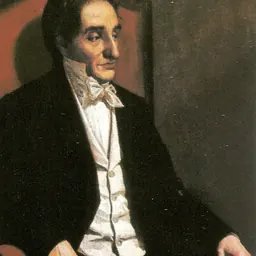

Related people
Same field, nearest in time


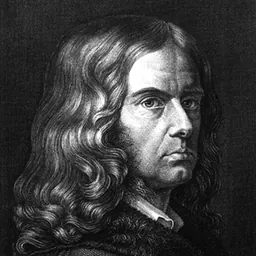
Contemporaries
People whose lives overlapped Francisco José de Caldas's





Frequently asked questions
Who was Francisco José de Caldas?
Neogranadine lawyer and scientist (1768-1816)
When was Francisco José de Caldas born?
Francisco José de Caldas was born on 4 October 1768 in Popayán.
When did Francisco José de Caldas die?
Francisco José de Caldas died on 30 October 1816 in Bogotá.
What was Francisco José de Caldas's occupation?
Francisco José de Caldas was a botanist, military engineer, journalist, astronomer, lawyer and engineer.
What was Francisco José de Caldas known for?
Francisco José de Caldas was known for Inventor, Mathematician and Wikt:precursor.
What nationality was Francisco José de Caldas?
Francisco José de Caldas was Colombian.
Sources & further reading
· Wikipedia: Francisco José de Caldas
· DBpedia: Francisco José de Caldas
Cite this page
APA: Biography.guide. (2026). Francisco José de Caldas. https://biography.guide/francisco-jose-de-caldas/
MLA: "Francisco José de Caldas." Biography.guide, https://biography.guide/francisco-jose-de-caldas/.
Chicago: "Francisco José de Caldas." Biography.guide. https://biography.guide/francisco-jose-de-caldas/.
Data last updated: 2026-09-20 · Spot an error? Report a correction.
Page generated 2026-09-27 05:27 UTC