
About Francisco Ichaso y Macías
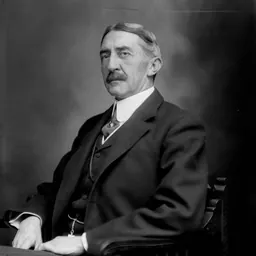
Lived 1900 – 1962. Francisco Ichaso y Macías was a Cuban essayist.
Francisco Ichaso Macías was a Cuban journalist, lawyer, and political thinker who played a significant role in Cuba’s intellectual and political landscape during the early and mid-20th century. He served as a member of the Havana City Council, and Director of the Press and Information Office. He was a member of the Minorista Group, and the President of PEN International's Cuba Club. He was also present at the Protest of the Thirteen, the first major protest of the Cuban intellectual class since Cuban independence.
Early life and education Born in Cienfuegos, Las Villas, Ichaso was the son of León Ichaso Díaz, a Basque writer and journalist, and Rafaela Macías Guerra, of Canarian descent. He was the eldest of five children. His family relocated to Havana when his father became deputy director of Diario de la Marina, one of Cuba's leading newspapers. Ichaso was educated at the Colegio de Belén and later earned a Doctorate in Law from the University of Havana at the age of 21. On May 18, 1923, he took part in the Protest of the Thirteen, a demonstration against the administration of President Alfredo Zayas Alfonso, and was a signatory to the "Manifesto of the Group of Thirteen." Later, he was a member of the Minorista Group, a collective that sought to address corruption and advocate for social change.
Political involvement Ichaso co-founded the ABC political party alongside Joaquín Martínez Sáenz, Jorge Mañach Robato, and Carlos Saladrigas Zayas. The party was instrumental in opposing the government of President Gerardo Machado Morales. Following Machado’s downfall, Ichaso was appointed Director of the Press and Information Office of the Presidential Palace and later elected as a city councilor.
His advocacy for human rights was reflected in his 1937 book, Defensa del Hombre, which examined the ideological tensions between democratic liberalism and totalitarian regimes. The work received the prestigious Justo de Lara Award.
Upon his release, he was placed under house arrest before seeking asylum at the Mexican Embassy. He left Cuba in the early 1960s and settled in Mexico.
Despite his declining health, Ichaso continued his journalistic work until his death on October 28, 1962. His final editorial for El Excélsior de México was published posthumously, accompanied by an obituary recognizing his dedication to Cuba.
Don’t just read it —
keep it.
Full-length biographies made to live with: read them, listen on the way to work, watch them tonight.
- E-book
- Audio
- Video
Instant download · yours to keep · every purchase keeps this site free
Important facts
People in Francisco Ichaso y Macías's life
Named in this biography and alive at the same time



Related people
Same field, nearest in time




Contemporaries
People whose lives overlapped Francisco Ichaso y Macías's



Frequently asked questions
Who was Francisco Ichaso y Macías?
Cuban essayist
When was Francisco Ichaso y Macías born?
Francisco Ichaso y Macías was born in 1900 in Cienfuegos.
When did Francisco Ichaso y Macías die?
Francisco Ichaso y Macías died in 1962 in Mexico.
What was Francisco Ichaso y Macías's occupation?
Francisco Ichaso y Macías was an essayist.
What nationality was Francisco Ichaso y Macías?
Francisco Ichaso y Macías was Cuban.
Sources & further reading
· Wikipedia: Francisco Ichaso y Macías
Cite this page
APA: Biography.guide. (2026). Francisco Ichaso y Macías. https://biography.guide/francisco-ichaso-y-macias/
MLA: "Francisco Ichaso y Macías." Biography.guide, https://biography.guide/francisco-ichaso-y-macias/.
Chicago: "Francisco Ichaso y Macías." Biography.guide. https://biography.guide/francisco-ichaso-y-macias/.
Data last updated: 2026-09-20 · Spot an error? Report a correction.
Page generated 2026-09-27 05:20 UTC