
About Francisco Barnés Salinas
Lived 1877 – 1947 (aged 70). Francisco Barnés Salinas was a Spanish politician and diplomat.
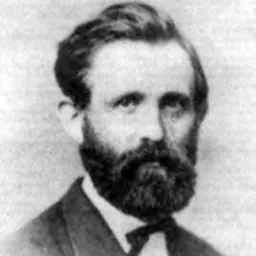
Francisco José Barnés Salinas (1877–1947) was a Spanish professor and Left Republican politician. He was Minister of Public Instruction and the Arts during the Second Spanish Republic. After the Spanish Civil War (1936–39) he went into exile in Mexico, where he died.
Early years
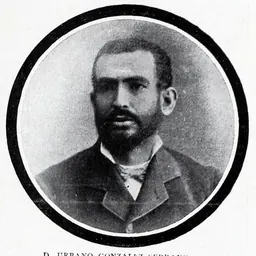
Francisco Barnés was born in Seville in 1877. He attended secondary school and studied Philosophy and Literature in Seville. In 1900 he was appointed catedrático (professor) by the Institute of Geography and History, and taught at the schools in Pamplona and Ávila. He was attached to the ideals of the Institución Libre de Enseñanza. Barnés married Dorotea González de la Calle, daughter of a well-known professor Urbano González Serrano. They had several children, of whom the youngest were Angelita and Juan. In 1920 Francisco Barnés joined the Instituto-Escuela, where he taught until 1936 when the institute was closed due to the Spanish Civil War (1936–39). He implemented various pedagogical innovations at the institute.
Political career
Barnés was active in the Republican Left party. When the Second Spanish Republic was proclaimed he was a deputy in the 1931 Constituent Assembly. He was appointed a member of the Board of Trustees of the Institución Libre de Enseñanza by ministerial order on 6 August 1931. Manuel Bartolomé Cossío was president. The board selected young teachers to undertake educational missions in the most remote and isolated villages of Spain. They were carefully selected for their ability to create relaxed and friendly but serious relationships with the villagers, to avoid shocking them in any way while introducing them to modern culture.
Barnés was appointed Minister of Public Instruction in the government of Manuel Azaña in June 1933. Barnés was Minister of Public Instruction from 12 June 1933 to 12 September 1933. He succeeded Fernando de los Ríos Urruti and was succeeded by his brother, Domingo Barnés Salinas. While Minister in 1933 he and his successors, his brother Domingo Barnés and then José Pareja Yébenes, were responsible for formulating the law that excluded religious organizations from teaching, and created secular public schools to replace the religious schools. This was enshrined in the constitution.
Barnés was again appointed Minister of Public Instruction in the government of Santiago Casares Quiroga in May 1936 and of José Giral in June 1936. Until this last appointment he continued to teach at the Instituto-Escuela. He replaced Marcelino Domingo Sanjuán as Minister of Public Instruction on 15 May 1936. For one day on 19 July 1936 at the outbreak of the civil war he was replaced by Domingo Sanjuán, then returned to office, which he held until 4 September 1936. He was replaced by Jesús Hernández Tomás. Hernández Tomás was a militant communist who launched reforms that treated education as a social function.
Later career
After leaving office in September 1936 Barnés generally avoided political office from fear of the safety of his wife and son, who had stayed in Ávila in the rebel zone when the civil war broke out. He accepted the position of inspector of the war front after the death in battle of his youngest son, Juan. He undertook some diplomatic missions for the government. He was appointed consul in Algiers in August 1937, and then consul in Gibraltar a year later. The damaged Republican destroyer José Luis Díez took refuge in Gibraltar in late August 1938. Barnés had difficulty obtaining permission from the British authorities for the sailors to disembark, which was only allowed under tight restrictions, and repairs had to be made clandestinely. The ship made an attempt to escape on 31 December 1938, then was interned at Gibraltar for the duration of the war.
After the civil war Barnés sailed from France to Mexico in the Nyassa. While in exile he became a professor at El Colegio de México. He helped create the Chapultepec Museum in Mexico City. Francisco Barnés Salinas died in Mexico City in 1947.
Don’t just read it —
keep it.
Full-length biographies made to live with: read them, listen on the way to work, watch them tonight.
- E-book
- Audio
- Video
Instant download · yours to keep · every purchase keeps this site free
Important facts
People in Francisco Barnés Salinas's life
Named in this biography and alive at the same time




Related people
Same field, nearest in time





Contemporaries
People whose lives overlapped Francisco Barnés Salinas's



Frequently asked questions
Who was Francisco Barnés Salinas?
Spanish politician
When was Francisco Barnés Salinas born?
Francisco Barnés Salinas was born on 16 June 1877 in Seville.
When did Francisco Barnés Salinas die?
Francisco Barnés Salinas died on 17 October 1947 in Mexico City, Mexico.
What was Francisco Barnés Salinas's occupation?
Francisco Barnés Salinas was a politician and diplomat.
What nationality was Francisco Barnés Salinas?
Francisco Barnés Salinas was Spanish.
Sources & further reading
· Wikipedia: Francisco Barnés Salinas
· DBpedia: Francisco Barnés Salinas
Cite this page
APA: Biography.guide. (2026). Francisco Barnés Salinas. https://biography.guide/francisco-barnes-salinas/
MLA: "Francisco Barnés Salinas." Biography.guide, https://biography.guide/francisco-barnes-salinas/.
Chicago: "Francisco Barnés Salinas." Biography.guide. https://biography.guide/francisco-barnes-salinas/.
Data last updated: 2026-09-20 · Spot an error? Report a correction.
Page generated 2026-09-27 05:22 UTC