
About Francis Lind
Lived 1879 – 1916 (aged 37). Francis Lind was a military personnel.
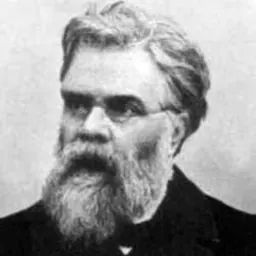
Francis Thomas Lind (March 9, 1879 – July 1, 1916) was a Newfoundland soldier. An accountant by trade, Lind volunteered for service during the First World War, eventually being killed in action on the Western Front in France. Correspondence written by Lind prior to his death later became widely published in his native Newfoundland, with Lind becoming a symbol of Newfoundlander service in the war. In light of his writings, Lind has been referred to as "Newfoundland's unofficial news correspondent" during the First World War.
Biography Lind was born on March 9, 1879, in Betts Cove, Little Bay, Newfoundland Colony. He was the son of a schoolteacher and one of five children. Following his schooling, Lind found work as a clerk and later as an accountant for a number of businesses, including Ayre and Sons.
When the First World War broke out, Lind - who at 35 was older than most recruits - volunteered for military service, joining the Royal Newfoundland Regiment. Lind and the regiment were first deployed to England for training and later to Fort George, Highland. While there, he wrote his first correspondence, one part of which (a complaint about the poor quality of English tobacco) was published in a St. John's newspaper and spurred the Imperial Tobacco Company to send the Newfoundland Regiment extra tobacco supplies. This occurrence allowed Lind to sign up for regular shipments of tobacco, known in the regiment as the "Mayo-Lind Tobacco Fund". Lind was also nicknamed "Mayo Lind" due to his new association with tobacco companies.
In 1915, the Newfoundland regiment was shipped to Egypt for acclimatization and then mobilized for the Gallipoli campaign. During the drawn out campaign and battles around Suvla Bay, Lind was hospitalized for jaundice, frostbite, and later influenza. In the spring of 1916 the Newfoundlanders were deployed to the front lines in France, taking up positions near Beaumont-Hamel. Lind continued to write until June 26, stopping before the start of the Battle of the Somme on July 1, 1916. On the first day of the offensive, the Newfoundland Regiment assaulted the German positions, losing several hundred men before being forced back. While advancing across a field near a landmark known now as the "Danger Tree", Lind was killed in action. His remains were not identified until after the battle, with Lind eventually being interred in the Beaumont-Hamel Newfoundland Memorial. Lind's death was reported on in local Newfoundland newspapers. The Dictionary of Canadian Biography notes that Lind is remembered as a symbol of Newfoundlander resilience during the First World War.
Don’t just read it —
keep it.
Full-length biographies made to live with: read them, listen on the way to work, watch them tonight.
- E-book
- Audio
- Video
Instant download · yours to keep · every purchase keeps this site free
Important facts
People in Francis Lind's life
Named in this biography and alive at the same time

Related people
Same field, nearest in time





Contemporaries
People whose lives overlapped Francis Lind's



Frequently asked questions
Who was Francis Lind?
Newfoundland soldier (1879-1916)
When was Francis Lind born?
Francis Lind was born on 9 March 1879.
When did Francis Lind die?
Francis Lind died on 1 July 1916 in Beaumont-Hamel.
What was Francis Lind's occupation?
Francis Lind was a military personnel.
Sources & further reading
Cite this page
APA: Biography.guide. (2026). Francis Lind. https://biography.guide/francis-lind/
MLA: "Francis Lind." Biography.guide, https://biography.guide/francis-lind/.
Chicago: "Francis Lind." Biography.guide. https://biography.guide/francis-lind/.
Data last updated: 2026-09-20 · Spot an error? Report a correction.
Page generated 2026-09-27 05:06 UTC