
About Francis Janssens
Lived 1843 – 1897 (aged 53). Francis Janssens was a Dutch catholic priest and catholic bishop.
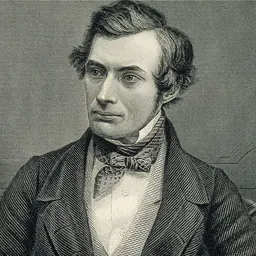
Francis Anthony Joseph August Janssens (October 17, 1843 – June 10, 1897) was an American prelate of the Catholic Church. A native of the Netherlands, he served as Bishop of Natchez from 1881 to 1888 and as Archbishop of New Orleans from 1888 until his death in 1897.
Early life and education Janssens was born on October 17, 1843, in Tilburg, in the predominantly Catholic province of North Brabant in the Netherlands. His father, Cornelis Jan Janssens (1789–1868), was a wealthy wool merchant who served on the municipal council for 20 years. His mother, Josephina Anna Janssens (née Dams; 1807–1883), was a daughter of Willebrord Dams, who served as burgemeester of Tilburg from 1811 to 1816. Janssens was baptized Franciscus Antonius Josephus Augustinus.
At the age of nine, Janssens enrolled at a boarding school run by the Brothers of Tilburg in Sint-Michielsgestel. From 1856 to 1862, he attended Gymnasium Beekvliet, the minor seminary of the Diocese of 's-Hertogenbosch. He then began his studies for the priesthood at the major seminary in Haaren.
While still a seminarian at Haaren, Janssens was recruited for the Diocese of Richmond in Virginia by Bishop John McGill. In 1866, he transferred to the American College in Leuven, Belgium, to complete his studies and train as a foreign missionary. He arrived at Richmond in September 1868. He also did pastoral work at the missions in Warrenton, Gordonsville, and Culpeper.
During his time as a priest in Richmond, Janssens baptized the infant son of former Confederate senator Thomas Jenkins Semmes and the adult sisters of Confederate colonel John S. Mosby, also spending his first Christmas in the United States at Colonel Mosby's home.
When Father John de Neve took temporary leave as rector of the American College at Leuven in 1871, Father Edmond Dumont took his place until his appointment as Bishop of Tournai in 1872. The faculty wanted Janssens to replace Dumont but this was opposed by Bishop Gibbons, who did not want to lose his vicar general. Cardinal Alessandro Barnabò, prefect of the Congregation for the Propagation of the Faith (which oversaw the college), appointed him as rector in 1873, but Janssens refused to accept, writing, "I am still quite young, not yet thirty years and without experience...My natural inclinations are for an active life."
Bishop of Natchez In November 1880, after Bishop William Henry Elder of the Diocese of Natchez in Mississippi was promoted to Archbishop of Cincinnati, the bishops of the ecclesiastical province of New Orleans submitted to Rome a terna (a list of three candidates) for Natchez that included Janssens, Henry P. Northrop, and Nicolaus Aloysius Gallagher. The Congregation for the Propagation of the Faith (which then oversaw the affairs of the Church in the United States) nominated Janssens in January 1881, By the end of his tenure in 1888, there were 59 churches, 30 secular priests, 17 parochial schools, six schools for Black children, and two schools for Native Americans.
As Bishop of Natchez, Janssens over the saw the completion of St. Mary's Cathedral, which he consecrated in September 1886. He also opened a minor seminary in October 1885, but it was forced to close the following year due to financial difficulties and low enrollment. After encountering the Choctaw in his diocese, Janssens traveled to Europe in 1882 to seek missionaries and financial aid to minister to them; he recruited Father Bartholomew J. Bekkers from Delft, who established Holy Rosary Mission in Neshoba County in 1884.
Janssens attended the third Plenary Council of Baltimore (1884), where he sat on the committee that prepared the Baltimore Catechism.
Archbishop of New Orleans In 1887, Archbishop Francis Xavier Leray of the Archdiocese of New Orleans in Louisiana sought a coadjutor archbishop with the right of succession due to his declining health. On February 10 of that year, the bishops of the ecclesiastical province of New Orleans submitted a terna that included Bishops Janssens, Edward Fitzgerald, and Anthony Durier. However, Leray preferred Father Placide Louis Chapelle and opposed the appointment of a non-French coadjutor. Before Rome could make a decision, Leray died in September.
In November 1887, the bishops resubmitted a new terna with the same names to serve as archbishop. After the Congregation for the Propagation of the Faith nominated Janssens, Pope Leo XIII confirmed his appointment as the fifth Archbishop of New Orleans on August 7, 1888.
When Janssens became archbishop in 1888, the Archdiocese of New Orleans had 162 priests and 80 churches with five under construction. In September 1891, he opened St. Joseph Preparatory Seminary, originally located near Ponchatoula and staffed by the Benedictines.
As Bishop of Natchez, Janssens opened three Catholic schools for Black children, including one that opened in 1886 in a building next to his official residence. In March 1887, he published an article in The Catholic World, in which he wrote about the actions the Church should take "to gain a firm foothold among the negroes". He expressed his belief that
Thus, he advocated for Black priests to minister to Black Catholics:
Father Charles Uncles, who would become the first Black Catholic priest ordained on American soil in 1891, later wrote that Janssens's article in The Catholic World had greatly encouraged him.
Janssens's ministry to African Americans continued as Archbishop of New Orleans. He frequently condemned the Regulators, a white supremacist organization that was active in Louisiana. In 1889, he prohibited members of the Regulators from receiving the sacraments, saying, "Better sometimes to cut off a few members than to have a cancer set in the whole body." In 1896, he called for civil authorities to "disband and punish" the group. He also described anti-miscegenation laws as "unjust and uncalled for".
However, Janssens's plan was met with opposition from some Black leaders in the city. According to Janssens, this opposition stemmed from a concern that "different churches will tend to a greater social separation." In February 1895, the Comité des Citoyens encouraged Black Catholics to avoid a separate church in The New Orleans Crusader. He renamed the church as St. Katharine's in her honor.
At the dedication ceremony for St. Katharine's on May 19, 1895, Janssens delivered a sermon in which he said, "The Church is one general, immense brotherhood, and should not know any distinction between its members."
Death During his tenure, Janssens reduced the Archdiocese of New Orleans's debt from $324,759 to about $130,000. He boarded the steamship Creole in New Orleans on June 9, 1897, but fell ill that evening and died early the next morning. His body was transferred at sea to the Hudson, and returned to New Orleans.
Don’t just read it —
keep it.
Full-length biographies made to live with: read them, listen on the way to work, watch them tonight.
- E-book
- Audio
- Video
Instant download · yours to keep · every purchase keeps this site free
Important facts
People in Francis Janssens's life
Named in this biography and alive at the same time


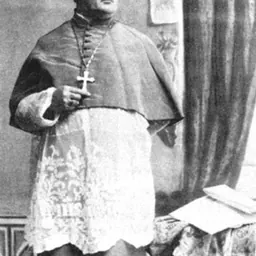
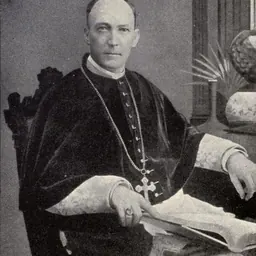
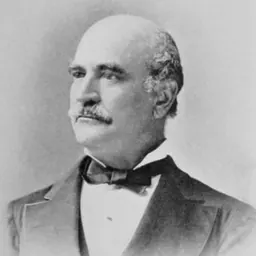


Related people
Same field, nearest in time
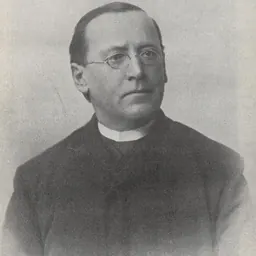
Contemporaries
People whose lives overlapped Francis Janssens's

Frequently asked questions
Who was Francis Janssens?
Dutch-born Catholic bishop
When was Francis Janssens born?
Francis Janssens was born on 17 October 1843 in Tilburg.
When did Francis Janssens die?
Francis Janssens died on 9 June 1897 in Atlantic Ocean.
What was Francis Janssens's occupation?
Francis Janssens was a catholic priest and catholic bishop.
What nationality was Francis Janssens?
Francis Janssens was Dutch.
Sources & further reading
Cite this page
APA: Biography.guide. (2026). Francis Janssens. https://biography.guide/francis-janssens/
MLA: "Francis Janssens." Biography.guide, https://biography.guide/francis-janssens/.
Chicago: "Francis Janssens." Biography.guide. https://biography.guide/francis-janssens/.
Data last updated: 2026-09-20 · Spot an error? Report a correction.
Page generated 2026-09-27 05:30 UTC