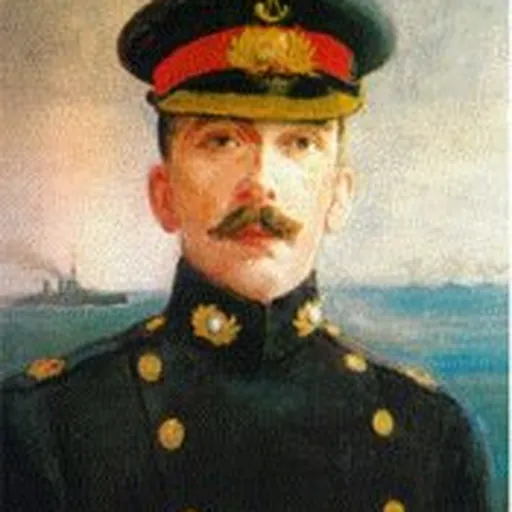
Francis Harvey
Officer of the British Royal Marine Light Infantry posthumously awarded the Victoria Cross
About Francis Harvey
Lived 1873 – 1916 (aged 43). Francis Harvey was a British military personnel.
Major Francis John William Harvey, VC (29 April 1873 – 31 May 1916) was an officer of the British Royal Marine Light Infantry during the First World War. Harvey was posthumously awarded the Victoria Cross, the highest military award for gallantry in the face of the enemy given to British and Commonwealth forces, for his actions at the height of the Battle of Jutland. A long-serving Royal Marine officer descended of a military family, during his career Harvey became a specialist in naval artillery, serving on many large warships as gunnery training officer and gun commander. Specially requested for , the flagship of the British battlecruiser fleet, Harvey fought at the battles of Heligoland Bight, Dogger Bank and Jutland.
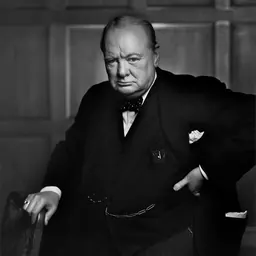
At Jutland, Harvey, although mortally wounded by German shellfire, ordered the magazine of Q turret on the battlecruiser Lion to be flooded. This action prevented the tons of cordite stored there from catastrophically detonating in an explosion that would have destroyed the vessel and all aboard her. Although he succumbed to his injuries seconds later, his dying act may have saved over a thousand lives and prompted Winston Churchill to later comment: "In the long, rough, glorious history of the Royal Marines there is no name and no deed which in its character and consequences ranks above this". Harvey was descended from a military family; his great-great-grandfather John Harvey had been killed in the Glorious First of June in 1794 and his great-grandfather Admiral Sir Edward Harvey and grandfather Captain John Harvey of the 9th Regiment of Foot were also prominent military figures.
Gunnery expert After leaving school, Harvey chose a military career and was accepted by both the Royal Military College, Sandhurst, and the Royal Naval College, Greenwich, for officer training. Choosing the latter school as a Royal Marines officer cadet, Harvey graduated in 1892 and the following year was made a full lieutenant, joining for his first seagoing commission. After just a year at sea, Harvey was back on shore attending gunnery courses at , qualifying in 1896 as an instructor first class in naval gunnery. In 1898, whilst on the Phaeton, he was thanked by the Admiralty for a report he rendered on San Diego Harbour. Returning home the same year, Harvey was given the position of Assistant Instructor for Gunnery at Plymouth Division. During this period, Harvey married Ethel Edye and had one son, John. In 1903 he was posted aboard , the first of a string of big ship appointments teaching gunnery to the heavy units of the Channel Fleet. By 1909, Harvey had served on , and the new battlecruiser . In 1910 Harvey became Instructor of Gunnery at Chatham Dockyard and the following year was promoted to major, a report on the gunnery school commenting "Degree of efficiency in Gunnery Establishment at Chatham is very high both as regards general training and attention to detail. Great credit is due all concerned particularly to Major F.J.W. Harvey, the I of G". One German cruiser had already been sunk by the time Beatty's force arrived, but the German flagship and cruiser were surprised in the fog and destroyed by heavy calibre shells from Beatty's battlecruisers. German Konteradmiral Leberecht Maass and over 1,000 of his sailors were killed, Harvey's guns scoring several hits on the cruisers. A huge explosion destroyed the neighbouring turret as well and killed 160 men, the German flagship only surviving due to the actions of sailor Wilhelm Heidkamp, who wrenched open the magazines' water valves despite them glowing red hot.
Lion was badly damaged in the action by shells from the passing and with her engines failing, dropped back to engage the already sinking . Misread signals resulted in the rest of the British fleet returning to support Lion in this task, allowing the rest of the battered German fleet to retire as the British destroyed the hapless Blücher and 792 of her crew. Following the battle, Harvey remained aboard Lion at Rosyth for the whole of 1915 and the first five months of 1916, continuing his gunnery training and preparations for major fleet action. His preparations came to fruition on the last day of May, when the British fleet sailed to engage the main body of the German High Seas Fleet at the Battle of Jutland.
Just after Dogger Bank, Harvey had written to a fellow RMLI officer in describing his experiences:
Jutland "The armoured roof of Q turret had been folded back like an open sardine tin, thick yellow smoke was rolling up in clouds from the gaping hole and the guns were cocked up in the air awkwardly". Lieutenant W. S. Chambers, HMS Lions bridge.
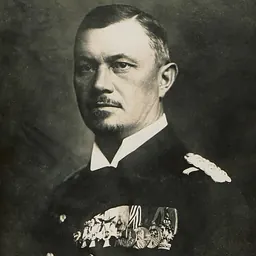
Beatty's battlecruisers led the British fleet in its attack, casting southward into the North Sea to find the enemy during the afternoon of 31 May 1916. At 14:15, scouting cruisers spotted the German vanguard and Beatty closed to attack the enemy with his main force. Given time to prepare, Hipper was ready for Beatty with his battlecruisers in line to face Beatty's approaching ships with their full broadsides. Hipper was also encouraged by the main German battleship fleet under Vice-Admiral Reinhard Scheer, which was steaming northwards close behind him. At 15:45 Beatty came within range of the German fleet and the vanguards engaged one another with their opening fusillades. One shell at 16:00 struck the right upper corner of the left hand gun port at the junction of the face plate and the roof, and punched a piece of the 9-inch face plate into the turret before detonating, blowing off the armoured roof of the turret and starting a fire, which a damage control party working from outside the turret fought to put out.
HMS Lion to left of exploding HMS Queen Mary at Jutland. White splashes from shells can be seen falling short of Lion
The initial explosion killed or wounded everyone stationed in the gun house itself. Harvey, despite severe wounds and burns, gave orders down the voice pipe for the magazine doors to be closed and the magazine compartments to be flooded, an action which would prevent the cordite in the magazines detonating. Turning to his sergeant, the one man still standing, Harvey instructed him to proceed to the bridge and give a full report to the ship's captain Ernle Chatfield (a standard drill in damage exercises). The sergeant went immediately to the bridge and notified the captain of Harvey's actions before being taken below to have his wounds dressed.
In the Transmitting Station below the armoured deck, Stoker 1st Class William Yeo was entrusted with passing on Harvey's last orders. The magazine was consequently flooded and locked up within minutes of the hit. However the cordite charges which had fallen down from gun house after the hit were not removed to safety, and there were still ready charges in the working chamber. A large number of crewmen still remained in the shell room, magazine handing room and working chamber. The fire which was thought to have been put out after the hit on the turret gained strength and ignited the remaining cordite charges, setting off a large explosion at 16:28 which killed the turret crewmen, the flame of the explosion reaching as high as the top of the ship's masts. Even with the precautions taken in hand, the magazine doors were later found to be severely buckled – only the seawater in the magazine behind it prevented the blast reaching inside. Other ships of the battlecruiser fleet were less lucky; at about the same time as Harvey's death, was torn to pieces by a series of magazine explosions that claimed 1,013 lives and just minutes after that HMS Queen Mary exploded "like a puffball" in one huge column of grey smoke, killing 1,275 sailors.
Remembrance Harvey's charred corpse was taken from the wreckage of Q turret in the aftermath of battle and buried at sea with full honours alongside the other 98 fatal casualties Lion had suffered. Harvey's widow Ethel was presented with the award at Buckingham Palace by King George V on 15 September 1916. His medal group was later loaned to the Royal Marines Museum, Eastney Barracks by his son Lieutenant-Colonel John Malcolm Harvey of the King's Regiment in 1973. Harvey's name is inscribed on the Chatham Naval Memorial to those with no known grave, administered by the Commonwealth War Graves Commission.
Victoria Cross citation Whilst mortally wounded and almost the only survivor after the explosion of an enemy shell in "Q" gunhouse, with great presence of mind and devotion to duty ordered the magazine to be flooded, thereby saving the ship. He died shortly afterwards.
London Gazette, 15 September 1916
Don’t just read it —
keep it.
Full-length biographies made to live with: read them, listen on the way to work, watch them tonight.
- E-book
- Audio
- Video
Instant download · yours to keep · every purchase keeps this site free
Important facts
People in Francis Harvey's life
Named in this biography and alive at the same time




Related people
Same field, nearest in time
Contemporaries
People whose lives overlapped Francis Harvey's

Frequently asked questions
Who was Francis Harvey?
officer of the British Royal Marine Light Infantry posthumously awarded the Victoria Cross (1873–1916)
When was Francis Harvey born?
Francis Harvey was born on 29 April 1873 in Sydenham.
When did Francis Harvey die?
Francis Harvey died on 31 May 1916 in North Sea.
What was Francis Harvey's occupation?
Francis Harvey was a military personnel.
What nationality was Francis Harvey?
Francis Harvey was British.
Sources & further reading
Cite this page
APA: Biography.guide. (2026). Francis Harvey. https://biography.guide/francis-harvey-military-personnel/
MLA: "Francis Harvey." Biography.guide, https://biography.guide/francis-harvey-military-personnel/.
Chicago: "Francis Harvey." Biography.guide. https://biography.guide/francis-harvey-military-personnel/.
Data last updated: 2026-10-02 · Spot an error? Report a correction.
Portrait: Wikimedia Commons · author & licence
Page generated 2026-10-04 14:51 UTC