
Francis Gracey Childers
American military officer and politician
About Francis Gracey Childers
Lived 1860 – 1921 (aged 60). Francis Gracey Childers was a military personnel, businessperson, entrepreneur and columnist.
Francis Gracey Childers (July 4, 1860 – March 18, 1921) was an American politician, businessman, and U.S. Army officer who served as the 48th adjutant general of Tennessee from 1909 to 1910. A member of the Democratic Party, he previously served as a member of the Tennessee House of Representatives from 1903 to 1907, and as the mayor of Clarksville, Tennessee from 1900 to 1902. Following his death, Childers was described by the Pittsburgh Post-Gazette as "one of the most popular men of the day in Tennessee."
Born and raised in eastern Kentucky, Childers moved to Tennessee and graduated from Rhodes College. After working in the railroad and steamboat industry, he joined the Tennessee Army National Guard as a lieutenant colonel in 1888. He was mustered into regular service during the Spanish–American War and served in combat during the Philippine–American War at the battles of Manila and Visayas. In November 1899, Childers retired from active duty and returned to his plantation in the Appalachian Mountains. In 1900, he published his war memoir, Red Tides of Manila, which garnered widespread popularity and critical acclaim.
After serving for several years in local government, Childers was elected to the Tennessee General Assembly in 1902. He supported segregation, prohibition, and antitrust legislation before retiring from the state legislature in 1907. He was elected to the U.S. Congress in 1908, but declined to take his seat in order to serve as adjutant general of Tennessee. During the 1910 Tennessee elections, Childers was a leading candidate for governor of Tennessee, challenging incumbent Malcolm R. Patterson. Following a contentious primary, Childers and Patterson both withdrew from the race to support a compromise candidate—Robert Love Taylor—who would go on to lose to Republican nominee Ben W. Hooper. From 1912 to 1920, Childers served as Sheriff of Montgomery County, Tennessee. He was appointed by the United States Secretary of War to serve as the presiding officer of the county draft board during World War I. At the time of his death in 1921, Childers was widely considered the front-runner in the 1922 Tennessee gubernatorial election.
Early life, education, and career Francis Gracey Childers was born on July 4, 1860, in Eddyville, Kentucky, to Reverend James Francis Childers and Lucy (née Gracey) Childers. His paternal grandfather was William C. Childers, son of Abraham Childers. Childers was raised in Kentucky before attending college in Tennessee. During the First Tennessee's five-month assignment in California, the regiment became embroiled in a "series of scandals" regarding the issue of racism. In August 1898, "nearly half the regiment" attempted to lynch a Black San Franciscan man named Daniel Thomas. The regiment was widely condemned by military leadership; General Henry C. Merriam described the events as a "deplorable occurrence" and "a thing never before known in the history of the United States Army." The San Francisco Call published a political cartoon criticizing the regiment, titled: "Fiery Southerners Bring Their Race War to the Golden Gate." Colonel William Crawford Smith issued a public apology for the "unfortunate occurrence," while Lt Colonel Childers defended the soldiers' actions, saying: "The negroes are themselves greatly to blame for the violence bestowed upon one of their number yesterday." The unit served as part of the Eighth Army Corps. During the Philippine–American War, Childers fought in the Battle of Manila. He was formally promoted by Governor Benton McMillin two weeks later. Under his command were 45 officers, 619 enlisted men, 101 prisoners of war, and 24 discharged soldiers. Childers commanded the regiment during combat engagements on the islands of Luzon, Panay, and Cebu.
Childers served as colonel of the 1st Tennessee Infantry Regiment until he was discharged from active duty in San Francisco, California, on November 23, 1899. During the war, the 1st Tennessee Volunteer Infantry Regiment was the only regiment from the American South to serve in the Philippines, the only regiment from Tennessee to engage in combat, and the last volunteer regiment to leave the Philippine Islands. The San Francisco Chronicle and the El Paso Herald described the First Tennessee as "the most remarkable regiment of the Philippine War." thumb Childers on horseback (far left) with Senator Albert J. Beveridge (second from the left) at the University of San Agustin in Iloilo City, Philippine Islands.
Tennessee National Guard leadership During the Tobacco Wars, Childers commanded federal troops against the Night Riders in 1908 and 1909. That same month, Childers was appointed by Governor Malcolm R. Patterson as the 48th adjutant general of Tennessee.
Childers was honorably discharged from the Tennessee National Guard in 1910, attaining the rank of brigadier general. Nashville Banner poster of Childers featured alongside other notable Tennesseans: John Sevier, James K. Polk, James Robertson, Sam Houston, N. B. Forrest, and Andrew Jackson. In 1901, Childers and other surviving veterans of the 1st Tennessee Volunteer Infantry Regiment were honored at the Tennessee State Capitol.
Political career Government of Clarksville (1890–1902) Childers first entered elected politics as an alderman of Clarksville, Tennessee. He represented the second ward from 1890 to 1896, and again from 1898 to 1900. Childers was re-elected in 1904, but did not seek re-election in 1906.
1908 U.S. House of Representatives election
In 1908, Childers won the Democratic nomination for the U.S. House of Representatives in Tennessee's 6th congressional district, defeating incumbent John W. Gaines. In the general election, Childers' only opponent was Socialist Party candidate E. D. Morgan. In November 1908, Childers won the election in a landslide, receiving 97.29% of the vote. During the transition, Childers was offered the military post of state adjutant general and assumed command in February 1909. In accepting the position, Childers declined his seat in the U.S. House of Representatives. His successor, Jo Byrns, was chosen at a state party convention and assumed office at the beginning of the 61st United States Congress—the term Childers was elected to serve. Childers supported both issues and his faction of the state party declined to support Patterson. In the aftermath of the highly contested Democratic primary, Republican nominee Ben W. Hooper won the general election, becoming the first Republican elected statewide since 1880. In 1890, Childers purchased Oak Top mansion in Clarksville.
The community of Childers Hill, Tennessee, was named in honor of Childers.
At 7:15 pm on March 18, 1921, Childers died from "malady," aged 60, in Clarksville, Tennessee. In 1929, Childers was reinterred at Mount Olivet Cemetery in Nashville.
Don’t just read it —
keep it.
Full-length biographies made to live with: read them, listen on the way to work, watch them tonight.
- E-book
- Audio
- Video
Instant download · yours to keep · every purchase keeps this site free
Important facts
People in Francis Gracey Childers's life
Named in this biography and alive at the same time

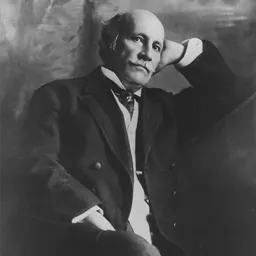




Related people
Same field, nearest in time

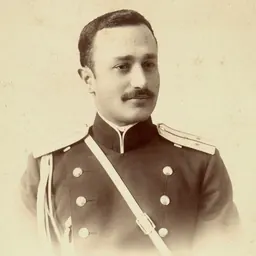

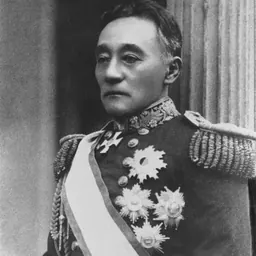
Contemporaries
People whose lives overlapped Francis Gracey Childers's


Frequently asked questions
Who was Francis Gracey Childers?
American military officer and politician
When was Francis Gracey Childers born?
Francis Gracey Childers was born on 4 July 1860.
When did Francis Gracey Childers die?
Francis Gracey Childers died on 18 March 1921.
What was Francis Gracey Childers's occupation?
Francis Gracey Childers was a military personnel, businessperson, entrepreneur and columnist.
Sources & further reading
· Wikipedia: Francis Gracey Childers
· DBpedia: Francis Gracey Childers
Cite this page
APA: Biography.guide. (2026). Francis Gracey Childers. https://biography.guide/francis-gracey-childers/
MLA: "Francis Gracey Childers." Biography.guide, https://biography.guide/francis-gracey-childers/.
Chicago: "Francis Gracey Childers." Biography.guide. https://biography.guide/francis-gracey-childers/.
Data last updated: 2026-09-20 · Spot an error? Report a correction.
Page generated 2026-09-27 05:19 UTC