
About Francesco Milizia
Lived 1725 – 1798 (aged 72). Francesco Milizia was an Italian art historian and architect.
Francesco Milizia (15 November 17257 March 1798) was an Italian writer and art theorist. He was one of the leading Italian theorists of Neoclassicism. His writings combine neoclassical admiration for Ancient Greek art with Enlightenment rationalism and utilitarianism, showing also a taste for the expressive and the dramatic, and appreciation of Roman and Gothic art.
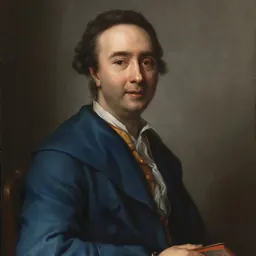
Biography Francesco Milizia studied in Naples, Rome and Padua, and in 1761, he settled in Rome. There he began the publication of an influential series of theoretical works, beginning with a biographical encyclopedia of architects (1768). Ferdinand IV, King of Naples, appointed him superintendent of the Farnese buildings in the Papal States, but he soon resigned this post (1780) to resume his literary career. He was friendly with José Nicolás de Azara and the painter Anton Raphael Mengs, whose art he promoted.
Theories Although Milizia advocated "great masses, great forms and great tracts" in architecture, he adopted in his works a stance that was strongly opposed to the Baroque, regarding the 16th century as an age of correctness in comparison to the 17th, which he saw as an age of corruption. He criticized St. Peter's Basilica for being divided into too many parts and denounced Michelangelo's Moses as "a horrible watchdog dressed like a stoker, badly placed and useless". Francesco Borromini's followers were categorized as "a delirious sect", while of Guarino Guarini he wrote, "whoever likes his architecture, much good may it do him, but he would be a nitwit".
Although Milizia's theories of art are not free from inconsistencieshe himself admitted that he was "a heterogeneous compound of contradictions"his general approach was influenced by the rationalism of Carlo Lodoli and Marc-Antoine Laugier. Milizia denounced excessive ornamentation in buildings, which he considered led to the "bizzaria", destroying order and the forms dictated by Nature; nevertheless, his insistence on "soft transitions" and the avoidance of abrupt contrasts reveals the subliminal persistence of Baroque influence on his views. The functionalism that underlies Milizia's theories is clearly evident in the essay on architecture that precedes his biographical dictionary, where he enunciated principles on which perfect architecture should be based. These include symmetry and unity, combined with variety. All features should appear to be necessary and perform a specific function; hence, "everything which is done just for the purpose of decoration is vicious". The architectural orders, however, he regarded as structural rather than ornamental, although he maintained that the authority of ancient design should not be cited to impede the pursuit of reason.
Milizia's attacks helped to provoke a rejection of Baroque that persisted for a century until appreciation was rekindled by such scholars as Cornelius Gurlitt. Although Milizia implied that the legacy of Antiquity was exhausted, his writings did much to promote the rise of Neoclassicism.
Writings
Del teatro (Rome, 1771) Dell’arte di vedere nelle belle arti di disegno secondo i principi di Sulzer e di Mengs (Venice, 1781) Memorie degli architetti antichi e moderni (Parma, 1781) Principj di architettura civile (Finale, 1781) Dizionario delle belle arti del disegno (Bassano, 1797)
Works in English translation
Don’t just read it —
keep it.
Full-length biographies made to live with: read them, listen on the way to work, watch them tonight.
- E-book
- Audio
- Video
Instant download · yours to keep · every purchase keeps this site free
Important facts
People in Francesco Milizia's life
Named in this biography and alive at the same time


Related people
Same field, nearest in time




Contemporaries
People whose lives overlapped Francesco Milizia's





Frequently asked questions
Who was Francesco Milizia?
Italian art historian and architect
When was Francesco Milizia born?
Francesco Milizia was born on 14 November 1725 in Oria.
When did Francesco Milizia die?
Francesco Milizia died on 7 March 1798 in Rome.
What was Francesco Milizia's occupation?
Francesco Milizia was an art historian and architect.
What nationality was Francesco Milizia?
Francesco Milizia was Italian.
Sources & further reading
· Wikipedia: Francesco Milizia
Cite this page
APA: Biography.guide. (2026). Francesco Milizia. https://biography.guide/francesco-milizia/
MLA: "Francesco Milizia." Biography.guide, https://biography.guide/francesco-milizia/.
Chicago: "Francesco Milizia." Biography.guide. https://biography.guide/francesco-milizia/.
Data last updated: 2026-09-20 · Spot an error? Report a correction.
Page generated 2026-09-27 05:23 UTC