
Vivant Denon
French artist, writer, diplomat, author, and archaeologist
About Vivant Denon
Lived 1747 – 1825 (aged 78). Vivant Denon was a French art historian, egyptologist, diplomat, travel writer, draftsperson and archaeologist.
Dominique Vivant, Baron Denon (; 4 January 1747 – 27 April 1825) was a French artist, writer, diplomat, author, and archaeologist. Denon was a diplomat for France under Louis XV and Louis XVI. He made a portrait of the philosopher, which was engraved and published on his return to Paris. His next diplomatic appointment was to Naples, where he spent seven years, first as secretary to the embassy and afterwards as chargé d'affaires. He devoted this period to a careful study of the monuments of ancient art, collecting many specimens and making drawings of others. He also perfected himself in etching and mezzotinto engraving. He accompanied General Desaix to Upper Egypt, and made numerous sketches of the monuments of ancient art, sometimes under the very fire of the enemy. The results were published in his Voyage dans la basse et la haute Egypte (Journey in Lower and Upper Egypt), published as two volumes in 1802. The work crowned his reputation both as an archaeologist and as an artist, and sparked Egyptian Revival architecture and decorative arts.
He died in Paris and is buried in the world famous Père Lachaise Cemetery, where his grave is marked by a life-sized statue.
Legacy
In Napoleon III's Louvre expansion in the 1850s, Denon's name was given to the central pavilion of the Nouveau Louvre's South Wing. In the Grand Louvre project of the late 1980s, the entire South Wing of the Louvre Palace was named after him (aile Denon, echoing Richelieu to the North and Sully to the East) as part of a signposting concept developed by the Carbone Smolan Agency.
Works
A note at the beginning of this book states 'Point De Lendemain, the authorship of which has also been attributed to Vivant Denon was first published in 1777'. Hence the authorship being stated as Dorat in Sutton's translation.
In fiction Anthony O'Neill included the character of Vivant Denon in his novel The Empire of Eternity, in which he is portrayed as bisexual.
Lee Langley has written a biographical novel of Denon's life, A conversation on the Quai Voltaire.
Ruth McKenney also includes the character of Vivant Denon in her novel Mirage.
Milan Kundera's Slowness (1995) includes a rewriting of Vivant-Denon's Point de lendemain.
References and sources
Don’t just read it —
keep it.
Full-length biographies made to live with: read them, listen on the way to work, watch them tonight.
- E-book
- Audio
- Video
Instant download · yours to keep · every purchase keeps this site free
Important facts
more
Denon Vivant, Donon, Dunon, Baron D. Vivant-Denon, Daunon, D., Baron Vivant-Denon, V., DenonPeople in Vivant Denon's life
Named in this biography and alive at the same time
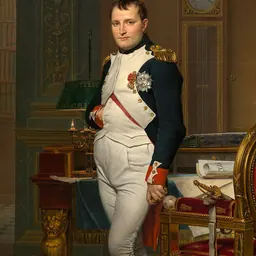
Related people
Same field, nearest in time
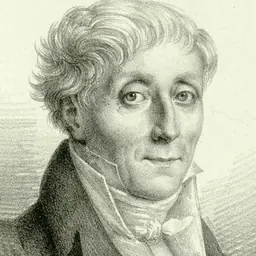

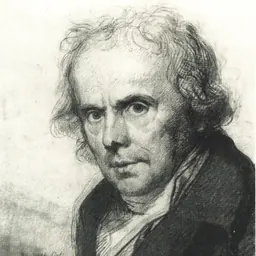

Contemporaries
People whose lives overlapped Vivant Denon's




Frequently asked questions
Who was Vivant Denon?
French artist, writer, diplomat, author, and archaeologist (1747-1825)
When was Vivant Denon born?
Vivant Denon was born on 4 January 1747 in Chalon-sur-Saône.
When did Vivant Denon die?
Vivant Denon died on 27 April 1825 in former 10th arrondissement of Paris.
What was Vivant Denon's occupation?
Vivant Denon was an art historian, egyptologist, diplomat, travel writer, draftsperson and archaeologist.
What nationality was Vivant Denon?
Vivant Denon was French.
Sources & further reading
Cite this page
APA: Biography.guide. (2026). Vivant Denon. https://biography.guide/vivant-denon/
MLA: "Vivant Denon." Biography.guide, https://biography.guide/vivant-denon/.
Chicago: "Vivant Denon." Biography.guide. https://biography.guide/vivant-denon/.
Data last updated: 2026-09-20 · Spot an error? Report a correction.
Page generated 2026-09-27 05:29 UTC