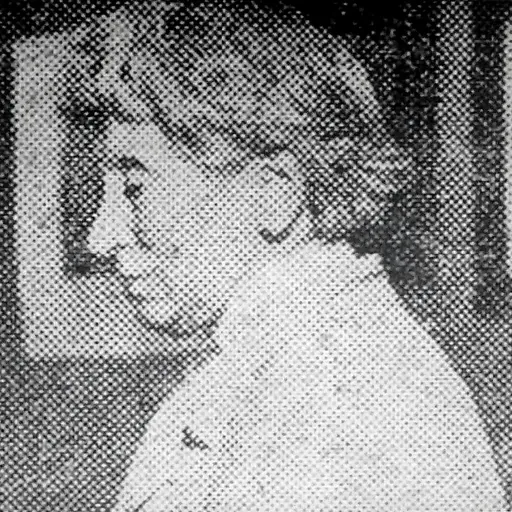
About Frances C. Fairman
Lived 1839 – 1923 (aged 83–84). Frances C. Fairman was a British painter.
Frances Caroline Fairman (1839 – February 1923) was a British watercolourist, a painter in oils, and an illustrator. In her lifetime she was best known for her canine portraits, some of which were commissioned by royalty and aristocracy. She was known as "the Lady Landseer" for the quality of her work. She travelled to the Americas, France, and Switzerland, returning with watercolour landscape sketches.
Fairman was born in Kent and studied under Louis Henri Deschamps in Paris, but for most of her life lived and worked in London. When she was in her late 50s, she was taken to court and fined for attempting to prevent a hansom cab driver from whipping his horse in Fulham Road, London, and for striking the cabman with her hand after he had hit her.
Life Frances Caroline "Fanny" Fairman was baptised on 20 March 1839 at Lynsted, Kent. She spent most of her working life in London. She started her life at Millers House, Lynsted, where she lived with her parents and five servants. The 1851 census recorded her as a scholar at twelve years old, at 30 Linsted Street, Lynsted, Kent, with her parents and four house servants. By 1861 she was living with her mother at 7 Cambridge Square, Paddington, with one servant. No profession was declared for either woman. The 1871 Census shows her as a guest of Colonel B. Hall, a gunpowder manufacturer, at Syndale House, Ospringe, Kent. In 1891 she was living at 4 Culversden Road, Drysdale, Streatham, London, with one servant, describing herself as an artist and watercolourist. The 1911 Census found her living alone at 4 Avenue Studios, Fulham, London, describing herself as an artist of dog portraits, working independently at home.
In 1873, Fairman and her mother spotted a false reference which had been presented by the "tall, well-dressed" James Bartley when applying for the position of butler at their Kensington house. Bartley had invented a former employer, the Hon. Mrs G. Sutton, and had forged a letter purporting to be from her. Bartley pled guilty in court and was fined £15 10s. with the alternative of imprisonment. He paid the fine.
In 1887, Fairman inherited a legacy from her uncle George Gosselin of Bristol.
The Daily Telegraph & Courier said that Fairman had "the artistic temperament".
The horse became restive [on Fulham Road] ... and an application of the whip became necessary. The defendant then ran up from behind and sprang at the horse's head, catching the off-side rein, and crying, "You brute; leave the horse alone." The suddenness of her rush caused the horse to rear and plunge towards the railings, over which the near-side rein was thrown. "In order to save his life," as he said in evidence, Childs left his dickey. Defendant released her hold, and immediately the animal bolted, eventually colliding with a four-wheeled cab, and overturning the hansom. Childs requested the lady to go with him to the scene of the accident, and as she refused took her by the sleeve to prevent her leaving the spot. A police officer who came up declined to arrest the driver for assault, and would not agree with Miss Fairman that he was drunk, nor did he find any marks of the ill-treatment on the horse. Proceedings were taken out against the driver before a police magistrate, but the charge was dismissed, the justice upon that occasion telling Miss Fairman "that her action had caused all the trouble." Mr Reed: Have you ever driven a hansom cab in the streets of London? Defendant: As you ask me – I have. On one occasion I had a drunken driver, and I had to take the reins myself. I have taken the reins on another occasion, the driver then being drunk also. Mr Reed: Did you mount the dickey on these occasions? Defendant: No, I drove from inside. Mr Reed: You were lucky not to have met with an accident; don't you think so? Defendant: Oh, I got through it all right. Mr Reed: When the cabman hit you, what did you do? Defendant: Struck him with the other hand. (Laughter) ... Eventually the jury brought in a verdict for plaintiffs, assessing the damages at £39 . (Daily Telegraph & Courier (London), 1899) Her funeral on 7 February 1923 was a requiem mass at Brompton Oratory. Queen Alexandra sent a wreath with the message, "In deepest remembrance of a great animal artist. We shall all miss her greatly." Fairman had painted Edward VII's fox terrier Caesar, who "followed the funeral procession to the grave".
Career Fairman was trained in Paris by Louis Henri Deschamps (1846–1902). Known as "the Lady Landseer" for her animal paintings, She flourished from around 1864 until 1917. In 1917 her picture We owe it to King Edward was exhibited at the Albert Hall, where the Ladies' Kennel Association dog show was being held. As a member, Fairman helped to support the association financially, and the picture was sold in aid of the Association.
Royal commissions Fairman "painted nearly 30 royal pets in her time", including Edward VII's fox terrier, Caesar, The magazine Vote said that she had "painted many portraits of the favourite dogs of Queen Victoria, King Edward, and Queen Alexandra, and ... had attained a considerable reputation as an artist of animal life". In 1910 Fairman was commissioned to paint four dogs, by the Queen. In 1911, the Pall Mall Gazette described Fairman thus: The original painting was sold as part of the late Mario Buatta’s collection in 2020.
Book illustrations
Painting King Charles spaniels, ch. Clevedon Magnet, ch. Clevedon Comus, ch. Clevedon Pharaoh, ch. Clevedon Cedric (1907), in Painting The bull bitch ch. Silent Duchess (1911), in .
Exhibitions Fairman's works were exhibited in London from 1865 onwards. Dudley Gallery Art Society, Egyptian Hall: Bob, the first prize old English Sheepdog, also portraits, flower-study and animal portraits, all watercolours (1889). Society of Lady Artists: Various watercolours of fruit and flowers (1892). Dudley Gallery Art Society, Egyptian Hall: A couple of owls and dead mouse, watercolour, (1890). "Decided merit". Art exhibition at Victoria Hall, Bracknell: Three in a tub, oil (1894). Society of Lady Artists: Various canine portraits, including Miss Bowyer Smythe's Scotch dogs and Champion dachshund Pterodactyl (1896). Miss Bowyer Smythe's Scotch dogs is a very sympathetic study of canine characteristics". Clifford's, Bond Street, London: An exhibition, The Dog Show on Paper and Canvas, dedicated to Fairman's dog portraits (1897). Royal Academy Summer Exhibition: The platter clean: portraits of three Japanese dogs, 448, oil (1897). Graves Galleries, Pall Mall, London: Various canine portraits, including United we stand, watercolour (1898). Royal Academy Summer Exhibition: Three for the red, 632, oil (1899). Society of Women Artists: Various works, including "many of her faithfully-depicted dogs" (1899). Grafton Galleries, Women's international Art Club: Four canine portraits, including Tina (1901). Dudley Gallery Art Society, Water Colour Society: Two "clever dog studies" (1901). No.10 Ryder Street, St James's, London: Various dog portraits in an exhibition devoted to dogs (1901). "Miss F.C. Fairman, both in oil and watercolour, is celebrated for her proficiency in portraying well-known figures in the canine world". Mendoza Galleries, St James's, London: Various watercolours, "excellent work" (1903). Society of Women Artists: Smooth Chow Yen How, watercolour (1902). "An aptitude for animal painting ... Miss F.C. Fairman's portraits of dogs". Society of Women artists: "The best things are Miss F.C. Fairman's large painting of a Newfoundland dog ..." (1903). Society of Women Artists: Various works (1904). Fairman was described as "popular ... portraitist of dogs". Dore Gallery, Bond Street, London: A collection titled Dogs of all nations (1904). Grafton Gallery: "Three of her speaking-dog portraits" (1904). Dore Gallery: Various works (1905). Society of Women Artists: "Clever studies of animals" (1905). Society of Woman Artists: Various works (1906).
Collections Royal Collection Trust: Six canine portraits including Roy (1897), oil on canvas. This picture is displayed at Osborne House. National Trust for Places of Historic Interest or Natural Beauty: A longhorn (1864), Gerbils (1872), and Chinchillas (1875). Richmond Borough Art Collection: View from Star and Garter, Richmond Hill (undated).
Reviews "Of the more striking pictures , above the level of the rest of the exhibition, we may mention ... F.C. Fairman's See what I can do and Le Premier déjeuner – both capital studies of cat and dog life". (Illustrated London News, 1889). "A couple of drawings by Miss F.C. Fairman seem to me to promise well". (Truth, 1889). "Capital canine studies, boldly painted and noteworthy for varied expression". (Morning Post, 1896). "Her skill in realising the character of her subjects is quite exceptional. She shows a rare degree of appreciation of the peculiar attributes of the various breeds of dogs with which she has had to deal, and is particularly successful in rendering varieties and subtleties of texture. Her best work is in water-colour; her oil paintings hardly do justice to her unquestionable capacity, and lack something of reality and expressiveness. The success of the exhibition has already been remarkable; among the purchasers of her productions are the Queen, the Prince and Princess of Wales, and various other members of the Royal Family, and commissions for the portraits of several of the royal pets have immediately followed". (Globe, 1897). "Miss F.C. Fairman ... is already favourably known for some excellent little object-sketches done in Florida and Brazil. The artist has a most acute perception of those moments when dogs look as if they possessed an intelligence at present unknown to us. Many of the dogs painted are owned by folk of high degree from royalty down, and though their pictures may not commend themselves to those who like muscle as apart from points, Miss Fairman is to be congratulated for much creditable and clever work". (Reynolds's Newspaper, 1897). "The canine portraits by Miss F.C. Fairman are excellent, the water colour of Smooth Chow Yen How, with a silky black texture, being particularly good". (Gentlewoman, 1902).
Don’t just read it —
keep it.
Full-length biographies made to live with: read them, listen on the way to work, watch them tonight.
- E-book
- Audio
- Video
Instant download · yours to keep · every purchase keeps this site free
Important facts
People in Frances C. Fairman's life
Named in this biography and alive at the same time


Related people
Same field, nearest in time

Contemporaries
People whose lives overlapped Frances C. Fairman's


Frequently asked questions
Who was Frances C. Fairman?
English painter
When was Frances C. Fairman born?
Frances C. Fairman was born in 1839 in Lynsted.
When did Frances C. Fairman die?
Frances C. Fairman died in 1923 in London.
What was Frances C. Fairman's occupation?
Frances C. Fairman was a painter.
What nationality was Frances C. Fairman?
Frances C. Fairman was British.
Sources & further reading
· Wikipedia: Frances C. Fairman
Cite this page
APA: Biography.guide. (2026). Frances C. Fairman. https://biography.guide/frances-c-fairman/
MLA: "Frances C. Fairman." Biography.guide, https://biography.guide/frances-c-fairman/.
Chicago: "Frances C. Fairman." Biography.guide. https://biography.guide/frances-c-fairman/.
Data last updated: 2026-09-22 · Spot an error? Report a correction.
Portrait: Wikimedia Commons · author & licence
Page generated 2026-09-27 05:04 UTC