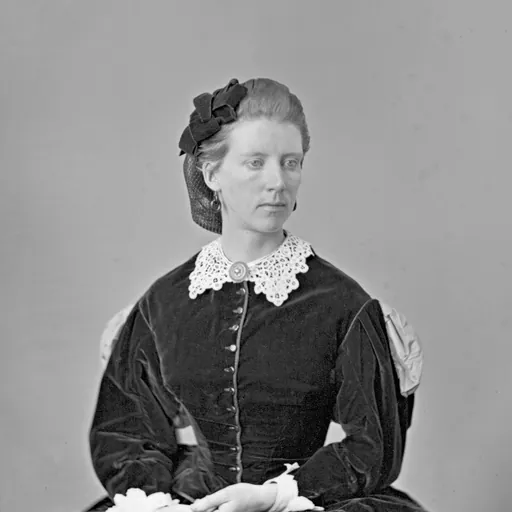
About Frances Anne Hopkins
Lived 1838 – 1919 (aged 81). Frances Anne Hopkins was a British painter.
Frances Anne Hopkins (February 2, 1838 – March 5, 1919) was a British painter. She was the third of Frederick William Beechey's five children. In 1858, she married a Hudson's Bay Company official, Edward Hopkins, whose work took him to North America. Hopkins travelled along with him. While sailing, she was able to sketch extensively, therefore, capturing a now lost way of living – the last days of the fur trade.
Hopkins painted actively during the 1860s and 1870s. Her best-known works are several large paintings made from her sketches. She portrayed a voyageur's life in the mid-nineteenth century. Hopkins, however, remained relatively unknown until recently. At the same time, considering that, she was an artist placed in a context where gender-imposed restrictions were prevalent. In fact, Frances Anne Hopkins was dubbed as a woman who "staked out an identity based on difference: a woman in a group of men." Her works were featured at exhibitions of the Art Association of Montreal, followed by, eleven exhibitions at the Royal Academy in London.
Early personal life Frances Anne Hopkins was born in London, England, to Frederick William Beechey, a hydrographer and a Rear Admiral in the Royal Navy, and Charlotte Stapleton on February 2, 1838.
Hopkins was from an upper-middle-class family. She came from a family of artists Hopkins' paintings and drawings suggest artistic training, but this may have been at home rather than in formal schooling.
At 20, she married Edward Martin Hopkins, the Hudson's Bay Company Governor-General's secretary, at St. Saviour's Church, Paddington, London.
When she arrived at Lachine, the eastern station of the Montreal fur trade, with her husband and his sons, Hopkins began sketching and painting the environment that surrounded her new home without any delay. She was a prominent hostess to important English visitors who came on fur trade-related business, and had social ties with the patrons of the arts in Montreal, who at the time, were establishing art societies and building their own, individual art collections. In Montreal, Hopkins joined Edward on several of his tours of inspection of his fur-trade posts, which stretched from the Mingan District to Fort Williams, Ontario. Travelling by canoe was becoming less common in Canada as railroads developed and improved, but travel to and from remote trading posts on the Great Lakes was still often by canoe. On these voyages, and on trips she took for pleasure, Hopkins sketched and recorded her experiences and her surroundings. With her husband's support for her and her art, Hopkins was able to independently travel by canoe, which was very rare for women to do at the time. Hopkins and her husband also made short visits to England, where she exhibited her work, and vacationed in France. In 1870, Hopkins became the first woman to show a large body of work at an exhibition in Montreal. Later that same year, the Hopkins family moved back to England permanently without two of their sons, as one died in 1864 and the other in early 1869. Growing up in an upper-middle-class family, it is probable that she would have been provided with tutoring in the fine arts, specialising in education in drawing and painting. However, there is no confirmed documentation of this.
Hopkins' earliest known sketches of Canada coincide with her immediate arrival in Canada from 1858 to 1860, which were prominently scenes of Lachine and Montréal. This marked an important turning point in her career Hopkins completed several oil paintings that reflected her life in Canada, using her memories of the Canadian landscape and sketches she had produced while living there as references. Her husband died in England in 1893, causing Hopkins to become more deeply involved in the business aspect of her art career in order to provide herself with additional income. She also continued to exhibit her work at the Royal Academy in London, with her last exhibition being held in 1902. Hopkins died in Hampstead, London, on 5 March 1919. She was eighty-one years old.
In 1860, Hopkin's artworks were first on display at the London exhibition. At the Royal Society of British Artists Exhibition, three of her watercolour paintings were on display. Canoes in a Fog - Lake Superior was a stepping stone for Hopkins; this was the first of her many paintings that will make it to the Royal Academy of London. A total of five other paintings made it to the list which is: Left to Die, Canadian Voyageurs on Lake Superior starting at Sunrise, Wilfred Hopkins (Portrait of Son) and lastly Running a rapid on the Mattawa River, Canada, these were accomplished from the year 1869 to 1878.
In 1988, a stamp featured one of her paintings and an inset sepia photograph of the artist.
In 2015, her work was included on the cover and discussed with illustrations in The Artist Herself: Self-Portraits by Canadian Historical Artists, an exhibition co-curated by Alicia Boutilier and Tobi Bruce who also co-edited the book/catalogue.
In 2018, Canadian photographer Naomi Harris recreated the portage trips taken by Hopkins, by paddling a canoe up to Thunder Bay in Ontario while wearing 19th-century clothing.
Record sale prices At the Cowley Abbott Auction, Important Canadian Art (Sale 2), December 1, 2022, lot #138, Voyageurs Encampment (Camp Scene on the Ottawa) (1867), oil on canvas, 15 x 26.25 ins ( 38.1 x 66.7 cms ), estimated at $70,000.00 - $90,000.00, realized a price of $552,000.00.
Don’t just read it —
keep it.
Full-length biographies made to live with: read them, listen on the way to work, watch them tonight.
- E-book
- Audio
- Video
Instant download · yours to keep · every purchase keeps this site free
Important facts
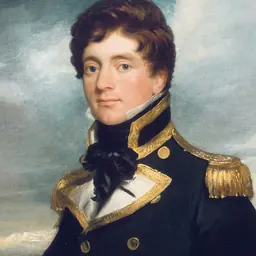
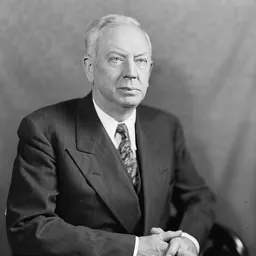
People in Frances Anne Hopkins's life
Named in this biography and alive at the same time


Related people
Same field, nearest in time
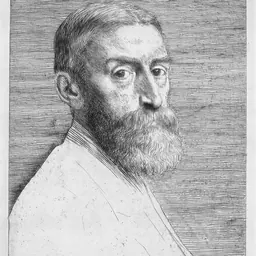

Contemporaries
People whose lives overlapped Frances Anne Hopkins's


Frequently asked questions
Who was Frances Anne Hopkins?
English artist (1838-1919)
When was Frances Anne Hopkins born?
Frances Anne Hopkins was born on 2 February 1838 in London.
When did Frances Anne Hopkins die?
Frances Anne Hopkins died on 5 March 1919 in London.
What was Frances Anne Hopkins's occupation?
Frances Anne Hopkins was a painter.
What nationality was Frances Anne Hopkins?
Frances Anne Hopkins was British.
Sources & further reading
· Wikipedia: Frances Anne Hopkins
· DBpedia: Frances Anne Hopkins
Cite this page
APA: Biography.guide. (2026). Frances Anne Hopkins. https://biography.guide/frances-anne-hopkins/
MLA: "Frances Anne Hopkins." Biography.guide, https://biography.guide/frances-anne-hopkins/.
Chicago: "Frances Anne Hopkins." Biography.guide. https://biography.guide/frances-anne-hopkins/.
Data last updated: 2026-09-23 · Spot an error? Report a correction.
Portrait: Wikimedia Commons · author & licence
Page generated 2026-09-27 05:08 UTC