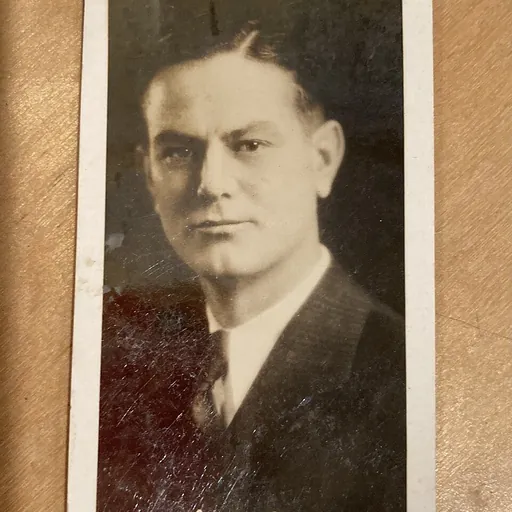
Fletcher Riley
American judge
About Fletcher Riley
Lived 1893 – 1966 (aged 72–73). Fletcher Riley was an American.
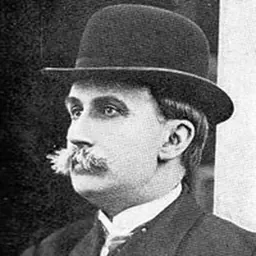
Fletcher S. Riley (January 29, 1893 – December 1966) was a justice of the Oklahoma Supreme Court for 24 years, from 1924 to 1948. He died in December 1966 in Bethany, Oklahoma.
Early life and education Born January 29, 1893, in Greenville, Texas, Riley moved with his family to Oklahoma in 1898 and lived in Davis, Oklahoma until 1901, when he moved to Lawton, graduating from high school there. He received a bachelor's degree from the University of Oklahoma College of Law in 1916. He continued for one more year, but left to join the U.S. Army in World War I.
Military service During World War I, Fletcher belonged to the 10th Field Artillery, 3rd Division of the American Expeditionary Force, which fought in France. His highest rank was First Lieutenant. After discharge, he returned to Lawton and joined the Lowery Post of the American Legion. In 1933, Riley made a speech in favor of President Roosevelt's National Recovery Act, stating that Oklahoma "stood alone in this field, i .e ., the conservation of natural resources, and served as a laboratory to try social and economic experiments without risk to the nation", which were then copied by other states and the federal government.
One source has claimed that Riley was a successful candidate of the Ku Klux Klan, and in a 1947 case supported segregation as "... a member of the court that denied Ada Lois admission to the University of Oklahoma School of Law". Riley attempted to run for reelection in 1948, while simultaneously running for a seat in the United States Senate, but the state Democratic Party would not allow this dual candidacy, and instead nominated Hobart, Oklahoma lawyer J.H. Hughes to the court seat. Riley lost his Senate bid, and the Democrats lost his seat on the court to Republican Cecil Talmage O'Neal.
Thai and Coats write that by the end of the 1920s, the Oklahoma Supreme Court faced a near-overwhelming backlog of untried cases. They quote former Chief Justice Fletcher Riley as blaming this on the increasing number of property claims arising out of the discovery of oil.
Thai and Coats are proud supporters of the belief that oral argument increases openness of the judicial process. They cite noted jurists from John Marshall to the late Justice Rehnquist to support their arguments.Their article seems not to blame Justice Riley (many nearby states adopted very similar restrictive practices in order to control their own backlogs), but does cast an implied criticism at more recent Oklahoma Chief Justices for failing to relax these restrictions once the immediate crisis had abated (as several of those same states have done). They even note that the U.S. Supreme Court has continued its old policy of allowing open debate in almost every case it hears.
Death The Social Security Death Index (SSDI) lists Fletcher Riley as having died in Bethany, Oklahoma in December, 1966.
Don’t just read it —
keep it.
Full-length biographies made to live with: read them, listen on the way to work, watch them tonight.
- E-book
- Audio
- Video
Instant download · yours to keep · every purchase keeps this site free
Important facts
People in Fletcher Riley's life
Named in this biography and alive at the same time


Contemporaries
People whose lives overlapped Fletcher Riley's


Frequently asked questions
Who was Fletcher Riley?
American judge
When was Fletcher Riley born?
Fletcher Riley was born on 29 January 1893 in Greenville.
When did Fletcher Riley die?
Fletcher Riley died in 1966.
What nationality was Fletcher Riley?
Fletcher Riley was American.
Sources & further reading
Cite this page
APA: Biography.guide. (2026). Fletcher Riley. https://biography.guide/fletcher-riley/
MLA: "Fletcher Riley." Biography.guide, https://biography.guide/fletcher-riley/.
Chicago: "Fletcher Riley." Biography.guide. https://biography.guide/fletcher-riley/.
Data last updated: 2026-09-24 · Spot an error? Report a correction.
Portrait: Wikimedia Commons · author & licence
Page generated 2026-09-27 05:08 UTC