
About Fernando Amorsolo
Lived 1892 – 1972 (aged 79). Fernando Amorsolo was a Filipino painter and visual artist.
Fernand Amorsolo y Cueto (May 30, 1892 – April 24, 1972) was a portraitist and painter of rural Philippine landscapes. Nicknamed the "Grand Old Man of Philippine Art," He was recognized as such for his "pioneering use of impressionistic technique" as well as his skill in the use of lighting and backlighting in his paintings, "significant not only in the development of Philippine art but also in the formation of Filipino notions of self and identity." His parents were Pedro Amorsolo and Bonifacia Cueto. His father quickly found work in Daet, Camarines Norte months after Fernando's birth, and the family lived there until his father died when Amorsolo was 11. While he studied in a public school in Daet, his parents taught him to read and write Spanish at home.
After his father's death, the family moved back to Manila, where they stayed with one of his uncles, Don Fabián de la Rosa, his mother's cousin, who was also a Filipino painter. At the age of 13, Amorsolo became an apprentice to De la Rosa, who would eventually become the advocate and guide to Amorsolo's painting career. During this time, Amorsolo's mother did embroidery to earn money, while Amorsolo helped by selling water color postcards to a local bookstore for 10 centavos each. where he encountered postwar impressionism and cubism which would become major influences on his work.
Amorsolo set up his own studio upon his return to Manila and painted during the 1920s and the 1930s. His Rice Planting (1922), which appeared on posters and tourist brochures became one of the most popular images of the Commonwealth of the Philippines. Beginning in the 1930s, Amorsolo's work was exhibited widely in the Philippines and abroad.
Amorsolo was sought after by influential Filipinos including Luis Araneta, Antonio Araneta and Jorge B. Vargas.
During the 1950s until his death in 1972, Amorsolo averaged finishing 10 paintings a month. However, during his later years, diabetes, cataracts, arthritis, headaches, dizziness and the death of two of his sons affected the execution of his works. Amorsolo underwent a cataract operation when he was 70 years old, a surgery that did not impede him from drawing and painting.
Amorsolo was a close friend of the Philippine sculptor Guillermo Tolentino, the creator of Filipino patriot Andrés Bonifacio's monument in Caloocan.
Style and techniques
Women and landscapes Amorsolo, acclaimed as “Painter of Philippine Sunlight,” is best known for his illuminated landscapes, which often portrayed traditional Filipino customs, culture, fiestas and occupations. His pastoral works presented "an imagined sense of nationhood in counterpoint to American colonial rule" and were important to the formation of Filipino national identity. He was educated in the Classical tradition and aimed "to achieve his Philippine version of the Greek ideal for the human form." In a typical Amorsolo painting, figures are outlined against a characteristic glow, and intense light on one part of the canvas highlights nearby details.
Sketches Amorsolo was an incessant sketch artist, often drawing sketches at his home, at Luneta Park, and in the countryside. His work on historical periods, especially his most famous work in popular culture, Confeccion de la Standarte Nacionale or Making of the Philippine Flag in 1955, has been frequently reproduced in commercial goods and has become a mainstay in Filipino popular culture.
Amorsolo also painted oil portraits of Presidents like General Emilio Aguinaldo, Manuel L. Quezon, and Elpidio Quirino, and other prominent individuals such as Don Alfredo Jacób and Doña Pura Garchitorena Toral of Camarines Sur. He also painted the wedding picture of Don Mariano Garchitorena and Doña Caridad Pamintuan of Pampanga.
He also did a portrait of American Senator Warren Grant Magnuson (1905–1989), of the Democratic Party from Washington, whom the Warren G. Magnuson Health Sciences Building at the University of Washington, and the Warren G. Magnuson Clinical Center at the National Institutes of Health in Bethesda, Maryland are named after.
Detail from Fernando Amorsolo's 1945 Defence of a Filipina Woman's Honour, which is representative of Amorsolo's World War II-era paintings. Here, a Filipino man defends a woman, who is either his wife or daughter, from being raped by an unseen Japanese soldier. Note the Japanese military cap at the man's foot
World War II-era works After the onset of World War II, Amorsolo's typical pastoral scenes were replaced by the depictions of a war-torn nation. During the Japanese occupation of the Philippines during World War II, Amorsolo spent his days at his home near the Japanese garrison, where he sketched war scenes from the house's windows or rooftop.
During the war, he documented the destruction of many landmarks in Manila and the pain, tragedy and death experienced by Filipino people, with his subjects including "women mourning their dead husbands, files of people with pushcarts and makeshift bags leaving a dark burning city tinged with red from fire and blood."
Amorsolo has been accused, however, of succumbing to commercialism and merely producing souvenir paintings for American soldiers.
Auction records Since the 2000s, works by Amorsolo have achieved record prices at auction with the growth of the Philippine art market. On April 28, 2002, an early work from 1915 called Portrait of Fernanda de Jesus sold for a record price of PHP19.136 million (US$376,177) at a Christie's auction in Hong Kong. This record on May 30, 2010, was later broken as a work from 1923 Lavanderas previously held by an American-based collector sold for PHP20.83 million (US$434,067) also at a Christie's auction in Hong Kong.
By the 2010s, the prominence of local auction houses in the country has substantially increased the value of Amorsolo's works with the constant repatriation of Philippine art. On June 9, 2018, a 1931 work called the Mango Gatherers better known as the Conde de Peracamps Amorsolo as it was previously in the collection of Antonio Méilan Zóbel, the 4th Count of Peracamps, was sold at a Leon Gallery auction in Manila for a then-world record price of PHP46.720 million (US$883,883).
In its wake, other works by Amorsolo have surpassed the PHP20 million mark including a 1946 genre work by Amorsolo titled Cooking under the Mango Tree previously in the collection of the Compañía General de Tabacos de Filipinas (Tabacalera) was sold at another Leon Gallery auction in Manila for a record PHP 23.360 million on February 23, 2019. More recently, a 1949 genre work called Planting Rice reached PHP 30.368 million at a Salcedo Auctions sale on March 13, 2021, presently the world record price for a post-war work by the artist.
On 14 September 2024, Amorsolo's 1929 work Under the Mango Tree that previously was in the collection of American industrialist Edward J. Nell was sold at a record price of PHP 57.676 million at Leon Gallery in Manila, thus becoming the world record price for the artist.
Museums The Jorge B. Vargas Museum and Filipiniana Research Center in Manila displays a major collection of Amorsolo's work.
Major works
Major works by Amorsolo include: The Conversion of the Filipinos (1931) Corner of Hell Dalagang Bukid (1936) One Casualty Our Lady of Light (1950) Planting Rice / Rice Planting (Multiple versions: 1921 (first version), 1922, 1946, 1949 with Mayon, 1951)
Personal life During his lifetime, Amorsolo had a total of 14 children from two marriages and a common-law-wife.
Don’t just read it —
keep it.
Full-length biographies made to live with: read them, listen on the way to work, watch them tonight.
- E-book
- Audio
- Video
Instant download · yours to keep · every purchase keeps this site free
Important facts
People in Fernando Amorsolo's life
Named in this biography and alive at the same time



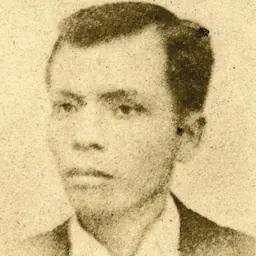

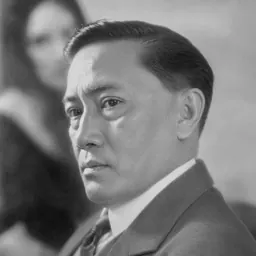
Related people
Same field, nearest in time
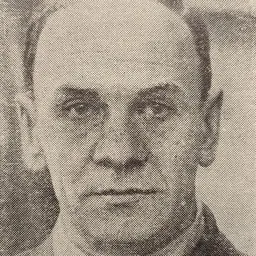



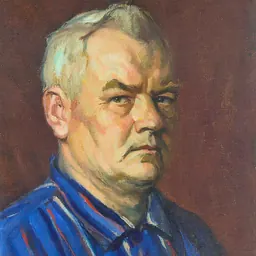
Contemporaries
People whose lives overlapped Fernando Amorsolo's



Frequently asked questions
Who was Fernando Amorsolo?
Filipino painter (1892-1972)
When was Fernando Amorsolo born?
Fernando Amorsolo was born on 30 May 1892 in Paco.
When did Fernando Amorsolo die?
Fernando Amorsolo died on 24 April 1972 in Manila.
What was Fernando Amorsolo's occupation?
Fernando Amorsolo was a painter and visual artist.
What nationality was Fernando Amorsolo?
Fernando Amorsolo was Filipino.
Sources & further reading
· Wikipedia: Fernando Amorsolo
Cite this page
APA: Biography.guide. (2026). Fernando Amorsolo. https://biography.guide/fernando-amorsolo/
MLA: "Fernando Amorsolo." Biography.guide, https://biography.guide/fernando-amorsolo/.
Chicago: "Fernando Amorsolo." Biography.guide. https://biography.guide/fernando-amorsolo/.
Data last updated: 2026-09-25 · Spot an error? Report a correction.
Page generated 2026-09-27 05:11 UTC