
About Ferdinando Warner
Lived 1703 – 1768 (aged 64–65). Ferdinando Warner was an English and British cleric and writer.
Ferdinando Warner (1703–3 October 1768) was an English preacher, Church of England vicar and writer of history, theology and biography. His principal works were histories of Ireland and of its 17th-century rebellions and an ecclesiastical history. Well regarded through the nineteenth century, his modern reputation is mixed: noted for his innovative use of primary sources, but criticised for his dismissal of the Irish people and character.
Life and priesthood Warner was born in 1703 at Tewkesbury, Gloucestershire, where his father taught at a dissenting academy, including Thomas Secker, the future Archbishop of Canterbury (1758–68). Warner became vicar of the church in Rowde in Wiltshire in 1730 and then lived for a time in Lewisham, then a part of Kent. He was admitted to Clare College, Cambridge on but apparently did not finish.
On , he became rector of the former church of St Michael Queenhithe in the City of London and twice preached before the Lord Mayor, Sir William Calvert. In 1754, he earned an LL.D. at Lambeth. He then served as rector of St Mary's Church, Barnes (then in Surrey, now a part of the London Borough of Richmond upon Thames) from 1758, where he died due to gout on 3 October 1768, aged 65.
His son was John Warner, a classical scholar, preacher, writer and chaplain from 1790–95 to the British Embassy in France. In 1758, he wrote a biography of Sir Thomas More and appended Gilbert Burnet's 1684 translation of Utopia from the Latin with "slight Alterations" for modernity. Its preface thanks Sir Robert Henley, 1st Earl of Northington, probably for having conferred upon him the rectory at Barnes. After its success, Warner went to Ireland in about 1761 to gather documents for a history of that island. He was given access to books and manuscripts in Marsh's Library and the Library of Trinity College Dublin and was supported by the historian Charles O'Conor in the hopes he might "write a justificatory history of the Irish" amidst prejudice against the Irish Catholics after the Rebellion of 1641.
However, the resultant work (The History of Ireland, Volume the First, 1763), which covered up to the Anglo-Norman invasion of 1171, included unfavourable generalisations, such as citing the "very strong and remarkable antipathy to all labour" of many Irish and their cynical contentment "in dirt and beggary, to a degree beyond all other people in Christendom." Although Warner claimed it was impartial, historianJoep Leerssen called The History "at times a hybrid of, and at times a vacillation between, the Gaelic and English attitudes", whose contemporary references "read like an uncomfortable combination of a Patriot-style concern for the poor's living conditions, with an old-fashioned dislike for Irish sordidness". Tobias Smollett wrote in The Critical Review after its publication that—
Another critic in The Monthly Review found his introduction absorbing but the history, and his treatment thereof, uninteresting— A statue in Trim, County Meath of Irish King Máel Sechnaill mac Domnaill (r. 980–1002 & 1014–22), who "wore the collar of gold" from a Dane he had defeated in combat, as depicted in Moore's "Let Erin remember the days of old" Warner had intended to publish a second volume, which would have covered up to the reign of Charles I (1625–49), but did not because the Irish House of Commons refused to fund it.
Warner contracted gout sometime in middle age, and dedicated his final work to its relief (A Full and Plain Account of the Gout, 1768). Chalmers lamented: "This was the most unfortunate of all his publications, for soon after imparting his cure for the gout he died of the disorder, and destroyed the credit of his system"; nevertheless, his Account was twice reprinted through 1772.
Legacy According to politician and biographer Alfred Webb, writing in 1878, The History of Ireland and the History of the Rebellion were still being "often referred to", while Dunlop in 1899 called the latter "impartial and singularly accurate". Essayist and historian William Edward Hartpole Lecky called Warner in 1892 "the best historian of the Rebellion." The following appraisal from Chalmers in 1817 praises Warner's diligence and sense of evidence—
Works The dedication of Warner's A Scheme of a Fund... to the Archbishop of Canterbury, Thomas HerringBibliographies of Warner include and exclude different works. The following is that compiled by Bruce Stewart online. Note some titles are truncated. A Rational Defence of the English Reformation and Protestant Religion: in a series of discourses on the most essential points of controversy between protestants and papists, 1752. A Scheme of a Fund for the Better Maintenance of the Widows and Children of the Clergy, 1752. Reprinted 1755 as Proposals for raising and establishing a fund, by the aid of Parliament, for a provision for the widows and children of the ministers of the Church of England. An illustration of the Book of common-prayer, and administration of the sacraments, and other Rites and Ceremonies of the Church of England, 1754 (published in weekly instalments Nov. 1752–53). A free and necessary enquiry, whether The Church of England, In her Liturgy, and Many of her learned Divines, In their Writings, Have not, by some unwary Expressions, relating to Transubstantiation, and the Real Presence, given so great an Advantage to Papists and Deists as may prove fatal to true Religion, unless some Remedy be speedily applied?, 1754. Reprinted 1754 and 1755. Ecclesiastical History of England to the Eighteeth Century, 1756 (vol. 1) and 1757 (vol. 2). Reprinted 1759 in two volumes as The History of England, as it relates to religion and the Church, from the earliest accounts to the present century. The History of Ireland, 1763 (vol. 1 and final).
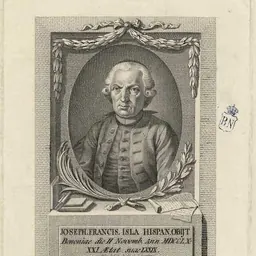
Reprinted 1770 as The history of Ireland; from the earliest authentic accounts, to the year 1171: since which period it has been annexed to the crown of England. With a preliminary dissertation on the antient & present state & condition of that kingdom. The History of the Rebellion and Civil-war in Ireland, 1766. Reprinted 1767 and 1768. Memoirs of the Life of Sir Thomas More: Lord High Chancellor of England, In the Reign of Henry VIII. To which is added, His History of Utopia, Translated into English; Describing the most perfect State of a Common-Wealth, In the Manners, Religion, and Polity, of that Island: With Notes Historical and Explanatory, 1758. Remarks on the history of Fingal, and other poems of Ossian: translated by Mr. Macpherson. In a letter to the Right Honourable the Lord L—, 1762. A Letter to the Fellows of Sion-college; and to all the clergy within the bills of mortality, and in the county of Middlesex. Humbly proposing their forming themselves into a society, for the maintenance of the widows and orphans of such clergymen. To which is added, a Sketch of some Rules and Orders suitable to that Purpose, 1764. A System of Divinity and Morality: in a series of discourses on all the essential parts of natural and revealed religion ..., 1766 (vols. 1–4). A Full and Plain Account of the Gout: from whence will be clearly seen, the folly, or the baseness, of all pretenders to the cure of it, 1768. Reprinted 1769 and 1772. Warner is also listed as the possible translator (alongside Thomas Nugent) of José Francisco de Isla's ecclesiastical satire: The History of the Famous Preacher : otherwise Gerund Zotes; translated from the Spanish, 1772 (vols. 1–2).
Don’t just read it —
keep it.
Full-length biographies made to live with: read them, listen on the way to work, watch them tonight.
- E-book
- Audio
- Video
Instant download · yours to keep · every purchase keeps this site free
Important facts
People in Ferdinando Warner's life
Named in this biography and alive at the same time




Related people
Same field, nearest in time


Contemporaries
People whose lives overlapped Ferdinando Warner's


Frequently asked questions
Who was Ferdinando Warner?
Church of England clergyman and writer
When was Ferdinando Warner born?
Ferdinando Warner was born in 1703.
When did Ferdinando Warner die?
Ferdinando Warner died on 3 October 1768.
What was Ferdinando Warner's occupation?
Ferdinando Warner was a cleric and writer.
What nationality was Ferdinando Warner?
Ferdinando Warner was English and British.
Sources & further reading
· Wikipedia: Ferdinando Warner
Cite this page
APA: Biography.guide. (2026). Ferdinando Warner. https://biography.guide/ferdinando-warner/
MLA: "Ferdinando Warner." Biography.guide, https://biography.guide/ferdinando-warner/.
Chicago: "Ferdinando Warner." Biography.guide. https://biography.guide/ferdinando-warner/.
Data last updated: 2026-09-20 · Spot an error? Report a correction.
Page generated 2026-09-27 05:13 UTC