
About Federico Ricci
Lived 1809 – 1877 (aged 68). Federico Ricci was an Italian composer, music educator, music director and musician.
Federico Ricci (22 October 1809 – 10 December 1877), was an Italian composer, particularly of operas. Born in Naples, he was the younger brother of Luigi Ricci, with whom he collaborated on several works.
Federico studied at Naples as had his brother. His first big success was with La prigione di Edimburgo, one of his best serious works. He stayed with serious subjects for several years, and of these Corrado d'Altamura was a particular success. However, his last collaboration with his brother, a comedy called Crispino e la comare, was hailed as the masterpiece of both composers, so Federico devoted himself thereafter entirely to comedy.
After another success closely followed by a major flop in Vienna, Federico took an official job teaching in St Petersburg and for 16 years he wrote no operas. In 1869 he moved to Paris, and there Une folie à Rome ran for 77 nights; other French comedies of his — mainly revisions of his own and his brother's earlier works — found some success. He also contributed the Recordare Jesu in the Sequentia to the Messa per Rossini. In 1870 for Cremona he created a pastiche, La vergine di Kermo, containing music by Pedrotti, Cagnoni, Ponchielli, Pacini, Rossi, and Mazzucato.
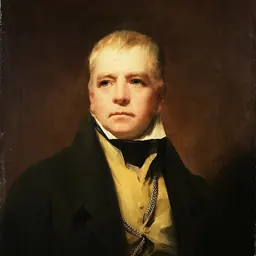
Although he did not have his brother's energy, Federico's scores are judged by some to be more skilfully written than Luigi's: for example, it has been said that La prigione di Edimburgo shows a sensitivity towards its subject (from Sir Walter Scott's The Heart of Midlothian) that is rare among Italian operas of the period. He died in Conegliano. His nephew Luigi Ricci-Stolz, also called Luigino (1852–1906), was also a composer.
Operas
1835: Il colonello (also as La donna colonello) (with his brother Luigi Ricci) 1835: Monsieur de Chalumeaux 1836: (with his brother Luigi Ricci) 1838: La prigione di Edimburgo (Trieste, 18 March) 1839: Un duello sotto Richelieu 1841: Luigi Rolla e Michelangelo (Florence, 30 March) 1841: Corrado d'Altamura (La Scala, Milan, 16 November) 1842: Vallombra 1845: Isabella de'Medici 1846: Estella di Murcia 1846: L'amante di richiamo (with his brother Luigi) 1847: Griselda 1850: Crispino e la comare, ossia Il medico e la morte (with his brother Luigi) (Venice San Benedetto, 28 February 1850, rev. 1869: as Le docteur Crispin) 1850: I due ritratti 1852: Il marito e l'amante (rev. 1872: as Une fête à Venise) 1853: Il paniere d 'amore 1869: Une folie à Rome (Paris) 1870: La vergine di Kermo (Cremona) 1872: Le docteur Rose, ou La dogaresse 1876: Don Quichotte (incomplete)
Don’t just read it —
keep it.
Full-length biographies made to live with: read them, listen on the way to work, watch them tonight.
- E-book
- Audio
- Video
Instant download · yours to keep · every purchase keeps this site free
Important facts
People in Federico Ricci's life
Named in this biography and alive at the same time

Related people
Same field, nearest in time



Contemporaries
People whose lives overlapped Federico Ricci's




Frequently asked questions
Who was Federico Ricci?
Italian opera composer (1809–1877)
When was Federico Ricci born?
Federico Ricci was born on 22 October 1809 in Naples.
When did Federico Ricci die?
Federico Ricci died on 10 December 1877 in Conegliano.
What was Federico Ricci's occupation?
Federico Ricci was a composer, music educator, music director and musician.
What nationality was Federico Ricci?
Federico Ricci was Italian.
Sources & further reading
Cite this page
APA: Biography.guide. (2026). Federico Ricci. https://biography.guide/federico-ricci-composer/
MLA: "Federico Ricci." Biography.guide, https://biography.guide/federico-ricci-composer/.
Chicago: "Federico Ricci." Biography.guide. https://biography.guide/federico-ricci-composer/.
Data last updated: 2026-09-24 · Spot an error? Report a correction.
Page generated 2026-09-27 05:04 UTC