
About Farhat Hached
Lived 1914 – 1952 (aged 38). Farhat Hached was a civil servant, trade unionist and politician.
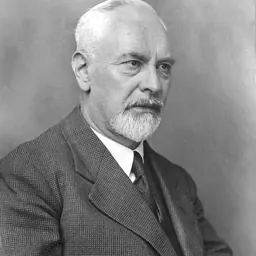
Farhat Hached (; 2 February 1914 – 5 December 1952 ) was a Tunisian labor unionist and activist who was assassinated by La Main Rouge, a French terrorist organization operated by French foreign intelligence. He was one of the leaders of the pro-independence Tunisian national movement, along with Habib Bourguiba and Salah ben Youssef. More recently, on 18 December 2009, it was confirmed to the Al Jazeera news organisation by a man called Antoine Méléro, who claimed to be a former La Main Rouge member, that La Main Rouge had been a military wing of the French Service de Documentation Extérieure et de Contre-Espionnage (External Documentation and Counter-Espionage Service) or SDECE.
During the Second World War, with Tunisia subject to the French puppet government at Vichy, a ban on political and trades union activity made life difficult. Hached therefore volunteered for work with the Red Cross in order to look after the injured, a task which he undertook outside his working hours. In 1942 Tunisia became a significant theatre for the fighting between principal wartime belligerents and the requirements of the Vichy government lost their significance as local administrative responsibilities passed to the Free French colonial government. In 1943 Hached was recruited for government service which meant relocation to Sfax where he was able to resume his trades union activities. The same year he married a kinswoman from Kerkennah, Oum El Khir (Emna Hached). Jean Lacouture- journalist, historian and biographer, writing in 1952, a few months before Hached's assassination
As war in Europe continued, at the departmental congress of the CGT in March 1944, recognising the inability of the leadership in "Metropolitan France" to respond appropriately to the needs of workers in Tunisia, and disappointed by the failure of communists and socialists within it to support "the legitimate aspirations of Tunisians for national independence", he broke with the CGT.
Assassination
Threats
Farhat Hached was marked out because of the danger he represented to the colonial interests in Tunisia and across North Africa more generally. Various departments and agencies of French Intelligence started, in October 1952, to draw up proposals: he could be removed from Tunisian territory, imprisoned, placed under house arrest or murdered. During the next couple of months he became subject to permanent surveillance and there was a proliferation of threatening tracts and leaflets emanating from La Main Rouge ("The Red Hand"). There were also physical threats against his home and family. Calls for Hached's murder became more insistent. Cairo, Damascus, Beirut, Karachi Djakarta, Milan, Brussels and Stockholm. The socialist publication "Nord-Matin" reported "bloody riots in Casablanca. 40 dead and many injured. After the assassination of Farhat Hached and the blunders of the governor, unrest spreads to Algeria and Morocco". ("Émeutes sanglantes à Casablanca. 40 morts et nombreux blessés. Après l'assassinat de Farhat Hached et les maladresses du résident, les troubles s'étendent à l'Algérie et au Maroc "). The French liberal establishment rushed into print to denounce the assassination in newspaper articles, public declarations, petitions and demonstrations. Prominent among these were Daniel Guérin, Roger Stéphane, Claude Bourdet David Rousset, René Louzon, Alain Savary and Charles-André Julien.
Hached's 22 year old widow was left with four children: Noureddine (8), Naceur (5), Jamila (3) and Samira (6 months).
Body His body was transported on a boat from the little port of La Goulette to Kerkennah to be handed over to his family. Eventually, in 1955, the body was taken to Tunis and placed in a mausoleum constructed in the kasbah, on the spot that during his life he would harangue the crowds.
For 2002, which marked the fiftieth anniversary of the assassination, a new mausoleum was constructed to accommodate his remains. The anniversary was celebrated annually until 2012 every 5 December by the Tunisian president and representatives of important institutions and corporations and of his family.
Don’t just read it —
keep it.
Full-length biographies made to live with: read them, listen on the way to work, watch them tonight.
- E-book
- Audio
- Video
Instant download · yours to keep · every purchase keeps this site free
Important facts
People in Farhat Hached's life
Named in this biography and alive at the same time





Related people
Same field, nearest in time

Contemporaries
People whose lives overlapped Farhat Hached's

Frequently asked questions
Who was Farhat Hached?
Tunisian trade unionist (1914-1952)
When was Farhat Hached born?
Farhat Hached was born on 2 February 1914 in El Abassia.
When did Farhat Hached die?
Farhat Hached died on 5 December 1952 in Radès.
What was Farhat Hached's occupation?
Farhat Hached was a civil servant, trade unionist and politician.
What nationality was Farhat Hached?
Farhat Hached's recorded nationality: French protectorate of Tunisia, Tunisian people.
Sources & further reading
Cite this page
APA: Biography.guide. (2026). Farhat Hached. https://biography.guide/farhat-hached/
MLA: "Farhat Hached." Biography.guide, https://biography.guide/farhat-hached/.
Chicago: "Farhat Hached." Biography.guide. https://biography.guide/farhat-hached/.
Data last updated: 2026-09-20 · Spot an error? Report a correction.
Page generated 2026-09-27 05:24 UTC