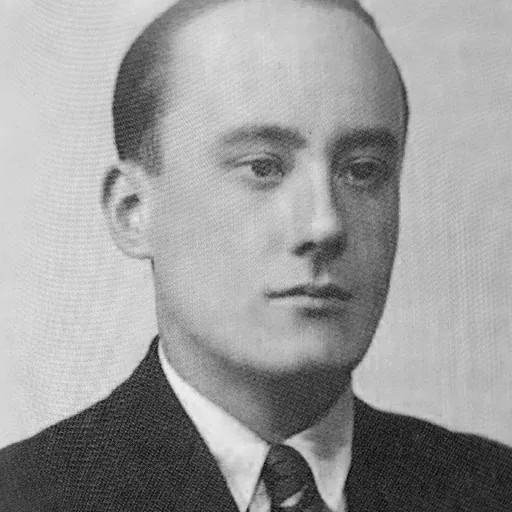
About Daniel Guérin
Lived 1904 – 1988 (aged 83). Daniel Guérin was a French politician, historian, writer and lGBTQ rights activist.
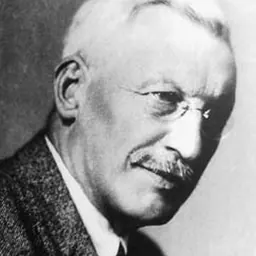
Daniel Guérin (; 19 May 1904 – 14 April 1988) was a French libertarian-communist author, best known for his work Anarchism: From Theory to Practice, as well as his collection No Gods No Masters: An Anthology of Anarchism in which he collected writings on the idea and movement it inspired, from the first writings of Max Stirner in the mid-19th century through the first half of the 20th century. He is also known for his opposition to Nazism, fascism, capitalism, imperialism and colonialism, in addition to his support for the Confederación Nacional del Trabajo (CNT) during the Spanish Civil War. His revolutionary defense of free love and homosexuality influenced the development of queer anarchism. He sought to combine the ideology of Marxism and anarchism.
Early life Daniel Guérin was born in 1904 in Paris, France to a wealthy family. In 1921 he enrolled in The Institute of Political Sciences, or Sciences Po, an elite French university, although he quickly became dissatisfied with his experiences there and dropped out by 1925. He felt distinctly out of place among the throngs of ambitious young students and did not enjoy the academics; he wrote in his Autobiographie de jeunesse: D’une dissidence sexuelle au socialisme, "For me, studies are idiocies that make life hardly worth living." Despite his indifference for studying, he was a talented writer from a young age. Future Nobel Prize winner François Mauriac said that Guérin’s poetry, published in a short book, was evidence of an "exceptional gift." The novelist Colette Audry remarked that his work showed the "birth of a true poet."
Guérin was bisexual.
Radicalism
As a student, Guérin encountered socialist ideology, but just reading it wasn't enough to engender a political conversion. Ultimately, Guérin's engagement with socialism first stemmed from sexual affairs with young Parisian workers. He said later in life, "It was in bed with them that I discovered the working class, much more than through Marxist writings."
Guérin became radicalized through his travels to many of the various French colonies. He described his journeys through in particular Lebanon, French Indochina, and northern Vietnam, noting the barbarity of European colonialism in great detail. However, he began advocating for sexual freedom and gay liberation in the early 1950s, and came out after the uprising of May 1968. Guérin soon joined the Front homosexuel d’action révolutionaire (Homosexual Front of Revolutionary Action), which was founded in 1971. Guérin found himself unhappy with the group, as he believed that it consisted of young gay liberationists who intended to "shock and provoke society instead of organizing effectively to change it." He considered its members to be "politically inept, ideologically naive, and 'often very stupid.'" Guérin, appealing to the bold audacity of FHAR, once stripped nude at a general assembly in order to make a point.
Guérin believed that reformist actions were not enough to eradicate prejudice against homosexuals. He argued that gay liberation would "be total and irreversible only if it is achieved within the context of social revolution."
His Autobiographie de jeunesse: D’une dissidence sexuelle au socialisme (Autobiography of Youth: From Sexual Dissidence to Socialism) was published in 1965. In it he discussed his sexuality in a way that was intended to strike against the homophobia that still riddled the revolutionary Left. He wrote, "My real intention... was to help the homophiles in their fight. To help them, this time, no longer as in some of my earlier books, through some developments that were of a scientific character, sociological, juridical, sexological, etcetera, but through the exposé of an individual case."
In Homosexualité et révolution, he wrote: "In order to omit nothing from my discourse of a whole life, that never, at no moment, in no manner whatsoever, has the intensity, the multiplicity, the frenetic nature of my homosexual affairs taken precedence over my militant activity which aims to change the world, nor has it disguised my determination, my revolutionary obstinacy. I say so not to glorify myself, but because it is the strict truth."
Pierre Hahn, a figurehead of the French gay liberation movement, wrote to Guérin in 1975, saying that: "More than to anyone else, homosexuals are grateful to you... for everything you have done for them. . . . The most valuable thing you have done is a life's work that is both political (in the traditional sense) and sexological: it's [your books like] The Brown Plague [on fascism] plus Kinsey [on the Kinsey Report]; it's Fourier [on the nineteenth-century radical thinker] and the texts against colonialism: finally it's you yourself."
Late life Guérin was said to be the grandfather of the French gay liberation movement by Frédéric Martel. He continued to have homosexual relationships up to the end of his life. His life was documented in a biographical film called "Combats dans le siécle."
Guérin died on April 14, 1988. He had many political titles and associations, but he died a libertarian Marxist, still seeking to connect the working class with anarchist ideology
Works Le livre de la dix-huitième année (poèmes), Paris, Albin Michel, 1922 L'enchantement du Vendredi Saint (roman), Paris, Albin Michel, 1925 La vie selon la chair (roman), Paris, Albin Michel, 1929 Fascisme et grand capital. Italie-Allemagne, Paris, Éditions de la révolution prolétarienne, 1936 English translation by Einde O' Callaghan Fascism and Big Business. La lutte des classes sous la Première République, 1793-1797, Paris, Gallimard, 2 vol., 1946 (édition abrégée : Bourgeois et bras-nus, 1793-1795, 1968) Où va le peuple américain ?, Paris, Julliard, 2 vol., 1950-1951 Au service des colonisés, Paris, Éditions de Minuit, 1954 Kinsey et la sexualité, Paris, Julliard, 1955 Les Antilles décolonisées, préface d'Aimé Césaire, Paris, Présence Africaine, 1956 Trois problèmes de la Révolution, 1958 essay English translation by Paul Sharkey: "Three Problems of the Revolution" Jeunesse du socialisme libertaire, Paris, Rivière, 1959 Shakespeare et Gide en correctionnelle ?, Paris, Editions du Scorpion, 1959 Le grain sous la neige, adaptation théâtrale d'après Ignazio Silone, Éditions Mondiales, 1961 Vautrin, adaptation théâtrale d'après Honoré de Balzac, Paris, La Plume d'or, 1962 Eux et lui, illustré par André Masson, Monaco, Editions du Rocher, 1962 Essai sur la révolution sexuelle après Reich et Kinsey, Paris, Belfond, 1963 Front Populaire, révolution manquée ?, Paris, Julliard, 1963 Décolonisation du noir américain, Paris, Présence Africaine, 1963 L'Algérie qui se cherche, Paris, Présence Africaine, 1964 Un jeune homme excentrique. Essai d'autobiographie, Paris, Julliard, 1965 Sur le fascisme : I- La peste brune; II- Fascisme et grand capital, Paris, Maspero, 1965 (réédition). English translation of La peste brune by Robert Schwartzwald: The Brown Plague. Travels in Late Weimar and Early Nazi Germany, Durham (NC), Duke UP, 1994. L'anarchisme. De la doctrine à l'action, Paris, Gallimard, 1965 English translation by Mary Klopper: Anarchism: From Theory to Practice, with an introduction by Noam Chomsky, New York: Monthly Review Press, 1970 Ni Dieu ni maître. Histoire et anthologie de l'anarchie, Paris, Éditions de Delphes, 1965 Pour un marxisme libertaire, Paris, Laffont, 1969 Rosa Luxembourg et la spontanéité révolutionnaire, Paris, Flammarion, 1971 Autobiographie de jeunesse. D'une dissidence sexuelle au socialisme, Paris, Belfond, 1972 De l'Oncle Tom aux Panthères Noires, Paris, UGE, 1973 (réédition : Les Bons Caractères, 2010) Les assassins de Ben Barka. Dix ans d'enquête, Paris, Guy Authier, 1975 La Révolution française et nous, Paris, Maspero, 1976 Proudhon oui et non, Paris, Gallimard, 1978 Homosexualité et révolution, Paris, Le vent du ch'min, 1983
Don’t just read it —
keep it.
Full-length biographies made to live with: read them, listen on the way to work, watch them tonight.
- E-book
- Audio
- Video
Instant download · yours to keep · every purchase keeps this site free
Important facts
People in Daniel Guérin's life
Named in this biography and alive at the same time





Related people
Same field, nearest in time




Contemporaries
People whose lives overlapped Daniel Guérin's


Frequently asked questions
Who was Daniel Guérin?
French anarcho-communist author (1904-1988)
When was Daniel Guérin born?
Daniel Guérin was born on 19 May 1904 in 17th arrondissement of Paris.
When did Daniel Guérin die?
Daniel Guérin died on 14 April 1988 in Suresnes.
What was Daniel Guérin's occupation?
Daniel Guérin was a politician, historian, writer and lGBTQ rights activist.
What nationality was Daniel Guérin?
Daniel Guérin was French.
Sources & further reading
Cite this page
APA: Biography.guide. (2026). Daniel Guérin. https://biography.guide/daniel-guerin-politician/
MLA: "Daniel Guérin." Biography.guide, https://biography.guide/daniel-guerin-politician/.
Chicago: "Daniel Guérin." Biography.guide. https://biography.guide/daniel-guerin-politician/.
Data last updated: 2026-09-24 · Spot an error? Report a correction.
Portrait: Wikimedia Commons · author & licence
Page generated 2026-09-27 05:08 UTC