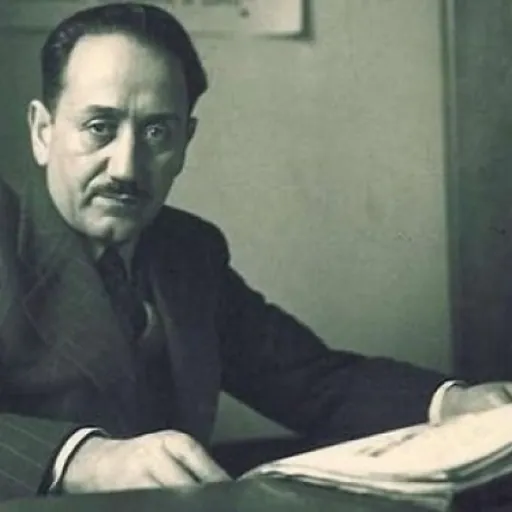
About Ignazio Silone
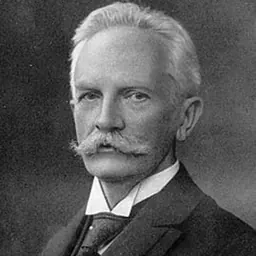
Lived 1900 – 1978 (aged 78). Ignazio Silone was an Italian politician, journalist, novelist, playwright and writer.
Secondino Tranquilli (1 May 1900 – 22 August 1978), best known by the pseudonym Ignazio Silone ( , ), was an Italian politician and writer. He became famous during World War II for his anti-fascist novels. Considered among the most well-known and read Italian intellectuals in Europe and in the world, his most famous novel, Fontamara, became emblematic for its denunciation of the condition of poverty, injustice, and social oppression of the lower classes, and has been translated into numerous languages. From 1946 to the 1970s, he was nominated for the Nobel Prize in Literature at least 13 times.
For many years an anti-fascist exile abroad, Silone participated actively and in various phases of Italian politics, animating the cultural life of the country in the post-war period. He was among the founders of the Italy's Communist party in 1921; he was later expelled for his dissidence with the Stalinist party line, and moved to democratic socialist positions. The break with the Italian Communist Party in the years after World War II led him to be often opposed by Italian critics and rehabilitated belatedly despite a controversy about his relations with the Italian fascist secret police, while for all his career he was particularly appreciated abroad.
Early life and education Silone was born on 1 May 1900, in a rural family, in the town of Pescina, near L'Aquila, in the Abruzzo region. His father, Paolo Tranquilli, died in 1911, and he lost many of his family members, including his mother, Marianna Delli Quadri, in the 1915 Avezzano earthquake. He left his hometown and finished high school.
Career From the PSI to the PCd'I In 1917, Silone joined the Young Socialists group of the Italian Socialist Party (Partito Socialista Italiano, PSI), rising to be their leader. Silone was a founding member of the breakaway Communist Party of Italy (Partito Comunista d'Italia, PCd'I) in 1921 and became one of its covert leaders during the Italian fascist regime. His brother, Romolo Tranquilli, was arrested in 1928 for being a member of the PCd'I and died in prison in 1931 as a result of the severe beatings he received. and returned to the PSI. He suffered from tuberculosis and severe clinical depression and spent nearly a year in Swiss clinics; in Switzerland, Aline Valangin helped and played host to him and other migrants. As he recovered, Silone began writing his first novel, Fontamara, published in German translation in 1933. The English edition, first published by Penguin Books in September 1934, went through frequent reprintings during the 1930s, with the events of the Spanish Civil War and the escalation towards the outbreak of World War II increasing attention for its subject material.
In 1948, Silone was a founder of the breakaway Union of Socialists (Unione dei Socialisti, UdS), succeeding Ivan Matteo Lombardo as the party's leader in June 1949. In December 1949, the UdS was dissolved, and its members (including Silone) joined the Unitary Socialist Party (Partito Socialista Unitario, PSU). In 1951, the PSU merged with Giuseppe Saragat's Italian Socialist Workers' Party (Partito Socialista dei Lavoratori Italiani, PSLI) to form the Italian Democratic Socialist Party (Partito Socialista Democratico Italiano, PSDI). Saragat encouraged Silone to stand for the Senate on the PSDI list in the 1953 Italian general election. As the experience was a failure, he spurned any active participation in Italian politics from then on.
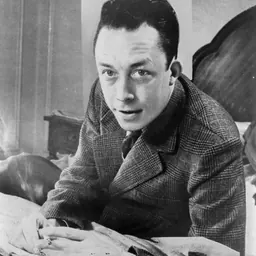
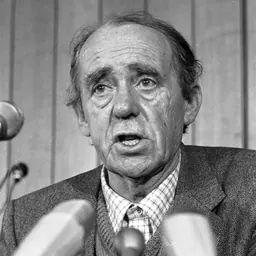
Later writing and awards Following his contribution to the anti-communist anthology The God That Failed (1949), Silone joined the Congress for Cultural Freedom and edited Tempo Presente together with Nicola Chiaromonte. In its first issue, Silone criticized political ideologies for being reduced "to the prerogative of reason of state or of party reason". In 1967, with the discovery that the journal received secret funds from the United States Central Intelligence Agency, Silone resigned and devoted all his energies to writing novels and autobiographical essays. but was more appreciated abroad; for example, Silone was enjoyed by the likes of Heinrich Böll, Albert Camus, and Thomas Mann while critics, such as Carlo Salinari in L'Unità, defined him as a "renegade" and a "failure". His reputation in Italy improved mainly after his death. In the words of Marco Malvestuto, Silone was "opposed by his former party colleagues, often misunderstood, and never well enough known". and is considered the archetypical Italian anti-fascist.
In the 1990s, Italian historians Dario Biocca and Mauro Canali found documents that implied that Silone had acted as an informant for the Fascist police from 1919 until 1930. It is believed that the reason he broke from the Italian fascist secret police OVRA is that they tortured his brother. The two historians published the results of their research in a work titled L'informatore. Silone, i comunisti e la polizia, In 2003, Elizabeth Leake put forward the thesis, based on the work of Biocca and Canali, that Silone would have invented his own image, his identity, and life, accusing him of having been a false-socialist spy for the police and then a false-communist spy for the fascists. In her work, Leake does not accept the thesis according to which Silone, who repented after having acted as a fascist spy within the Communist party, redeemed himself through anti-fascist literary works, and goes further; according to Leake, Silone had always been a traitor after the breakdown of the relationship with the fascist police commissioner Ernesto Belloni, an event that according to Leake "represented, for Silone, the event more significant and dramatic than his expulsion from the Italian Communist Party in 1931 or the death of his brother in 1932".
Abroad, Silone remained appreciated, and was defended by the likes of Christopher Hitchens. |group=nb The original book by Biocca and Canali was strongly criticized by Mimmo Franzinelli, a historian who is considered an expert on the OVRA, who saw him as "a consistently indefatigable enemy of Mussolini's regime" in contrast to Biocca and Canali's Silone as "the cleverest and most effective informer for the Fascist police". (Indro Montanelli explained: "I have always said – and I confirm – that revisionism is the raw material of historiography which, without it, would be a dead discipline.) ... The case of Silone is very different, as he tries to pay for a traitor to his party and a spy for the OVRA. There are, it is said, the documents. But which documents? The OVRA documents, cut and stitched together in certain ways, and which consist of some letters written by Silone to a police commissioner who at the time of the earthquake which had destroyed Marsica, and made the two Silone boys orphans (who at that time they were called Tranquilli), he had taken them under his protection and helped them as government commissioner to continue their studies. In these letters, of an almost filial tone, as they have been reproduced, there is, not even if you look for it with a lantern, any 'revelation' on what was happening in the recesses of that clandestine and catacomb-like PCI, of whose nomenclature Silone referred part, nor the name of any 'comrade'. So what was Silone spying on and reporting? And why did he abandon the party of his own accord, if he had joined it to spy on and report what was happening there? And why did Togliatti, when, as Minister of Justice, had in his hands the lists of the OVRA and the confidences of its boss, Leto, find nothing to complain about Silone considered the apostate and renegade 'comrade'? This, dear Rocca, for me is not revisionism. It's something else. Guess what." who argued that the accusations first put forward by Biocca and Canali against Silone were made either in bad faith or in good faith but with mediocre scholarship.
Works Novels Fontamara (1930) – Fontamara, translated by Michael Wharf (1934); Gwenda David and Eric Mosbacher (1938); Harvey Fergusson II (1960). Un viaggio a Parigi (1934) – Mr. Aristotle, translated by Samuel Putnam (1935), short stories. Pane e vino (1936) – Bread and Wine, translated by Gwenda David and Eric Mosbacher (1936). Il seme sotto la neve (1941) – The Seed Beneath the Snow, translated by Frances Frenaye (1942). Una manciata di more (1952) – A Handful of Blackberries, translated by Darina Silone (1953). Pane e vino (revised version, 1955) – Bread and Wine, translated by Harvey Fergusson II (1962). Il segreto di Luca (1956) – The Secret of Luca, translated by Darina Silone (1958). La volpe e le camelie (1960) – The Fox and the Camelias, translated Eric Mosbacher (1961). Severina (1981), completed after his death by Darina Silone. The Abruzzo Trilogy: Fontamara, Bread and Wine, The Seed Beneath the Snow, translated by Eric Mosbacher, revised by Darina Silone (2000).
Essays Il fascismo. Origini e sviluppo (1934). La scuola dei dittatori (1938) – The School for Dictators, translated by Gwenda David and Eric Mosbacher (1939). Memoriale dal carcere svizzero (1942) – Memoi from a Swiss Prison, translated by Stanislao G. Pugliese (2006). The God that Failed (1949) – contribution. Uscita di sicurezza (1965) – Emergency Exit, translated by Harvey Fergusson II (1968). L'Avvenire dei lavoratori (1945). A Conversation in Paris (1955), The Anchor Review, Number One of a Series, Garden City, New York: Doubleday Anchor Books. Mazzini (1939) – introductory essay, translated by Arthur Livingstone, to The Living Thoughts of Mazzini Presented by Ignazio Silone (1939). Three of Silone's poems were included by Hanns Eisler in his Deutsche Sinfonie, along with poetry by Bertolt Brecht.
Theatre Ed egli si nascose (1944) – And He Hid Himself: A Play in Four Acts, translated by Darina Silone (1946). L'avventura di un povero cristiano (1968) – The Story of a Humble Christian, translated by William Weaver (1970).
Cinematic versions A version of Fontamara, directed by Carlo Lizzani and starring Michele Placido, was released in 1977.
Don’t just read it —
keep it.
Full-length biographies made to live with: read them, listen on the way to work, watch them tonight.
- E-book
- Audio
- Video
Instant download · yours to keep · every purchase keeps this site free
Important facts
People in Ignazio Silone's life
Named in this biography and alive at the same time





Related people
Same field, nearest in time





Contemporaries
People whose lives overlapped Ignazio Silone's



Frequently asked questions
Who was Ignazio Silone?
Italian writer and politician (1900-1978)
When was Ignazio Silone born?
Ignazio Silone was born on 1 May 1900 in Pescina.
When did Ignazio Silone die?
Ignazio Silone died on 22 August 1978 in Geneva.
What was Ignazio Silone's occupation?
Ignazio Silone was a politician, journalist, novelist, playwright and writer.
What nationality was Ignazio Silone?
Ignazio Silone was Italian.
Sources & further reading
Cite this page
APA: Biography.guide. (2026). Ignazio Silone. https://biography.guide/ignazio-silone/
MLA: "Ignazio Silone." Biography.guide, https://biography.guide/ignazio-silone/.
Chicago: "Ignazio Silone." Biography.guide. https://biography.guide/ignazio-silone/.
Data last updated: 2026-09-21 · Spot an error? Report a correction.
Portrait: Wikimedia Commons · author & licence
Page generated 2026-09-27 05:00 UTC