
About Fanny Fern
Lived 1811 – 1872 (aged 61). Fanny Fern was an American journalist, writer, novelist, children's writer and essayist.
Fanny Fern (born Sara Payson Willis; July 9, 1811 – October 10, 1872), was an American novelist, children's writer, humorist, and newspaper columnist in the 1850s to 1870s. Her popularity has been attributed to a conversational style and sense of what mattered to her mostly middle-class female readers.
By 1855, Fern was the highest-paid US columnist, commanding $100 per week for her New York Ledger column. A collection of her columns published in 1853 sold 70,000 copies in its first year. Her best-known work, the fictional autobiography Ruth Hall (1854), has become a popular subject among feminist literary scholars.
Biography Early life Sara Payson Willis was born in Portland, Maine, to newspaper owner Nathaniel Willis and his wife Hannah Parker. She was the fifth of their nine children. Her older brother Nathaniel Parker Willis became a notable journalist and magazine owner. Her younger brother Richard Storrs Willis became a musician and music journalist, known for writing the melody for "It Came Upon the Midnight Clear". Her other siblings were Lucy Douglas (born 1804), Louisa Harris (1807), Julia Dean (1809), Mary Perry (1813), Edward Payson (1816), and Ellen Holmes Willis (1821).
Inspired by Reverend Edward Payson of Portland's Second Congregational Church, her father intended to name his fifth child after the minister. When the child was born a girl, he intended to name her after Payson's mother, Grata Payson. The reverend urged the Willises to reconsider, noting that his mother had never liked the name.
Willis attended Catharine Beecher's boarding school in Hartford, Connecticut. Beecher later described her as one of her "worst-behaved girls" (adding that she also "loved her the best.") Here, the girl had her first taste of literary success when her compositions were published in the local newspaper. She also attended the Saugus Female Seminary. After returning home, Willis wrote and edited articles for her father's Christian newspapers, The Puritan Recorder and The Youth's Companion.
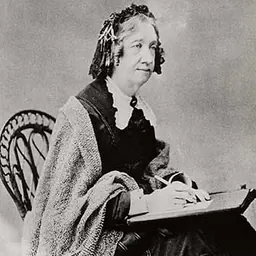
First marriage and early career Fanny Fern in 1866. She was, "A large, argumentative brunette with a florid complexion, an aquiline nose, and sharp blue eyes...She made up in self-assurance for what she lacked in beauty."
In 1837, Willis married Charles Harrington Eldredge, a banker. They had three daughters together: Mary Stace (1838), Grace Harrington (1841), and Ellen Willis (1844). Sara's mother and younger sister Ellen both died early in 1844; in 1845, her eldest daughter Mary died of brain fever (meningitis); soon afterward, her husband Charles died from typhoid fever. the young widow married Samuel P. Farrington, a merchant. In 1852, on her own with two daughters to support, she began writing in earnest. She sent samples of her work in her own name to her brother Nathaniel, by then a magazine owner, but he refused them and said her writing was not marketable outside Boston. He was proven wrong, as newspapers and periodicals in New York and elsewhere began printing Fanny Fern's "witty and irreverent columns".
In the summer of 1852, Fern was hired by publisher Oliver Dyer at twice her salary to publish a regular column exclusively in his New York newspaper Musical World and Times; she was the first woman to have a regular column. The next year, Dyer helped her find a publisher for her first two books: Fern Leaves from Fanny's Portfolio (1853), a selection of her more sentimental columns, and Little Ferns for Fanny's Little Friends (1853), a children's book. She had to reveal her legal name to the publishers. As it was still Farrington and disagreeable to her because of her divorce, she tried to keep her name secret. The former book sold 70,000 copies in its first year, "a phenomenal figure for the time."
Highest-paid columnist James Parton, a biographer and historian who edited Home Journal, the magazine owned by Fern's brother Nathaniel (known as N.P. Willis), was impressed by Fern's work. He published her columns and invited the author to New York City. When her brother discovered this, he forbade Parton from publishing any more of Fern's work. Instead Parton resigned as editor of the magazine in protest. Her first regular column appeared on January 5, 1856, and would run weekly, without exception, until October 12, 1872, when the last edition was printed two days after her death.
Fern wrote two novels. Her first, Ruth Hall (1854), was based on her life – the years of happiness with Eldredge, the poverty she endured after he died and lack of help from male relatives, and her struggle to achieve financial independence as a journalist. Most of the characters are thinly veiled versions of people in her world. She took revenge by her unflattering portrayals of several who had treated her uncharitably when she most needed help, including her father, her brother N.P. Willis, her in-laws, and two newspaper editors. When Fern's identity was revealed shortly after the novel's publication, some critics believed it scandalous that she had attacked her own relatives; they decried her lack of filial piety and her want of "womanly gentleness" in such characterizations. At the same time, the book also garnered positive attention. The author Nathaniel Hawthorne, who had earlier complained about the "damned mob of scribbling women", wrote to his publisher in early 1855 in praise of the novel. He said he "enjoyed it a great deal. The woman writes as if the devil was in her, and that is the only condition in which a woman ever writes anything worth reading."
Wounded by the criticism and ambivalent about the wide publicity she stirred up, Fern tried to reduce the autobiographical elements in her second novel, Rose Clark. But while it features a conventionally sweet and gentle heroine, a secondary character makes a poor marriage of convenience, an act which Fern had regretted in her own life.
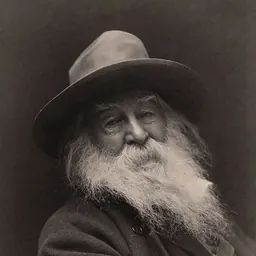
Fern's writing continued to attract attention. In her Ledger column of May 10, 1856, she defended the poet Walt Whitman in a favorable review of his controversial book Leaves of Grass. Criticized for her admiration, she continued to champion literature that was ahead of its time.
In 1859, Fern bought a brownstone in Manhattan at what is now 303 East Eighteenth Street near Second Avenue. She and Parton lived in the house for 13 years until her death.
Final years
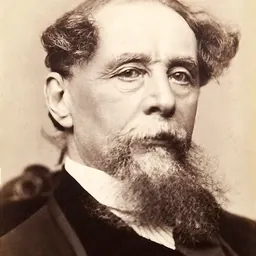
Fern continued as a regular columnist for the Ledger for the remainder of her life. She was a suffrage supporter, and in 1868 she co-founded Sorosis, New York City's pioneer club for women writers and artists. The club was formed by Fern and others after women were excluded from hearing the author Charles Dickens at the all-male New York Press Club dinner in his honor. six collections of columns, and three books for children. Fern was straightforward when she wrote of subjects such as men's economic and social victimization of women.
Legacy Fanny Fern is credited with coining the phrase, "The way to a man's heart is through his stomach". Henry D. Butler dedicated his 1858 book The Family Aquarium to "the gifted litterateuse whose nom de plume is 'Fanny Fern'" Fern's granddaughter Ethel Grace Thomson Parton became a correspondent for the periodical The Youth's Companion (founded by her great-uncle, Nathaniel Willis).
Don’t just read it —
keep it.
Full-length biographies made to live with: read them, listen on the way to work, watch them tonight.
- E-book
- Audio
- Video
Instant download · yours to keep · every purchase keeps this site free
Important facts
Family & relationships
People in Fanny Fern's life
Named in this biography and alive at the same time

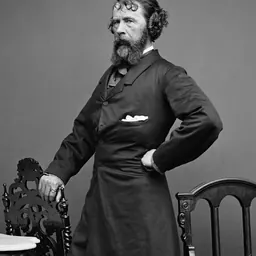
Related people
Same field, nearest in time


Contemporaries
People whose lives overlapped Fanny Fern's





Frequently asked questions
Who was Fanny Fern?
American writer (1811–1872)
When was Fanny Fern born?
Fanny Fern was born on 9 July 1811 in Portland.
When did Fanny Fern die?
Fanny Fern died on 10 October 1872 in Manhattan.
What was Fanny Fern's occupation?
Fanny Fern was a journalist, writer, novelist, children's writer and essayist.
What nationality was Fanny Fern?
Fanny Fern was American.
Sources & further reading
Cite this page
APA: Biography.guide. (2026). Fanny Fern. https://biography.guide/fanny-fern/
MLA: "Fanny Fern." Biography.guide, https://biography.guide/fanny-fern/.
Chicago: "Fanny Fern." Biography.guide. https://biography.guide/fanny-fern/.
Data last updated: 2026-09-20 · Spot an error? Report a correction.
Page generated 2026-09-27 05:23 UTC