
About F. O. C. Darley
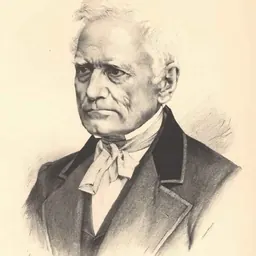
Lived 1822 – 1888 (aged 65). F. O. C. Darley was an American painter, illustrator, visual artist and printer.
Felix Octavius Carr Darley (June 23, 1822 – March 27, 1888), often credited as F. O. C. Darley, was an American illustrator, known for his illustrations in works by well-known 19th-century authors, including James Fenimore Cooper, Charles Dickens, Mary Mapes Dodge, Nathaniel Hawthorne, Washington Irving, George Lippard, Henry Wadsworth Longfellow, Donald Grant Mitchell, Clement Clarke Moore, Francis Parkman, Harriet Beecher Stowe and Nathaniel Parker Willis.
Biography Darley was born on June 23, 1822, in Philadelphia, Pennsylvania.
Darley was a self-taught and prolific artist who started out as a staff artist for a Philadelphia publishing company, where he was given a wide variety of assignments. He later moved to New York City, and his work began to appear in magazines such as Harper's Weekly and in books by various publishers. Darley made 500 drawings for Benson John Lossing's History of the United States. Among his lithographic illustrations are those for Washington Irving's "The Legend of Sleepy Hollow", and some scenes in Indian life. The swing and vigor of his style, his facility, and versatility and the high average merit of his numerous works, make him one of the most noteworthy of American illustrators.
Darley signed a contract with Edgar Allan Poe on January 31, 1843, to create original illustrations for his upcoming literary journal The Stylus. The contract, which was through July 1, 1844, requested at least three illustrations per month, "on wood or paper as required," but no more than five, for $7 per illustration. The Stylus was never actually produced but Darley provided illustrations for the final installments of the first serial publication of Poe's award-winning tale "The Gold-Bug" later that year.
In 1848, Darley provided the drawings for the first fully illustrated edition of Irving's "Rip Van Winkle", which was printed and distributed by the American Art-Union. That same year, Darley also illustrated an edition of Irving's The Sketch Book of Geoffrey Crayon, Gent. and then his Wolfert's Roost in 1855.
Over his career, he produced nearly 350 drawings for James Fenimore Cooper, later collected in a several-volume edition of Cooper's novels printed from 1859 to 1861. In 1868, following a visit to Europe, he published Sketches Abroad with Pen and Pencil. His water color paintings of incidents in American history are full of spirit and include bank-note vignettes.
Darley died in 1888 at his home in Claymont, Delaware, and was buried at Mount Auburn Cemetery in Cambridge, Massachusetts. His Victorian mansion, located in Claymont, is now known as the Darley House and was placed on the National Register of Historic Places in 1974.
Illustrations
Don’t just read it —
keep it.
Full-length biographies made to live with: read them, listen on the way to work, watch them tonight.
- E-book
- Audio
- Video
Instant download · yours to keep · every purchase keeps this site free
Important facts
more
F.A.O. darleyPeople in F. O. C. Darley's life
Named in this biography and alive at the same time





Related people
Same field, nearest in time




Contemporaries
People whose lives overlapped F. O. C. Darley's



Frequently asked questions
Who was F. O. C. Darley?
American artist (1822–1888)
When was F. O. C. Darley born?
F. O. C. Darley was born on 23 June 1822 in Philadelphia.
When did F. O. C. Darley die?
F. O. C. Darley died on 27 March 1888 in Claymont.
What was F. O. C. Darley's occupation?
F. O. C. Darley was a painter, illustrator, visual artist and printer.
What nationality was F. O. C. Darley?
F. O. C. Darley was American.
Sources & further reading
Cite this page
APA: Biography.guide. (2026). F. O. C. Darley. https://biography.guide/f-o-c-darley/
MLA: "F. O. C. Darley." Biography.guide, https://biography.guide/f-o-c-darley/.
Chicago: "F. O. C. Darley." Biography.guide. https://biography.guide/f-o-c-darley/.
Data last updated: 2026-09-20 · Spot an error? Report a correction.
Page generated 2026-09-27 05:24 UTC