
About Benson John Lossing
Lived 1813 – 1891 (aged 78). Benson John Lossing was an American journalist, historian and writer.
Benson John Lossing (February 12, 1813 — June 3, 1891) was an American historian, known best for his illustrated books on the American Revolution and American Civil War and features in Harper's Magazine. He was a charter trustee of Vassar College.
Early life Lossing was born February 12, 1813, in Beekman, New York. His father John was descended of old Dutch stock, originally surnamed Lassing or Lassingh, who had been among the earliest settlers of the Hudson Valley. His mother, Miriam Dorland Lossing was a Quaker. His formal education was curtailed when he was orphaned in 1824. Soon thereafter, he moved to Poughkeepsie to serve as apprentice to Adam Henderson, clock and watchmaker and silversmith. During his apprenticeship he read a number of history books, and over a period of several years pursued an independent study. He became interested in history after reading Edward Gibbon's Decline and Fall of the Roman Empire, John Marshall's The Life of George Washington, and the Bible. By 1833, Lossing and Henderson had formed a partnership.
Career
In 1835, Lossing became part owner and editor of the Poughkeepsie Telegraph. Out of that publication grew a semi-monthly literary paper, the Poughkeepsie Casket. Lossing began to learn the art of wood engraving from J. A. Adams, illustrator for the paper. He was awarded an LL.D. by the University of Michigan in 1873, adding to lesser degrees previously awarded him by Hamilton College and Columbia University. He also worked with engraver and book publisher George Edward Perine, most notably on his "History of New York City" (1884).
Historian Lossing's significance as a historian derives from his diligence in seeking out primary records, his interviews with participants of events and intimates of his biographical subjects, and his care to weigh and contrast details of his various sources. Although such efforts are today a standard among historians, in Lossing's time they were not. Historiography was not yet a discipline. Washington Irving, with whom he corresponded, wrote, "I have been gratified at finding how scrupulously attentive you have been to accuracy to facts, which is so essential in writings of an historical nature." This made him an essential secondary source for contemporary and succeeding historians, such as Theodore Roosevelt in his The Naval War of 1812.
Personal life On June 18, 1833, Lossing married his first wife, Alice Barrit, who died in 1855. On November 18, 1856, Lossing married his second wife, Helen Sweet. In 1868, the Lossings moved to a manor in Dover, New York, that Helen had inherited from her family; they called this The Ridge, but by later custom it has come to be known as Lossing Manor. There Benson had built a fireproof library to house his collection of over five thousand books and documents associated with the American Revolution and the framing of the Constitution. Lossing was actively involved in charitable, civic, literary, and historical societies, most notably serving as a charter trustee of Vassar College in Poughkeepsie. He died at home in Dover Plains, New York, on June 3, 1891. A written reminiscence of the Lossing family and life in 19th century New York was assembled by his son, Thomas Sweet Lossing; edited by his great-nephew, Peter Hannaford, it was published as My Heart Goes Home in 1997 (Purple Mountain Press, Fleischmanns, New York).
Works
Among the over 40 books Benson Lossing authored: Outline of the History of the Fine Arts (1840) Seventeen Hundred and Seventy-Six or the War of Independence; A History of the Anglo - Americans from the period of the Union of the Colonies against the French to the inauguration of Washington the First President of the United States of America (1847; 1852) Biographical Sketches of the Signers of the Declaration of American Independence (1848) Pictorial Field Book of the Revolution (1850–1852) A Primary History of the United States for Schools and Families (1857, revised 1866) Life of Washington: A Biography Personal, Military, Political (1860) The Life and Times of Philip Schuyler (1860; revised, 1880) The Hudson from the Wilderness to the Sea (1866) Pictorial Field Book of the Civil War (1866–1869) Vassar College and its Founder (1867) History of The United States (1867) Pictorial Field Book of the War of 1812 (1868) Mount Vernon & Its Associations (1859) and other editions titled Mount Vernon, or the Home of Washington Washington and the American Republic (1870) Memoir of Lieut. Col. John T. Greble (1870) (private printing) A History of England, Political, Military, And Social from the Earliest Times to the Present (1871) Our Country: A Household History of the United States for all Readers, From the Discovery of America to the Present Time (1873) The American Centenary (1876) History of American Industries & Arts (1878) Story of the United States Navy for Boys (1881) Cyclopœdia of United States History (1881) New history of the United States, from the Discovery of the American Continent to ... Inauguration of ... Chester A. Arthur: For all Readers (1881) Biography of James Garfield (1882) Lossing's School History of the United States (1883) History of New York City (1884) Mary and Martha: The Mother and Wife of George Washington (1886) The Empire State, a Compendious History of the Commonwealth of New York (1888) Reflections of Rebellion: Hours With the Living Men and Women of the Revolution; A Pilgrimage (1889)
He co-authored, edited or collaborated in the following works: The Diary of George Washington, from 1789 to 1791 (1860) with Anna Seward: The Two Spies: Nathan Hale & John Andre (1886) with George Jotham Hagar, John Elliot Read and Alfred Hudson Guernsey: The Achievements of Four Centuries, or the Wonderful Story of Our Great Continent ... (1890)
Published posthumously were: The Progress of Four Hundred Years in The Great Republic of the West (1890) Lossing's Complete History of the United States (1896) Edition De Luxe. Limited to five Hundred copies of which this is No. (?) Lossing History Company, Nineteen Hundred and Five. Over seven Hundred Illustrations by Felix O.C. Darley and other well known Artists. Special Notice: Any Person using any of the illustrations in this book without permission of the publishers will be prosecuted-L.P. Co. with John Frederick Schroeder and E. C. Towne: The Life and Times of George Washington (1903) Harper's Encyclopedia of United States History from 458 A.D to 1909. Based Upon the Plan of Benson John Lossing (1909). This 10-volume set included contributions from Woodrow Wilson and Alfred Thayer Mahan.
Don’t just read it —
keep it.
Full-length biographies made to live with: read them, listen on the way to work, watch them tonight.
- E-book
- Audio
- Video
Instant download · yours to keep · every purchase keeps this site free
Important facts
People in Benson John Lossing's life
Named in this biography and alive at the same time


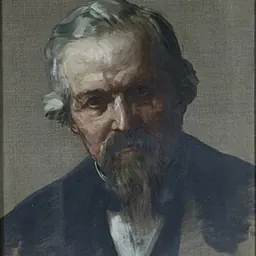

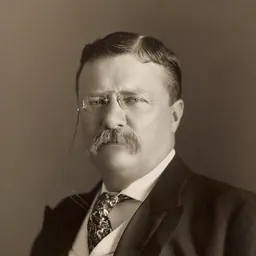

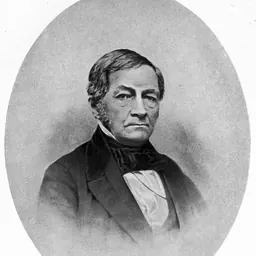
Related people
Same field, nearest in time

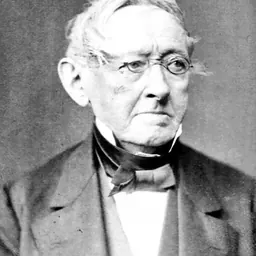

Contemporaries
People whose lives overlapped Benson John Lossing's




Frequently asked questions
Who was Benson John Lossing?
American journalist (1813–1891)
When was Benson John Lossing born?
Benson John Lossing was born on 12 February 1813 in Beekman.
When did Benson John Lossing die?
Benson John Lossing died on 3 June 1891 in Dover Plains.
What was Benson John Lossing's occupation?
Benson John Lossing was a journalist, historian and writer.
What nationality was Benson John Lossing?
Benson John Lossing was American.
Sources & further reading
· Wikipedia: Benson John Lossing
· DBpedia: Benson John Lossing
Cite this page
APA: Biography.guide. (2026). Benson John Lossing. https://biography.guide/benson-john-lossing/
MLA: "Benson John Lossing." Biography.guide, https://biography.guide/benson-john-lossing/.
Chicago: "Benson John Lossing." Biography.guide. https://biography.guide/benson-john-lossing/.
Data last updated: 2026-09-27 · Spot an error? Report a correction.
Page generated 2026-09-27 05:17 UTC