
About Evan O'Neill Kane
Lived 1861 – 1932 (aged 70). Evan O'Neill Kane was an American surgeon, known for Self-surgery.
Family and home Kane's father was the American Civil War Major General Thomas L. Kane, who was also the founder of the town Kane, Pennsylvania and a prominent abolitionist. Thomas L. Kane also played a role in preventing war with the Mormons through his friendship with Brigham Young. Kane's mother, Elizabeth Denniston Wood Kane, was a practicing physician (until 1909) as was his brother, William (also called Thomas L. Kane Jr., b. 1863), and his sister, Harriet Amelia (1855–1896). Kane also had an elder brother, Elisha Kent Kane (b. 1856), an engineering graduate from Princeton. A book by Ann Davis, a local historian, gives a fictionalized account of these events.
Kane's son Thomas Leiper Kane was the father of Evan O'Neill Kane, who was prominent in the development of the band theory of semiconductors, which are now the basic building blocks of modern electronics.
The arctic explorer Elisha Kent Kane is related (he is Evan Kane's uncle), but is a different person from both Evan Kane's son and his brother of the same name.
Kane died of pneumonia at the age of 70 in 1932, shortly after the trial of his son and just a few months after his major hernia operation. a position he held at the time of his own appendectomy operation. He died at his own hospital in 1932.
Kane Summit Hospital, as a public hospital, received charitable grants from the State of Pennsylvania. The tight family control of the hospital led to complaints from local physicians, who claimed that they were not able to freely use the hospital. Patients were admitted on condition that Evan O'Neill Kane, as the chief surgeon, had the final say in their treatment. The complaining physicians felt that they alone should be the judge of the proper treatment of their own patients and found this condition unacceptable. In February 1908, formal complaints to the Pennsylvania Board of Charity Commissioners resulted in an investigation. The complainants were requesting that the Hospital grant should be withdrawn so this was a serious matter for the hospital, but both Evan and his assistant Thomas L. Kane were away in Florida at the time. Answering the charges fell to their brother Elisha Kent Kane, who was on the board of management of the hospital, but not the medical staff, and the hospital superintendent M. J. Hays. The hospital admission rules were changed as a result of the investigation. The commissioners found that the Kanes were not using their position to make unacceptable profits from the hospital; on the contrary, they had made large donations, but recommended that stock holding in the hospital should be more broadly extended outside the Kane family. The commissioners also requested that the private practice offices of Evan and Thomas Kane be moved outside the hospital. Although the furnishing of these offices were paid for by the occupants, the cost of fuel, water and lighting was borne by the hospital.
Railway surgery Kane was a railway surgeon for five different railroads. In Kane's time, railway surgery was markedly different from surgery in a hospital and was considered to be its own field. Surgeons frequently needed to operate at great distances from a proper hospital facility, often in dirty and unsanitary conditions, and operations were performed with only basic equipment and materials. Industrial accidents on the railways resulted in many crushing injuries. A large proportion of the estimated 1,000 operations Kane performed in the three years from 1898 to 1900 were treatment for accidents on the railways, many of which were laparotomies. Several of Kane's medical innovations were intended to be aids to the surgeon in the field, and clearly inspired by his work as a railway surgeon. thus making Kane responsible for one of the first uses of music as a medical therapy. Studies have since shown that music can help reduce pain following an operation, and consequently also reduces the need for pain-killing drugs.
Kane invented an improvement to the Murphy button, a device then commonly used for intestinal anastomosis, but now usually done with a surgical stapler. Kane was seeking a device with a larger aperture and less possibility of blockage after losing a patient to whom he had fitted a Murphy button.
Kane presented a paper to the American Academy of Railway Surgeons in 1900 addressing the difficulty of administering intravenous infusions in the field. Kane lists among the difficulties the unsterilized conditions and the tendency of veins to collapse following haemorrhage. Kane's solution was a device which could administer multiple instances of hypodermoclyses simultaneously. Kane's device could have up to ten needles, but Kane never used this many, as four were normally sufficient. Normal hypodermoclysis would be too slow in emergency conditions, but Kane's invention speeded up the rate of fluid replacement many times. Kane's device was subsequently criticised for its use of an unsealed rubber bulb by Edwin Hasbrouck, who proposed an alternative improved design. Administering hypodermoclysis at two sites for faster fluid uptake is a technique still in use today.
Kane had some novel ideas on materials for use in surgery. Influenced by his work in railway surgery, he was particularly concerned with materials that were good for use in the field and sometimes advocated the use of supplies that could be obtained locally from hardware stores and similar suppliers. He made his own bandages from woven asbestos, a material readily available at the time. Sterilising dressings, and keeping them sterilised, was a problem in the field. Unlike modern dressings—which are supplied in sealed, sterile packs—the dressings of the time had to be sterilised immediately before use. In an emergency situation there may be little time to do this. The use of fire-proof bandages allowed them to be sterilised quickly in an open fire. In 1924, Kane proposed the use of mica to repair head wounds that had exposed and damaged the brain. He cited among the advantages of this that it provided a window for the physician to observe the damage and that in an emergency in the field, mica could be obtained by removing it from a stove window, an application for which it was commonly used at the time.
Another of Kane's innovations for use in the field was an acetylene lamp worn on the head by the surgeon. This was intended for operations carried out in the field at night. Kane says it was particularly useful for illuminating the abdominal cavity.
Kane advocated, and practiced, tattooing newborn infants (in an inconspicuous place) with an identifying mark matching an identical tattoo on the mother. Kane was aware of cases where claims had been made of babies being mixed up and wished to avoid any possibility of this occurring in his hospital. In Kane's view, complex clerical systems designed to prevent errors that might be implemented in a large hospital were impracticable in a small hospital because the administrative staff to run it were simply not available. Kane also argued that it was impossible to positively prove that a mistake had not been made with a purely clerical system.
Self-surgery
Kane had a history of operating on himself. In 1919 he self-amputated one of his own fingers that had become infected. But it was the operation of removing his own appendix under local anaesthetic, performed on 15 February 1921 at the age of 60, which brought him wider media attention. He is believed to have been the first to have undertaken this self-operation.
This operation by Kane was not only a sensation at the time—it continued to be reported for many years afterwards. For instance, Popular Science discusses it in 1933 in an article on anaesthesia.
In the latter part of his career, Kane had started signing his handiwork by tattooing on his patients the letter "K" in morse code using India ink. However, during his hernia operation he became too drowsy to finish the stitching up so this task and the tattooing fell to Howard Cleveland (who later became Chief Surgeon in 1938
Publications "Fire-proof asbestos dressing", Journal of the American Medical Association, vol.25, no.23, pp. 996–997, 7 December 1895. "Cure of prostatic hypertrophy by internal pressure", Journal of the American Medical Association, vol.26, no.11, pp. 521–522, 14 March 1896. "A new apparatus for fracture of the clavicle", Journal of the American Medical Association, vol.27, no.11, pp. 596–597, 12 September 1896. "Syphilis and drunkenness", Journal of the American Medical Association, vol.28, no.20, pp. 951–952, 15 May 1897. "Simple device for rapid hypodermoclysis in combating shock", Journal of the American Medical Association, vol.34, no.9, pp. 520–521, 3 March 1900. "A new coupler for rapid intestinal anastomosis", Journal of the American Medical Association, vol.38, no.16, pp. 1003–1005, 19 April 1902. "Pin in appendix", Journal of the American Medical Association, vol.43, no.3, p. 199, 16 July 1904. "Acetylene headlight and reflector for night operating", Journal of the American Medical Association, vol.43, no.17, p. 1231, 22 October 1904. "Cardiac dilation and displacement due to pleurisy", Journal of the American Medical Association, vol.57, no.10, pp. 792–793, 2 September 1911. "Peculiar twin ectopic gestation", Journal of the American Medical Association, vol.58, no.7, p. 475, 17 February 1912. "Phonograph in operating-room", Journal of the American Medical Association, vol.62, no.23, p. 1829, 6 June 1914. "Railway and army surgery – a comparison", International Journal of Surgery, vol.29, p. 390, December 1916. "Radium therapy", Radium, vol.7, no.1, pp. 16–20, April 1916. "Absorbable metal clips as substitutes for ligatures and deep sutures in wound closure", Journal of the American Medical Association, vol.69, no.8, pp. 663–664, 24 May 1917. "The injury to cancer patients of securing specimens prior to operation", Journal of the American Medical Association, vol.72, no.13, p. 955, 29 March 1919. "Autoappendectomy: a case history", International Journal of Surgery, vol.34, iss.3, pp. 100–102, March 1921. Is the Practice of Medicine Worth While?, Harrisburg, Pa: Medical Society of the State of Pennsylvania, 1921 . "Sheet mica in brain surgery", Journal of the American Medical Association, vol.82, no.21, p. 1714, 24 May 1924.
Don’t just read it —
keep it.
Full-length biographies made to live with: read them, listen on the way to work, watch them tonight.
- E-book
- Audio
- Video
Instant download · yours to keep · every purchase keeps this site free
Important facts
People in Evan O'Neill Kane's life
Named in this biography and alive at the same time
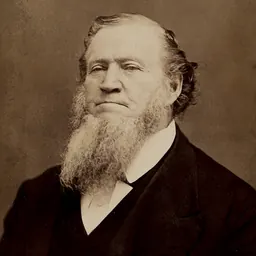

Related people
Same field, nearest in time
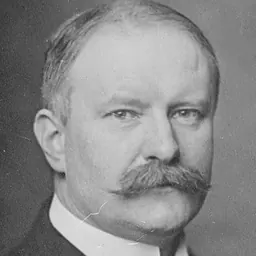
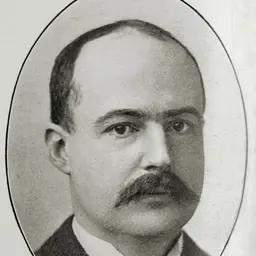
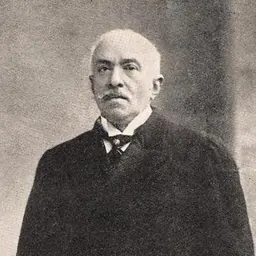

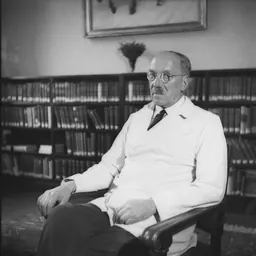

Contemporaries
People whose lives overlapped Evan O'Neill Kane's
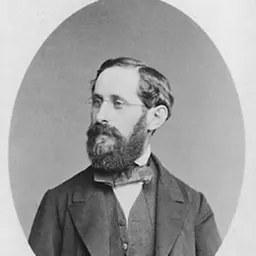



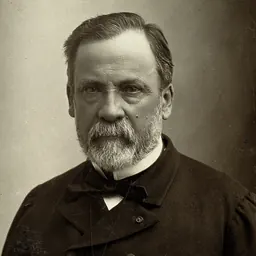

Frequently asked questions
Who was Evan O'Neill Kane?
American surgeon (1861-1932)
When was Evan O'Neill Kane born?
Evan O'Neill Kane was born on 6 April 1861 in Darby.
When did Evan O'Neill Kane die?
Evan O'Neill Kane died on 1 April 1932 in Kane.
What was Evan O'Neill Kane's occupation?
Evan O'Neill Kane was a surgeon.
What was Evan O'Neill Kane known for?
Evan O'Neill Kane was known for Self-surgery.
What nationality was Evan O'Neill Kane?
Evan O'Neill Kane was American.
Sources & further reading
· Wikipedia: Evan O'Neill Kane
Cite this page
APA: Biography.guide. (2026). Evan O'Neill Kane. https://biography.guide/evan-o-neill-kane/
MLA: "Evan O'Neill Kane." Biography.guide, https://biography.guide/evan-o-neill-kane/.
Chicago: "Evan O'Neill Kane." Biography.guide. https://biography.guide/evan-o-neill-kane/.
Data last updated: 2026-09-22 · Spot an error? Report a correction.
Page generated 2026-09-27 05:19 UTC