
About Eustachius De Lannoy
Lived 1715 – 1777 (aged 61). Eustachius De Lannoy was a Dutch and French military officer.
Eustachius Benedictus de Lannoy (also sometimes called 'Captain De Lannoy') (30 December 1715 – 1 June 1777, Udayagiri Fort) was a skilled military strategist and commander of the Travancore army, under Maharaja Marthanda Varma.
In order to establish the trade post, the Dutch force had to engage the Travancore army. They subsequently defeated the Dutch naval force at the Battle of Colachel.
De Lannoy, who was captured in the battle, subsequently earned the trust of the king, Maharaja Marthanda Varma, who made him an officer in the Travancore military.
His role as military commander of the Travancore army was instrumental in the later military successes and exploits of Travancore under Maharaja Marthanda Varma
Early life De Lannoy was born on 30 December 1715, in Arras, France. He belonged to the de Lannoy family, an immigrant noble family from the Franco-Belgian border town of Lannoy. He was a Roman Catholic and early in his life he joined the Dutch East India Company. Over time, he became an expert in constructions for fortifications. He arrived in Colombo, Ceylon (present Sri Lanka) in 1737, where General Imhoff was stationed. General Imhoff had a liking towards De Lannoy and he took him to Travancore in 1739.
Battle of Colachel
Background The Dutch East India Company wanted to acquire and monopolize the trade of pepper and other spices, which was sourced from the Kingdom of Kayamkulam and sold in the European markets at exorbitant prices . The negotiations with the Travancore the king Maharaja Marthanda Varma was futile, and it was decided to use military pressure against him.
In the 1730s, prior to the Battle of Colachel and the arrival of De Lannoy, Maharaja Marthanda Varma had annexed some territories to the north of his Kingdom and was also at confrontation with Kayamkulam. The Dutch governor at Cochin, M.A. Maten, took sides with the Maharaja's adversaries.
During a visit to Cochin in 1739, the Dutch governor of Ceylon, Gustaaf Willem van Imhoff, made a report to his government on the interferences of the Maharaja in the affairs of the smaller Malabar kingdoms. De Lannoy's military contingent was superior in that, it had firearms and artillery and was better equipped and trained, but was no match to the tactics and aggressiveness used by the Travancore forces at the Battle of Colachel. Legends states that a tiny spark to the gun powder stock in their ship buried all their rice reserves. The foodless army had no other go than surrendering to the Travancore contingent. Further, the Dutch were helpless against the cavalry of Travancore. The local legends state that, in accordance with the orders of the Maharajah, the local fisherfolk had made cannon replicas, diverting the attention of the Dutch. This battle is important as it marked the decline of Dutch influence in India.
In all, twenty-four Dutch officers were imprisoned, including De Lannoy and Donadi, while the rest of the Dutchmen either retreated to their ships or were killed.
Captain De Lannoy was a skilled military strategist. His military skills, combined with the tactics of the Dewan of Travancore, Ramayyan Dalawa, and statesmanship of Maharaja Marthanda Varma proved very effective in the future military exploitations and annexations of the Northern kingdoms up to Cochin over a period of time. They defeated and annexed Quilon, Kayamkulam, Kottarakkara, Pandalam, Ambalapuzha, Edappally, Thekkumkoor and Vadakkumkoor with Travancore.
Captain De Lannoy's military skills and loyalty were recognised not only by the king and his state officials, but also by the subjects of Travancore, who called him by the nom de guerre "Valiya Kappithaan ", meaning 'The Great Captain'. This fortification proved immensely useful in defending the kingdom against the attacks of Tipu Sultan and other marauders.
The wall was well-fortified and garrisoned. It had mounds, underground tunnels, barracks, arsenals and supply depots. It was a great stoppage to any invader coming from the north. It was erased by Tipu Sultan in an act of revenge for having been defeated in his attempt to subdue Travancore in 1789. It had a length of 40 km and extended from the sea near Vypeen Island to the Western ghats. Just before returning to Mysore after his failed attempt, he spent six days to demolish the lines which he called the 'Contemptible Wall'. He had sworn to demolish it earlier after his failed attempt to breach it on 28 December 1789, and lost 2000 soldiers in that single night, due to the spirited defence by the Cadres, for the loss of just a few soldiers of Travancore.
Many other forts like the Vattakottai Fort facing the sea near Kanyakumari, the hill-forts of Savakkotta, and the Marunnu Kotta (Ammunition fort) near Padmanabhapuram were built under De Lannoy's supervision.
De Lannoy is also credited with the construction of some other small forts and tunnels in the region.
Padmanabhapuram fort The palace fort of Padmanabhapuram was constructed to protect the palace and for the safety of the king who lived in the Padmanabhapuram palace. The fort has an area of 187 acres. The Padmanabhapuram fort was originally built with mud, then disassembled and reconstructed with granite rocks. The height of the walls varies from 15 feet to 24 feet according to the inclination of the ground. The thickness of the fort wall was 35 feet.
Udayagiri fort De Lannoy's Tomb at Udayagiri Fort on the Kanyakumari-Trivandrum highway. The Udayagiri Fort is situated nearly one kilometer away from Thuckalay. De-Lannoy reconstructed and fortified the fort at Udayagiri, which was built in 1742 A.D. The Udayagiri Fort walls and ramparts which are 18 feet high and 15 feet thickness with parapets averaging 4 feet in height are faced with huge blocks of well arranged granite. The space between the inner and the outer ramparts consisted of mud. Besides the gateway there are smaller doors near three bastions. The Udayagiri Fort served as a military base during the reign of Marthanda Varma which was supervised by Captain De-Lannoy
Cannon Factory He built a factory to produce war materials such as cannon balls. These were heavy artillery materials made of pure iron. The weight of such cannon balls ranged from 30 kgs to 1800 kgs.
Vattakkottai
De Lannoy repaired and strengthened the old fort that was built by Pandya kings. Vattakottai Fort is a specially built fort on the sea coastline on the southern tip of India. It was set up as the southern most sea coast defense area by the Dutch. Its a Rectangular shaped fort made of granite stones. As the corners are curved it presents itself as a circular shape and hence the name vattakkottai (Circular fort) The fortification of Vattakottai was completed under the supervision of De-Lannoy assisted by Marthanda Pillai, a local chief. The fort covers an area of three and a half acres. The fort is enclosed by walls 25 to 26 feet high, including the parapet, 29 feet thick at the front, 18 feet at the corners and 6 feet at the rear. Inside the fort, there are watch towers which measures from 3 to 6 feet. THere are holes on the walls for the guns and ramps inside the ramparts for the cannons to be moved. This fort was built of stone and lime and it covered an area of 171800 square feet. The fort was strategically situated to carry out defensive maneuvers.
Ammunition Fort This fort which is located one kilometer away from Padmanabhapuram was also built by Captain De Lannoy. It was earlier built to protect the Padmanabhapuram palace and was fortified by the Dutch captain. This fort was used to manufacture and store ammunition for the artilleries and fire arms produced at Udayagiri Fort.
Life at Udayagiri
As a Christian, De Lannoy was prohibited from entering the king's palace at Padmanabhapuram, so he resided primarily at Udayagiri Fort, or De Lannoy Kotta (de Lannoy's Fort) as it is known locally, where he had also built a small chapel for his family and other Christians.
Conversion of Saint Devasahayam Pillai
At some point of his military career, De Lannoy got well acquainted with Neelakanta Pillai, a Nair palace official, who after learning of Christian traditions and beliefs through De Lannoy, converted to Christianity. As they both had influential roles under the king, they got well acquainted. Neelankanta Pillai took the baptised name of Devasahayam Pillai. Devasahayam became a martyr of the Christian faith in 1752.
The Roman Catholic church under Pope Benedict XVI made Devasahayam Pillai a beatified laity of the church in 2012, and was made a saint on 15 May 2022 by Pope Francis Thus, De Lannoy had an important role in the conversion and Christian life of saint Devasahayam Pillai.
Death De Lannoy's burial site at the tomb at Udayagiri Fort, with inscriptions in Latin and Tamil.
Maharaja Marthanda Varma died in 1758, and De Lannoy served as military chief to his successor Dharma Raja. De Lannoy died in 1777 and was interred in the chapel within Udayagiri Fort. The tombs of De Lannoy and his family can be seen inside the church.
The English translation of the Latin inscription on his tombstone runs:
Don’t just read it —
keep it.
Full-length biographies made to live with: read them, listen on the way to work, watch them tonight.
- E-book
- Audio
- Video
Instant download · yours to keep · every purchase keeps this site free
Important facts
People in Eustachius De Lannoy's life
Named in this biography and alive at the same time
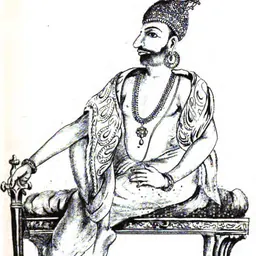
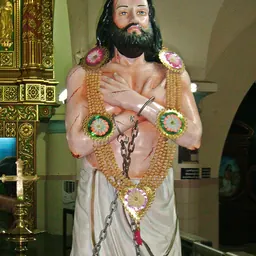


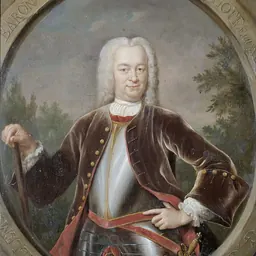
Related people
Same field, nearest in time
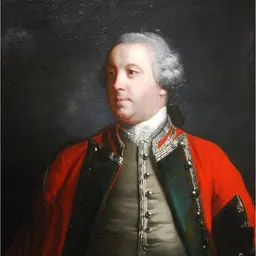

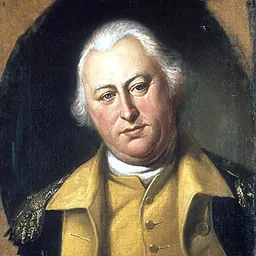

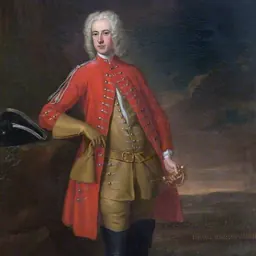
Contemporaries
People whose lives overlapped Eustachius De Lannoy's





Frequently asked questions
Who was Eustachius De Lannoy?
Flemish naval commander
When was Eustachius De Lannoy born?
Eustachius De Lannoy was born on 30 December 1715 in Arras.
When did Eustachius De Lannoy die?
Eustachius De Lannoy died on 1 June 1777 in Udayagiri Fort.
What was Eustachius De Lannoy's occupation?
Eustachius De Lannoy was a military officer.
What nationality was Eustachius De Lannoy?
Eustachius De Lannoy was Dutch and French.
Sources & further reading
· Wikipedia: Eustachius De Lannoy
· DBpedia: Eustachius De Lannoy
Cite this page
APA: Biography.guide. (2026). Eustachius De Lannoy. https://biography.guide/eustachius-de-lannoy/
MLA: "Eustachius De Lannoy." Biography.guide, https://biography.guide/eustachius-de-lannoy/.
Chicago: "Eustachius De Lannoy." Biography.guide. https://biography.guide/eustachius-de-lannoy/.
Data last updated: 2026-09-20 · Spot an error? Report a correction.
Page generated 2026-09-27 05:06 UTC