
About Eugène Le Poittevin
Lived 1806 – 1870 (aged 64). Eugène Le Poittevin was a French painter, lithographer, caricaturist and artist, known for Erotica, History painting and Marine art.
Career Auguste Xavier Leprince and Eugène Lepoittevin, The Artist's Studio, 1827, Chazen Museum of Art, MadisonIn 1826, at the age of 20, Eugène was enrolled at the École des Beaux-Arts. He studied painting under Louis Hersent and Auguste Xavier Leprince. His stature in the atelier of Leprince and his ability to match the skill of the master were such that when Leprince died, Lepoittevin was commissioned to complete Leprince's unfinished Interieur de l'atelier de feu Leprince (The Artist's Studio), exhibited at the Paris Salon of 1827; biographer Nadège Sébille presumes the seated figure at far left is a self-portrait of the young Lepoittevin. Also in 1827, at the age of 21, Lepoittevin debuted at the Paris Salon, under the name Potdevin. Up to and including the year of his death in 1870, he would exhibit over 150 paintings at the annual Salon.
In the 1830s, Lepoittevin became a prolific lithographer and caricaturist, with work appearing in the popular periodical La Caricature.
Eugène Lepoittevin, possible self-portrait from Les Diables de Lithographies, 1832Lepoittevin's devils took center-stage in several albums of erotic lithographs depicting these imps and their hapless human partners; Lepoittevin's outlandish diableries became a sensation, inspiring imitators who spawned a whole genre of such works. At least two of Lepoittevin's diabolical albums were banned in France, including Charges et décharges diaboliques, which in 1845 was censored and then condemned to destruction as an outrage to public morals and good manners. As recently as 1951, the album was seized by U.S. Customs because "the dominant theme of the material taken as a whole appeals to prurient interest."
The Bibliothèque Nationale de France includes in its collection Diableries, an album of 20 of the artist's erotic lithographs, which is freely accessible online.
Beginning in 1834, while still in his twenties, Lepoittevin was commissioned by the State to paint official works for the historical museum at Versailles. These included military scenes (the Battle of Wertingen, 1805; the naval combat off the island of Embro, 1346; the siege of Beirut, 1109) and the more placid Lunch Offered to Queen Victoria in a Tent at Mont d'Orléans in the forest of Eu, 4 September 1843.
Lepoittevin drew inspiration from travels to many sites in France, as well as to England, the Netherlands, Belgium, Germany, Italy, and Algeria.
Fishing families on the beach at Étretat, undated, private collectionA glimpse of his social life in Étretat, and his sense of humor, is provided by a lengthy anecdote recounted by the anonymous Paris Diarist for Dwight's Journal of Music, about a house-warming potluck hosted by Lepoittevin at La Chaufferette in 1851. Each guest was to "furnish his or her own candle" and to bring one dish. The fish dish was to be provided by the host, to the relief of the rest because "in fishing ports, it is hardly possible to get fish; we can only enjoy the odor. The fishermen are hardly ashore before their booty is on its way to Paris. But our painter had made himself the friend, sponsor, crony, counsellor, and benevolent giver of old clothes to all the fishermen in the place, and could therefore be sure of obtaining the desired fish." When the dish was presented, the guests applauded to see such a huge specimen, with "all the colors of the rainbow, and a multitude of others…resplendent upon its scales." But when one of the guests cut a piece, "the slice, slipping from the knife, fell upon the table and flew into a thousand pieces! Then and not till then, we discovered that the famous fish was of clay, which the skillful Lepoittevin, unable to obtain the real thing, had modeled and painted with perfection sufficient to deceive anybody."
Lepoittevin also painted a historical series depicting marine artists and others who inspired his own painting. These artists are usually shown at work in the "studio" of the open air. These included Adriaen van de Velde Disembarking on Blanckenberg Beach, 1840; Paul Potter Drawing from Life in the Hague (aka Paul Potter Painting The Young Bull), 1843; Van de Velde, Who Usually Followed His Friend Ruyter in the Maritime Campaigns, Draws a Naval Combat from Nature, 1843; Van Dyck Receives a Drawing Lesson from his Mother, ; Van de Velde Studying the Effect of the Cannon his Friend Ruyter Fired for this Purpose, 1845; Bakhuizen Telling Stories of Piracy by Fishermen from Schweningen, 1845; Young Bakhuizen Contemplating the Effects of the Storm, 1847; Bakhuizen Offering his Purse to Sailors to Take Him on in Bad Weather, 1848; David Teniers the Younger leading Don Juan of Austria, His Pupil, to a Fair, 1848;Van de Velde Embarks to Go after Admiral Ruyter, his Friend, upon His Arrival in Rotterdam, 1850; Bakhuizen Drawing from Nature in the Dunes of Skeveningen, 1850; and The Painter, Scene from the Life of Adriaen Brouwer.
In 1843, he was made a knight of the Legion of Honor. In 1845, he was made a Knight of the Order of Leopold. In 1849, he was appointed Peintre de la Marine for the French Ministry of Defence. In 1860, Lepoittevin was a founding member of the fashionable and influential club of Parisian artists, writers, architects, and musicians, Le Cercle de L’Union Artistique.
Two years after his death, the contents of his studio were sold at auction; these included 144 paintings and finished sketches and 52 drawings and watercolors by Leppoittevin, 20 paintings by friends, as well as his paints and painting utensils, and altogether realized around 40,000 francs.
In museums In France, the in Fécamp has built a collection of the artist's works depicting the environs of Étretat, and in 2020 mounted the exhibition L'invention d'Étretat: Eugène Le Poittevin, un peintre et ses amis à l'aube de l'impressionnisme.
The in Saint-Vaast-la-Hougue holds three paintings by Lepoittevin; a fourth, Vue de Normandie (1833), was destroyed in a fire in 2017.
Les naufragés, 1839, Musée de Picardie, Amiens Elsewhere in France (listed alphabetically by city), Lepoittevin's works are in the collections of the Musée de Picardie in Amiens; the Musée des Beaux-Arts d'Angers; the Musée Sarret de Grozon in Arbois; the Musée Calvet in Avignon; the Musée départemental de l'Oise in Beauvais; the Musée des Beaux-Arts de Brest; the Musée des Beaux-Arts in Chambéry; the Château-Musée de Dieppe; the Musée Magnin in Dijon; the Musée départemental d'Art ancien et contemporain in Épinal; the ; the Musée des Beaux-Arts in Marseille; the Musée des Beaux-Arts de Mulhouse; the Musée des Beaux-Arts in Nantes; the Musée de la Faïence et des Beaux-Arts in Nevers; the Musée des Beaux-Arts d'Orléans; the Hôtel de Brienne (home to the Ministry of Defence) in Paris; the Château de Saumur; the Musée de Soissons; the , Tarbes; the Musée des Beaux-Arts in Troyes; the Palace of Versailles and the Musée Lambinet in Versailles; and the Musée de la Révolution française in Vizille.
Legacy: Étretat
In recent decades, scholarly interest in Lepoittevin has centered on his works depicting the village of Étretat in Normandy, its sheer white cliffs and coastal landscape, its sailors and fishermen, and its visitors, in particular the "Parisian colony," which included Lepoittevin himself. While later artists such as Courbet and Monet and writers including Guy de Maupassant and Alphonse Karr would make Étretat famous and fashionable, it was Lepoittevin and his colleague Eugène Isabey who "discovered" the place,
Interest has been drawn to two particular paintings depicting the beach and its summer visitors, Les Bains de Mer, Plage d’Étretat of 1864 and Bains de mer à Étretat of 1866. In 1967, Raymond Lindon (mayor of Étretat from 1929 to 1959) published a seminal article on the two paintings. After examining preliminary sketches and period photographs, and studying the artist's family and social circle, Lindon identified many of the figures, including the painter Charles Landelle, the illustrator and caricaturist Bertall, a gangling Guy de Maupassant, and Lepoittevin himself. and the artist became the primary focus of the exhibition L'invention d'Étretat: Eugène Le Poittevin, un peintre et ses amis à l'aube de l'impressionnisme at the in Fécamp, from 14 July to 15 November 2020. Despite the circumstances of the COVID-19 pandemic, the exhibition had 22,000 visitors.
The companion book of the same title included articles about Lepoittevin by various scholars, including the first substantial biographical essay.
Another essay in the book, "Les Bains de Mer, Plage d’Étretat: Enquête sur un tableau disparu" (the case of the lost painting), recounted the disappearance of this work after the fall of Napoleon III, who purchased it for 7000 francs after it was shown at the Paris Salon of 1865. (Lindon in 1967 based his research on a lithograph of the painting.) The Parisian art world took notice when the "lost" painting suddenly reappeared and was put up for auction less than a month after the exhibit closed. The sale price far exceeded Sotheby's estimate and set a record for a work by Lepoittevin, €226,800.
Gallery: portraits of Lepoittevin & memorabilia
Don’t just read it —
keep it.
Full-length biographies made to live with: read them, listen on the way to work, watch them tonight.
- E-book
- Audio
- Video
Instant download · yours to keep · every purchase keeps this site free
Important facts
more
Eugene Modeste Edmond Poidevin, Eugene Modeste Edmond Lepoitevin, Eugene Modeste Edmond Lepoittevin, Eugene Modeste Edmond Le Poittevin, Eugene Le Poittevin, Eugene-Modeste-Edmond Poidevin, Eugene Lepoittevin, Eugene-Modeste-Edmond Lepoittevin, Eugene Poidevin, e. le poittevin, eugene la poittevin, eug.People in Eugène Le Poittevin's life
Named in this biography and alive at the same time

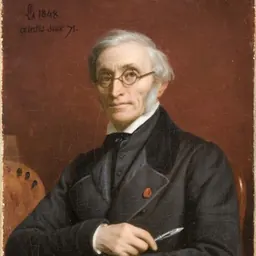
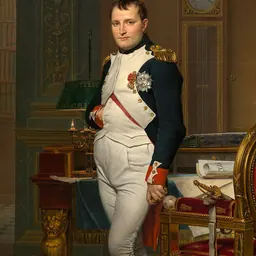

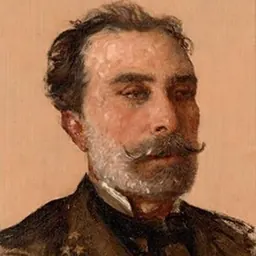
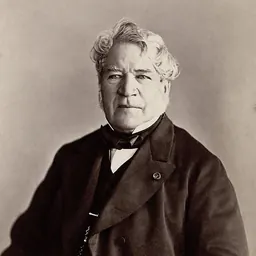
Related people
Same field, nearest in time


Contemporaries
People whose lives overlapped Eugène Le Poittevin's






Frequently asked questions
Who was Eugène Le Poittevin?
French painter (1806-1870)
When was Eugène Le Poittevin born?
Eugène Le Poittevin was born on 31 July 1806 in Paris.
When did Eugène Le Poittevin die?
Eugène Le Poittevin died on 6 August 1870 in Paris.
What was Eugène Le Poittevin's occupation?
Eugène Le Poittevin was a painter, lithographer, caricaturist and artist.
What was Eugène Le Poittevin known for?
Eugène Le Poittevin was known for Erotica, History painting and Marine art.
What nationality was Eugène Le Poittevin?
Eugène Le Poittevin was French.
Sources & further reading
· Wikipedia: Eugène Le Poittevin
Cite this page
APA: Biography.guide. (2026). Eugène Le Poittevin. https://biography.guide/eugene-le-poittevin/
MLA: "Eugène Le Poittevin." Biography.guide, https://biography.guide/eugene-le-poittevin/.
Chicago: "Eugène Le Poittevin." Biography.guide. https://biography.guide/eugene-le-poittevin/.
Data last updated: 2026-09-22 · Spot an error? Report a correction.
Page generated 2026-09-27 05:20 UTC