
About Eugene Kennedy
Lived 1928 – 2015 (aged 86). Eugene Kennedy was an American columnist, university teacher, non-fiction writer, psychologist, writer and journalist.
Eugene Cullen Kennedy (August 28, 1928 – June 3, 2015) was a psychologist, writer, columnist, and professor emeritus of Loyola University Chicago. Kennedy was a laicized Catholic priest and a long-time observer of the Catholic Church, but his work spans many genres. He published over 50 books, including two biographies, three novels, and a play, as well as books on psychology, the Roman Catholic Church, and the relationship between psychology and religion. In the early 1970s, inspired by Vatican II, he emerged as a voice for reform and modernization of the Roman Catholic Church.
Eugene Cullen Kennedy was born in Syracuse, New York, on August 28, 1928, to second-generation Irish parents, James Donald Kennedy and Gertrude Veronica Cullen. His father was an executive with the King Kullen Grocery Company, the family-owned supermarket chain founded by Kennedy's uncle, Michael J. Cullen, and his mother was a homemaker. During the 1980s, Kennedy became a consultant to King Kullen and a member of its board of directors, positions he held until his death.
Raised in Long Island, Kennedy graduated from Chaminade High School in Mineola, NY, in 1946, then entered the Maryknoll Seminary in Maryknoll, NY. From that institution, Kennedy received a B.A. (1950), S.T.B (1953) and M.R.E. (1954). Following his ordination to the priesthood on June 11, 1955, he was instructor in psychology at the Maryknoll Seminary in Clarks Summit, PA, before beginning graduate studies in psychology at the Catholic University of America, where he obtained an MA (1958) and a PhD (1962).
Career
Source:
Kennedy first gained attention among Catholic readers in 1965 with the publication of his first book, The Genius of the Apostolate, which he co-authored with Paul D'Arcy M.M. In 1967, Kennedy published Fashion Me a People, which won the Catholic Book Award, an award he again won in 1968 for his third book, Comfort My People. During the 1970s, he published twenty-five books, including In the Spirit, In the Flesh (1971), The Return to Man (1973), Believing (1974), Living With Loneliness (1974), On Becoming a Counselor (1977), Sexual Counseling, St. Patrick's Day with Mayor Daley (1976) and Himself (1978), his biography of Mayor Richard Daley of Chicago, which won both the Thomas More Medal for "the most distinguished contribution to Catholic Literature in 1978" as well as the Carl Sandburg Award (1978) for the best non-fiction by a Chicago author.
His On Becoming a Counselor has been described as "an unusually helpful, well-conceived guide" for non-professional counselors – those persons such as teachers, lawyers, ministers, nurses, priests and others – who may have to do counseling as part of their professional work.
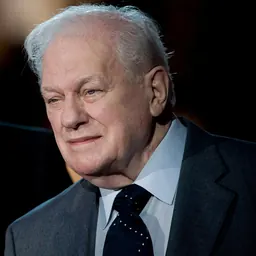
During the 1980s, Kennedy co-authored Defendant with his wife, Sara Charles. He also published three novels: Father's Day (1981), which was awarded the Carl Sandburg Award for the best fiction by a Chicago author in 1980–1981; Queen Bee (1984); and Fixes (1989). He also wrote a one-man play, I Would Be Called John, based on the life of Pope John XXIII, which became a PBS special featuring Charles Durning.
During the 1990s and into the new century, Kennedy, continued to publish, including a biography of Joseph Cardinal Bernardin,This Man Bernardin (1996), and reflections on his relationship with the Cardinal in My Brother Joseph (1997). Kennedy also published Authority (with Sara Charles)(1997), The Unhealed Wound (2001), and his last book, Believing (2013), which won a Catholic Book Award First Prize from the Catholic Press Association. At the time of his death, Kennedy was working with Sara Charles on the 4th edition of On Becoming a Counselor.
In addition to publishing a number of books, Kennedy also wrote articles and opinion pieces in numerous publications and newsletters, as well as columns for the Chicago Tribune, Religious News Service and the National Catholic Reporter's "Bulletins from the Human Side. He was awarded the Wilber Award in 1987 by the Religious Public Relations Council for his New York Times Magazine article, "A Dissenting Voice."
Throughout his career, Kennedy was a frequent TV commentator on politics and religion and lectured widely. His final lecture was given on Maryknoll Alumni Day, celebrating the 100th anniversary of Maryknoll, on September 16, 2011.
Personal Kennedy left the priesthood in 1977 and married Sara Charles M.D. They had homes in Chicago and Michigan.
Kennedy died at Lakeland Hospital, St. Joseph, Michigan, of heart failure. His funeral Mass was celebrated in Old St. Patrick's Church in Chicago and he is buried in Resurrection Cemetery in St. Joseph, Michigan.
Works
General non-fiction
The Genius of the Apostolate. with Paul F. D'Arcy. New York: Sheed and Ward, 1965 Fashion Me a People: Man, Woman and the Church. New York: Sheed and Ward, 1967 Comfort My People: The Pastoral Presence of the Church. New York: Sheed and Ward, 1968 The People are the Church. 1969 A Time for Love.1970 The Catholic Priest in the United States: psychological investigations, with Víctor J. Heckler. Washington D.C.: United States Catholic Conference, 1972. What A Modern Catholic Thinks About Sex. 1971 In the Spirit, In the Flesh. 1971 The New Sexuality. 1972 The Pain of Being Human. 1972 What A Modern Catholic Thinks About Marriage. 1972 Living with Loneliness. 1973 The Heart of Loving. 1973 Return to Man. 1973 The Joy of Being Human. 1974 Believing. 1974 Living with Everyday Problems. 1974 A Contemporary Meditation on Prayer. 1975 If You Real/y Knew Me, Would You Still Like Me? 1975 A Sense of Life, A Sense of Sin. 1975 Human Rights and Psychological Research. ed., 1975 What a Modern Catholic Thinks About Sex and Marriage. 1975 The Trouble Book. 1976 St. Patrick's Day with Mayor Daley. 1976 A Time for Being Human. 1977 On Becoming a Counselor. 1977 Sexual Counseling. 1977 Free To Be Human. 1979 The Choice to Be Human. 1981 On Being a Friend. 1982 Loneliness and Everyday Problems. 1983 Crisis Counseling. 1984 Defendant: A Psychiatrist on Trial for Medical Malpractice. (with Sara Charles) 1985 The Now and Future Church. 1985 Reimagining American Catholicism: The American Bishops and Their Pastoral Letters. 1985 The Trouble with Being Human. 1986 A Time for Being Human. 1987 Tomorrow's Catholics, Yesterday's Church. 1988 On Becoming a Counselor - 2nd edition. 1990 Authority: The Most Misunderstood Idea in America. (with Sara Charles) 1997 On Becoming a Counselor- 3rd edition. (with Sara Charles) 2001 The Unhealed Wound: The Church and Human Sexuality. 2001 Joseph Campbell: Thou Art That: Transforming Religious Metaphor (editor). 2001 9-11: Meditations at the Center of the World. 2002 Would You Like to Be a Catholic? 2003 Blogging Toward Bethlehem. 2007 Believing. 2013
Fiction
Father's Day. 1981 (Doubleday/Pocket) Queen Bee. 1982 (Doubleday) Fixes. 1989 (Doubleday)
Biography
Himself. 1978 (Viking) Cardinal Bernardin. 1989 This Man Bernardin. 1996 My Brother Joseph. 1997 Bernardin: Life to the Full. 1997 Cardinal Bernardin's Stations of the Cross. 2003
Plays
I Would Be Called John. 1986 (PBS)
Don’t just read it —
keep it.
Full-length biographies made to live with: read them, listen on the way to work, watch them tonight.
- E-book
- Audio
- Video
Instant download · yours to keep · every purchase keeps this site free
Important facts
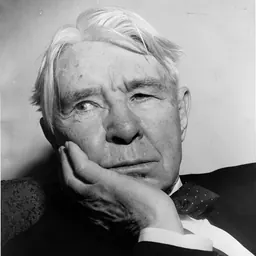
People in Eugene Kennedy's life
Named in this biography and alive at the same time






Related people
Same field, nearest in time
Contemporaries
People whose lives overlapped Eugene Kennedy's





Frequently asked questions
Who was Eugene Kennedy?
American psychologist (1928–2015)
When was Eugene Kennedy born?
Eugene Kennedy was born on 28 August 1928 in Syracuse.
When did Eugene Kennedy die?
Eugene Kennedy died on 3 June 2015 in Benton Harbor.
What was Eugene Kennedy's occupation?
Eugene Kennedy was a columnist, university teacher, non-fiction writer, psychologist, writer and journalist.
What nationality was Eugene Kennedy?
Eugene Kennedy was American.
Sources & further reading
Cite this page
APA: Biography.guide. (2026). Eugene Kennedy. https://biography.guide/eugene-kennedy-columnist/
MLA: "Eugene Kennedy." Biography.guide, https://biography.guide/eugene-kennedy-columnist/.
Chicago: "Eugene Kennedy." Biography.guide. https://biography.guide/eugene-kennedy-columnist/.
Data last updated: 2026-09-20 · Spot an error? Report a correction.
Page generated 2026-09-27 05:26 UTC