
Edzard Ernst
British-German academic physician and researcher specializing in the study of alternative medicine
About Edzard Ernst
Born 1948. Edzard Ernst is a German and British columnist, journalist, physician and university teacher.
Edzard Ernst (born 30 January 1948) is a retired British-German academic physician and researcher specialising in the critical study of complementary and alternative medicine. He was Professor of Complementary Medicine at the University of Exeter, the world's first such academic position in complementary and alternative medicine.
Ernst served as chairman of Physical Medicine and Rehabilitation (PMR) at the University of Vienna, but left this position in 1993 to set up the department of Complementary Medicine at the University of Exeter in England. He became director of complementary medicine of the Peninsula Medical School (PMS) in 2002. Ernst was the first occupant of the Laing chair in Complementary Medicine, retiring in 2011. He was born and trained in Germany, where he began his medical career at a homoeopathic hospital in Munich, Since his research began on alternative modalities, Ernst has been seen as "the scourge of alternative medicine" for publishing critical research that exposes methods that lack documentation of efficacy.
Early life Ernst was born in Wiesbaden, Germany, in 1948. As a child, his family doctor was a homeopath, and at the time he saw it as part of medicine. His father and grandfather were both physicians, and his mother was a laboratory assistant. Ernst originally wanted to be a musician, but his mother persuaded him that medicine might be a good "sideline" career for him to pursue. He learned homeopathy, acupuncture and other modalities Ernst researches complementary medicine with an emphasis on efficacy and safety. His research mainly surveys systematic reviews and meta-analyses of clinical trials; the institute has not performed a clinical trial for some time due to budget constraints. He has said that about five per cent of alternative medicine is backed by evidence, with the remainder being either insufficiently studied or backed by evidence showing lack of efficacy.
Ernst's department at Exeter defined complementary medicine as "diagnosis, treatment and/or prevention which complements mainstream medicine by contributing to a common whole, by satisfying a demand not met by orthodoxy or by diversifying the conceptual frameworks of medicine."
Ernst asserts that complementary techniques are mostly practised by qualified physicians in Germany and Austria whereas they are mainly practised by others in the UK. He also argues that the term "complementary and alternative medicine" (CAM) is an almost nonsensical umbrella term and that distinctions between its modalities must be made.
Since his research began on alternative modalities, Ernst has been seen as "the scourge of alternative medicine" for publishing critical research.
Smallwood Report
In 2005, a report by the economist Christopher Smallwood, personally commissioned by Prince Charles, claimed that complementary and alternative medicine was cost-effective and should be available in the National Health Service (NHS). Ernst was initially enlisted as a collaborator on the report, but asked for his name to be removed after a sight of the draft report convinced him that Smallwood had "written the conclusions before looking at the evidence". The report did not address whether CAM treatments were actually effective and Ernst described it as "complete misleading rubbish".
Prince Charles' private secretary, Sir Michael Peat, also filed a complaint regarding breached confidentiality with Exeter University. Although he was "cleared of wrongdoing", Ernst has said that circumstances surrounding the ensuing university investigation led to his retirement.
Trick or Treatment
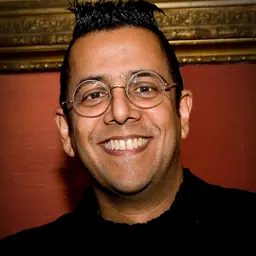
In 2008, Ernst and Simon Singh published Trick or Treatment? Alternative Medicine on Trial. The authors challenged the Prince of Wales, to whom the book is (ironically) dedicated, and The Prince's Foundation for Integrated Health on alleged misrepresentation of "scientific evidence about therapies such as homeopathy, acupuncture and reflexology". They asserted that Britons spent £500 million each year on unproven or disproven alternative therapies. In a review of Trick or Treatment in the New England Journal of Medicine, Donald Marcus described Ernst as "one of the best qualified people to summarize the evidence on this topic."
In 2008, Ernst sent an open letter urging the Royal Pharmaceutical Society of Great Britain to crack down on high street chemists that sell homoeopathic remedies without warning that the remedies lack evidence for claimed biological effects.
In a 2008 interview with Media Life Magazine, when he and Simon Singh were asked this question—"What do you think the future is for alternative medicine?"—they replied:For us, there is no such thing as alternative medicine. There is either medicine that is effective or not, medicine that is safe or not. So-called alternative therapies need to be assessed and then classified as good medicines or bogus medicines. Hopefully, in the future, the good medicines will be embraced within conventional medicine and the bogus medicines will be abandoned.
In a 2009 article entitled "Should We Maintain an Open Mind about Homeopathy?" published in the American Journal of Medicine, Ernst and Michael Baum—writing to other physicians—offered strong criticism of homeopathy:Homeopathy is among the worst examples of faith-based medicine. ... These axioms [of homeopathy] are not only out of line with scientific facts but also directly opposed to them. If homeopathy is correct, much of physics, chemistry, and pharmacology must be incorrect.... To have an open mind about homeopathy or similarly implausible forms of alternative medicine (e.g., Bach flower remedies, spiritual healing, crystal therapy) is therefore not an option. Hall said that Ernst and Smith direct their attention to the ethicists and the scientific community for this book with the goal "to inform, not to entertain. It is not an easy or 'fun' read, but it's an important one".
Dougal Jeffries, writing for the British Journal of General Practice, said the book was "replete with both theoretical and real-life examples and is thoroughly referenced, but is a rather turgid read. It clearly demonstrates the extraordinary capacity of intelligent beings, including both practitioners and patients, to hold to irrational beliefs in the face of contrary evidence, but the authors show little sympathy for this very human tendency."
Early retirement from Exeter Ernst was accused by Prince Charles' private secretary of having breached a confidentiality agreement regarding the 2005 Smallwood report. After being subjected to a "very unpleasant" investigation by the University of Exeter, the university "accepted his innocence but continued, in his view, to treat him as 'persona non grata'. All fundraising for his unit ceased, forcing him to use up its core funding and allow its 15 staff to drift away."
He retired in 2011, two years ahead of his official retirement. In July 2011, a Reuters article described his "long-running dispute with the Prince about the merits of alternative therapies" and stated that he "accused Britain's heir-to-the-throne Prince Charles and other backers of alternative therapies on Monday of being 'snake-oil salesmen' who promote products with no scientific basis", and that the dispute "had cost him his job – a claim Prince Charles's office denied". According to Ernst, "The snake oil salesman story is an entirely separate issue", which "happened years later." He added, "It is true that Charles's office denied that Charles knew about his 1st private secretary writing to my Vice Chancellor asking him to investigate my alleged breach of confidence." Ernst claims that as Sir Michael Peat wrote his letter in his capacity as the Prince's private secretary, Ernst finds that "exceedingly hard to believe." In 2009, Ernst's name appeared on a list of supporters of Republic – an organisation which campaigns for the abolition of the British monarchy. However, writing on his website in 2022, Ernst clarified his position: "Even though Charles did a sterling job in trying, I did not become a republican. I do have considerable doubts that Charles will be a good King (his reign might even be the end of the monarchy), and I did help the republican cause on several occasions but I never formally joined any such group (in general, I am not a joiner of parties, clubs or interest groups)."
In 2001, Ernst sat on the Scientific Committee on Herbal Medicinal Products of the Irish Medicines Board. In 2005, he was a member of the Medicines Commission of the British Medicines Control Agency (now part of the Medicines and Healthcare products Regulatory Agency) which determines which substances may be introduced and promoted as medicine. In 2008, he was an external examiner for several university medical schools in several countries. He is a Founding Member and on the Board of the Institute for Science in Medicine, formed in 2009 and was elected a Fellow of the Academy of Medical Sciences in 2009.
In February 2011, Ernst was elected as a Fellow of the Committee for Skeptical Inquiry. He was editor-in-chief of the journal Focus on Alternative and Complementary Therapies which he founded in 1995 and which was discontinued in 2016.
In 2015, Ernst was one of two recipients of the John Maddox Prize, sponsored jointly by Sense about Science and Nature, for courage in standing up for science.
Books Homeopathy: A Critical Appraisal (with Eckhart G. Hahn). Butterworth-Heinemann 1998. , 240 pages The Desktop Guide to Complementary and Alternative Medicine: An Evidence-based Approach. Elsevier Health Sciences 2006, , 556 pages Complementary Therapies for Pain Management. An Evidence-Based Approach. Elsevier Science 2007. , 349 pages The Oxford Handbook of Complementary Medicine. Oxford University Press 2008. , 448 pages Trick or Treatment? Alternative Medicine on Trial (with Simon Singh). Transworld Publisher 2008. , 416 pages (The same book published in the US is called Trick or Treatment: The Undeniable Facts about Alternative Medicine). Healing, Hype, Or Harm?: Scientists Investigate Complementary Or Alternative Medicine. (ed.) Imprint Academic 2008, , 120 pages A Scientist in Wonderland: A Memoir of Searching for Truth and Finding Trouble. Imprint Academic 2015. , 173 pages Homeopathy - The Undiluted Facts : Including a Comprehensive A-Z Lexicon. Springer 2018. , 151 pages More Harm than Good?: The Moral Maze of Complementary and Alternative Medicine with Kevin Smith. Springer 2018 , 223 pages SCAM: So-Called Alternative Medicine. (Societas) Imprint Academic 2018, , 225 pages Don't Believe What You Think: Arguments for and against SCAM. (Societas) Ingram Book Company 2020. , 261 pages Chiropractic: Not All That It's Cracked Up to Be. Springer 2021. , 206 pages Alternativmedizin - was hilft, was schadet: Die 20 besten, die 20 bedenklichsten Methoden. Gräfe und Unzer 2021. , 224 pages So-Called Alternative Medicine (SCAM) for Cancer. Springer 2021. , 232 pages Charles, The Alternative Prince: An Unauthorised Biography. Societas 2022. , 210 pages Charles, The Alternative King: An Unauthorised Biography. Societas 2023. , 216 pages Bizarre Medical Ideas: ... and the Strange Men Who Invented Them, Springer 2024, , 255 pages
Don’t just read it —
keep it.
Full-length biographies made to live with: read them, listen on the way to work, watch them tonight.
- E-book
- Audio
- Video
Instant download · yours to keep · every purchase keeps this site free
Important facts
People in Edzard Ernst's life
Named in this biography and alive at the same time





Related people
Same field, nearest in time




Contemporaries
People whose lives overlapped Edzard Ernst's


Frequently asked questions
Who is Edzard Ernst?
British-German academic physician and researcher specializing in the study of alternative medicine
When was Edzard Ernst born?
Edzard Ernst was born on 30 January 1948 in Wiesbaden.
What is Edzard Ernst's occupation?
Edzard Ernst is a columnist, journalist, physician and university teacher.
What nationality is Edzard Ernst?
Edzard Ernst is German and British.
Sources & further reading
Cite this page
APA: Biography.guide. (2026). Edzard Ernst. https://biography.guide/edzard-ernst/
MLA: "Edzard Ernst." Biography.guide, https://biography.guide/edzard-ernst/.
Chicago: "Edzard Ernst." Biography.guide. https://biography.guide/edzard-ernst/.
Data last updated: 2026-09-27 · Spot an error? Report a correction.
Page generated 2026-09-27 05:17 UTC