
About Eugène Claudius-Petit
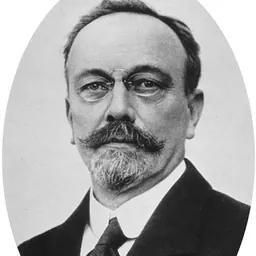
Lived 1907 – 1989 (aged 82). Eugène Claudius-Petit was a French politician, resistance fighter and minister.
Eugène Claudius-Petit (1907–1989) was a French politician. He participated in many governments under the Fourth Republic and was a proponent of Firminy Vert. He later added his pseudonym from the Resistance, "Claudius", to his name.
Early life and career He was born on 11 May 1907 in Angers, and died on 24 October 1989 in Paris.
The son of a railway worker, he attended primary school in his hometown and then became an apprentice and made his tour of France as a journeyman. He worked for a cabinetmaker in Paris and then joined the Rambault Furniture Company in Angers. He took courses in the hopes of becoming an art teacher. He later became anarchist in his political views and campaigned briefly in the libertarian movement. He also hosted a local union CGTU then joined after a meeting with Marc Sangnier.
He joined the French Resistance under the name Claudius. In 1942, he was part of the executive committee of Free Marksman in which Peter Degon later joined. In 1943 he became a founding member of the CNR where he represented the MUR (United Movements of Resistance). He left France for London and Algiers, where he was a delegate to the Provisional Consultative Assembly. After moving back to Paris, he chaired the National Liberation Movement.
He became a Companion of the Liberation, and was awarded the Croix de Guerre and the Legion of Honor.
Political career
Claudius-Petit was elected as Member of the Loire to the first and second National Constituent Assembly and the National Assembly from 1946 to 1955 under the Democratic and Socialist Union of the Resistance (UDSR) party.
During the Fourth and the Fifth Republic, Claudius-Petit, who believed that politics was a struggle for "those who have nothing," became one of the central figures of modernist and social centrism. Appointed Minister of Reconstruction and Urbanism on 11 September 1948, he led a broad policy and planning team in France after the war that repaired the damage of the conflict and dealt with housing shortages without precedent.
In February 1950, he appeared before the Council of Ministers to publish a pamphlet for national land use which is considered the founding manifesto of the policy conducted during the next half-century. To combat the excessive inequalities of settlement and activity, while balancing housing to industrial needs, Claudius-Petit advocated for a significant commitment in investment and regulation.
He was then Minister of Labour and Social Security from 19 June to 3 September 1954 under the government of Pierre Mendès France before becoming the interim Minister of Housing from 14 August to 3 September 1954. He resigned after the rejection of the EDC.
In the Ministry of Housing, he filed bills related to the acquisition of residential and industrial equipment, the procedure for codification of legislative texts concerning town planning and housing. He fought against slums.
Defeated in the 1956 election, he found his seat in the National Assembly from 1958 to 1962 and from 1967 to 1978 under various centrist roles.
From its inception in 1956 to 1977, he directed Sonacotra, the National Society for construction workers (Sonacotral, National Society of Algerian workers to build up the Evian agreements of 1962) Senior Manager of migrant workers' hostels in France.
He was a practicing Catholic, a fact reflected by his speech on the final day of the debate on the legalization of abortion in France, on 19 December 1974: "In conclusion, and precisely because I did not let my spiritual beliefs at the door, I can not get rid of the solidarity that binds me to the society in which I live. To obey my demands, I am with those who suffer most, with those convicted as with those who are despised the most (...) Because of that, because of Him, I take my share of burden. I will fight against everything that leads to abortion, but I will vote for the law".
Firminy-Vert As a friend of Le Corbusier, he embarked on a massive renovation of the town of Firminy. Elected mayor in 1953, he dreamed of building next to the city, "a city of the twentieth century to the best of his time," a kind of small Brasília, a compendium of modern architecture. In 1955, he governed several buildings by Le Corbusier, including a house of Culture, a "radiant city", a stage and the Church of St. Peter.
Honors
Commander of the Legion of Honor Companion of the Liberation - Decree of 19 October 1945 Croix de Guerre 1939-1945 (2 citations) Médaille de la Résistance with Rosette Commander of Mérite Social Commander of the Rose blanche de Finlande Grand Officer of Ouissam Alaouite
Tributes
A dead-end road at Saint-Étienne, bears his name. An avenue at Bourges bears his name. A street in Angers is named after him. A district in the 14th arrondissement of Paris bears his name: Place Eugène Claudius-Petit His "attic" (chalet in Courchevel) called "The Pin" became a historical monument since 23 January 2006
Don’t just read it —
keep it.
Full-length biographies made to live with: read them, listen on the way to work, watch them tonight.
- E-book
- Audio
- Video
Instant download · yours to keep · every purchase keeps this site free
Important facts
People in Eugène Claudius-Petit's life
Named in this biography and alive at the same time


Related people
Same field, nearest in time






Contemporaries
People whose lives overlapped Eugène Claudius-Petit's


Frequently asked questions
Who was Eugène Claudius-Petit?
politician (1907–1989)
When was Eugène Claudius-Petit born?
Eugène Claudius-Petit was born on 22 May 1907 in Angers.
When did Eugène Claudius-Petit die?
Eugène Claudius-Petit died on 24 October 1989 in Paris.
What was Eugène Claudius-Petit's occupation?
Eugène Claudius-Petit was a politician, resistance fighter and minister.
What nationality was Eugène Claudius-Petit?
Eugène Claudius-Petit was French.
Sources & further reading
· Wikipedia: Eugène Claudius-Petit
· DBpedia: Eugène Claudius-Petit
Cite this page
APA: Biography.guide. (2026). Eugène Claudius-Petit. https://biography.guide/eugene-claudius-petit/
MLA: "Eugène Claudius-Petit." Biography.guide, https://biography.guide/eugene-claudius-petit/.
Chicago: "Eugène Claudius-Petit." Biography.guide. https://biography.guide/eugene-claudius-petit/.
Data last updated: 2026-09-20 · Spot an error? Report a correction.
Page generated 2026-09-27 05:27 UTC