
About Eugen Schiffer
Lived 1860 – 1954 (aged 94). Eugen Schiffer was a German politician, lawyer, judge, jurist, member of parliament and minister.
Eugen Schiffer (14 February 1860 – 5 September 1954) was a German lawyer and liberal politician. He served as Minister of Finance and deputy head of government in the Weimar Republic from February to April 1919. From October 1919 to March 1920, he was again deputy head of government and Minister of Justice. In 1921, he once more became Minister of Justice. Schiffer was a founder-member of the liberal German Democratic Party (DDP) in 1918 and 1919 and co-founder in 1946 of its East German successor party, the Liberal Democratic Party of Germany (LDPD).
Early life Eugen Schiffer was born in Breslau in the Prussian Province of Silesia on 14 February 1860 as the son of Bernhard Schiffer (1830–1900, a merchant) and his wife Mathilde (1832–1888, née Kassel). Schiffer graduated from the Elisabeth-Gymnasium in Breslau with the Abitur and went on to study law at Breslau, Leipzig and Tübingen. He entered the Prussian judicial service in 1880 and after positions in Zabrze (Upper Silesia) and Magdeburg, became Kammergerichtsrat in Berlin in 1906. In 1910, Schiffer was promoted to Oberverwaltungsgerichtsrat.
In 1888, Schiffer married Bertha (1858-1919, née Buttermilch). They had two daughters (Mathilde, born in 1889, married Waldemar Koch in 1933) and a son. In 1896, the Jewish Schiffer converted to Protestantism.
After the Scheidemann cabinet resigned in June 1919 over the Treaty of Versailles, the DDP initially refused to become part of the Bauer cabinet, but in early October, the Democrats rejoined the Social Democratic Party of Germany (SPD) and Zentrum in government. As a result, Schiffer became Minister of Justice and, once again, deputy to the head of government, now with the title of Vice-Chancellor. He opposed plans to socialise industries and worked towards a fundamental reform of the civil service.
However, in March 1920, during the Kapp-Lüttwitz Putsch, Schiffer did not flee the capital with the majority of the cabinet. His role over the days of the putsch was controversial. Since he negotiated with the putschists without a formal mandate from the government, made promises in the name of President Friedrich Ebert and offered those responsible for the putsch amnesty, Schiffer was forced to resign by the SPD after the end of the putsch.
From May to October 1921, Schiffer was once again Minister of Justice in the first cabinet of Joseph Wirth. In 1921–1922, Schiffer was head of the German delegation at the negotiations with the Allies on Upper Silesia in Geneva that led to the treaty of 15 May 1922 securing trading rights and minority rights in the region. In 1922–1923, he was the German representative at the International Court of Justice in The Hague. In 1924, Schiffer supported the acceptance of the Dawes Plan.
In 1925, he resigned from the DDP and retired from active politics after an attempt to merge the parties of the political centre in a single Liberale Vereinigung.
Later life After retiring from politics, Schiffer focused on heading the Berliner Verwaltungsakademie, the first institution of higher learning for the German civil service, which he had helped found in 1921. He also practiced law, served as an adviser to the bank "Bankhaus Mendelssohn & Co." and was chairman of the board at Anhaltischen Kohlenwerke AG. In 1928, his book Die Deutsche Justiz launched a public debate over a judicial reform.
After having been initially left mostly alone by the Nazis due to the influence of highly placed advocates (, Johannes Popitz and Lutz Graf Schwerin von Krosigk), in 1943 he was forced, along with his daughter Marie, to move to the .
After the end of World War II, together with his son-in-law Waldemar Koch and Wilhelm Külz, Schiffer founded the Liberaldemokratische Partei Deutschlands (LDPD) in the Soviet-occupied sector of Berlin. For three years after August 1945, Schiffer headed the central administration of Justice (Justizverwaltung) under the Soviet military government. He then moved to West-Berlin.
Eugen Schiffer died in Berlin-Charlottenburg on 5 September 1954.
Don’t just read it —
keep it.
Full-length biographies made to live with: read them, listen on the way to work, watch them tonight.
- E-book
- Audio
- Video
Instant download · yours to keep · every purchase keeps this site free
Important facts
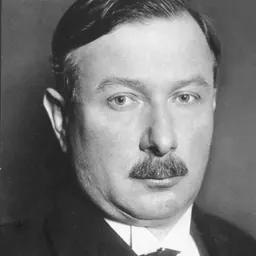
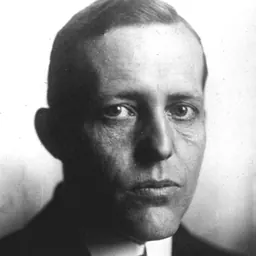
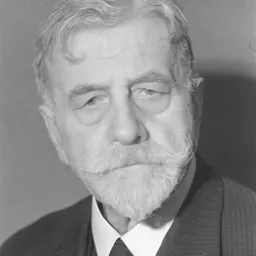
People in Eugen Schiffer's life
Named in this biography and alive at the same time



Related people
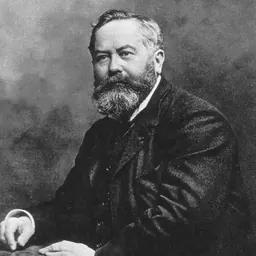
Same field, nearest in time


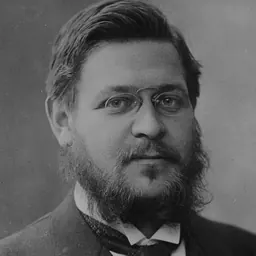

Contemporaries
People whose lives overlapped Eugen Schiffer's
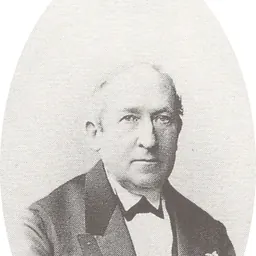
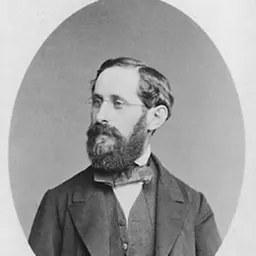

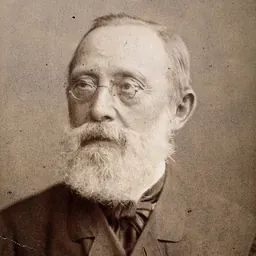

Frequently asked questions
Who was Eugen Schiffer?
German politician (1860-1954)
When was Eugen Schiffer born?
Eugen Schiffer was born on 14 February 1860 in Wrocław.
When did Eugen Schiffer die?
Eugen Schiffer died on 5 September 1954 in West Berlin.
What was Eugen Schiffer's occupation?
Eugen Schiffer was a politician, lawyer, judge, jurist, member of parliament and minister.
What nationality was Eugen Schiffer?
Eugen Schiffer was German.
Sources & further reading
Cite this page
APA: Biography.guide. (2026). Eugen Schiffer. https://biography.guide/eugen-schiffer/
MLA: "Eugen Schiffer." Biography.guide, https://biography.guide/eugen-schiffer/.
Chicago: "Eugen Schiffer." Biography.guide. https://biography.guide/eugen-schiffer/.
Data last updated: 2026-09-20 · Spot an error? Report a correction.
Page generated 2026-09-27 05:21 UTC