
Ernst Dammann
German Africanist, theologian and Nazi Party official in Tanganyika
About Ernst Dammann
Lived 1904 – 2003 (aged 99). Ernst Dammann was a German university teacher, writer, africanist, politician, leader and religious studies scholar.
Ernst Karl Alwin Hans Dammann (6 May 1904 in Pinneberg, Holstein – 12 July 2003 in Pinneberg ) was a German Africanist. With Walter Markov, he was one of the founders of African Studies in the DDR, A prodigious scholar of African languages and a one-time missionary in Tanga, Tanzania, he was an early member of the Nazi party, and his scientific work was criticized as imbued with racist ideology.
Biography Education, NSDAP membership Dammann grew up in Schleswig-Holstein, in an atmosphere of "Evangelical-Lutheran piety and Prussian virtues". His mother died young (in 1916), and his father left for Africa in 1908, where he spent three years working on Tanganyika Railway in Tanzania. and then studied in Kiel and at the University of Hamburg, with Carl Meinhof, whom he had met earlier in Pinneberg, He gained his doctorate in Kiel in 1929 (dissertation: Das negerische Afrika bei Yaqut und Qazwini) and was ordained in 1930. That same year he was employed as a research assistant by Meinhof in Hamburg. Meinhof and many others (including Dammann, Bernhard Struck, August Klingenheben, and Ernst Zyhlarz) were Nazis or Nazi sympathizers whose views on race were steeped in 19th-century theories of European racial superiority, with the attendant idea that the alleged African inferiority was manifested also in literature and language.
In and out of Africa From 1933 to 1937 he was a missionary in Tanga, Tanzania, He visited Lamu Island, where (with the help of his wife, Ruth Dammann was the leader of the foreign branch of the Nazi party (Landesgruppenleiter his work contributed to the global dissemination and recognition of Swahili literary culture. Ironically, while Dammann’s own racial ideology ranked African intellectual productions at the bottom of a racial hierarchy, the linguistic data he preserved later served to demonstrate the existence of a sophisticated Swahili civilization with high literary, philosophical, and theological standards.
However, his commitment the cultural appropriation of the "Other" was used to justify the reconquest of lands presented as intrinsically linked to Germanic heritage.
Subsequent career in Germany (DDR and BRD) After his return from Africa, he achieved his habilitation in African languages from the University of Hamburg in 1939, His application was supported by Klingenheben and Westermann. A memo, likely from some state agency, outlines the need for African Studies in East Germany: teaching African languages would be of great benefit in any East German ventures on the African continent. Dammann's linguistic expertise was said to override his compromised past; his "conservative" politics were well-known, but apparently he was silent about his position as Landesgruppenleiter for the NSDAP/AO in Africa, and copped only to having temporarily filled a vacancy. He retired in 1972 and moved back to Pinneberg, though he continued holding seminars in Marburg until 1985. which, according to one reviewer, reflects "the deep respect in which Professor Ernst Dammann is held by colleagues in the many disciplines to which he contributed". Later, in a 2011 study about racism in how Germans had studied Africa, he was described as an "opportunistic member of the Nazi party" who was "deeply entrenched in racist thought", and his memoir, 70 Jahre erlebte Afrikanistik (1999), shows he "upheld his racist and paternalistic views until late in life". Studien zum Kwangali. Hamburg 1957. Grundriss der Religionsgeschichte. Stuttgart 1972. Ndonga-Anthologie. Berlin 1975. Die Übersetzung der Bibel in Afrikanische Sprachen. Munich 1975. Was Herero erzählten und sangen: Texte, Übersetzung, Kommentar. Berlin 1987. Herero-Texte. With Andreas Kukuri. Berlin 1983. 70 Jahre erlebte Afrikanistik: ein Beitrag zur Wissenschaftsgeschichte. Berlin 1999. Menschen an meinem Lebensweg. Groß Oesingen 2002.
Festschrift Wort und Religion: Kalima na dini. Studien zur Afrikanistik, Missionswissenschaft, Religionswissenschaft. Ernst Dammann zum 65. Geburtstag, eds. Hans-Jürgen Greschat, Herrmann Jungraithmayr. Stuttgart: Evangelischer Missionsverlag, 1969.
Don’t just read it —
keep it.
Full-length biographies made to live with: read them, listen on the way to work, watch them tonight.
- E-book
- Audio
- Video
Instant download · yours to keep · every purchase keeps this site free
Important facts
People in Ernst Dammann's life
Named in this biography and alive at the same time
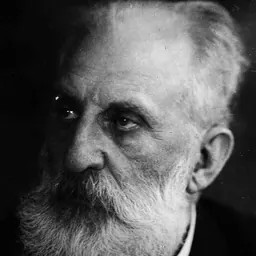

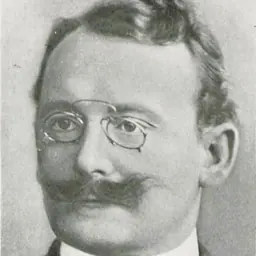


Related people
Same field, nearest in time


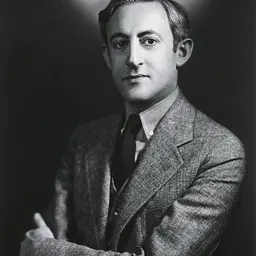
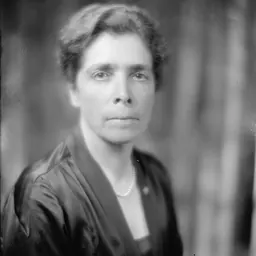
Contemporaries
People whose lives overlapped Ernst Dammann's





Frequently asked questions
Who was Ernst Dammann?
German Africanist, theologian and Nazi Party official in Tanganyika
When was Ernst Dammann born?
Ernst Dammann was born on 6 May 1904 in Pinneberg.
When did Ernst Dammann die?
Ernst Dammann died on 12 July 2003 in Pinneberg.
What was Ernst Dammann's occupation?
Ernst Dammann was a university teacher, writer, africanist, politician, leader and religious studies scholar.
What nationality was Ernst Dammann?
Ernst Dammann was German.
Sources & further reading
Cite this page
APA: Biography.guide. (2026). Ernst Dammann. https://biography.guide/ernst-dammann/
MLA: "Ernst Dammann." Biography.guide, https://biography.guide/ernst-dammann/.
Chicago: "Ernst Dammann." Biography.guide. https://biography.guide/ernst-dammann/.
Data last updated: 2026-09-20 · Spot an error? Report a correction.
Page generated 2026-09-27 05:06 UTC