
About Walter Markov
Lived 1909 – 1993 (aged 83). Walter Markov was a German historian, university teacher, german resistance to Nazism and history.
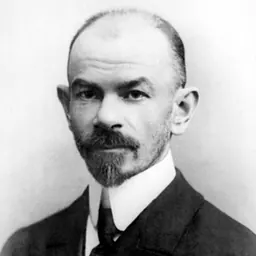
Walter Karl Hugo Markov (born Mulec; 5 October 1909 – 3 July 1993) was a German historian. Shortly after he received his doctorate, a promising academic career was interrupted in 1934 when he joined the (by this time illegal) Communist Party and briefly became a resistance activist. In 1935 he was sentenced to twelve years in prison, but ten years later in April 1945, as the Hitler regime collapsed, he was one of a number of long-term inmates from the Siegburg jail who organised their own "self-release", with the help of two pistols that he had been able to purchase, already loaded, on the prison black market.
After the war, according to more than one source he became one of very few historians from the German Democratic Republic who built a reputation for serious historical scholarship beyond the confines of the East German academic establishment. Markov also managed several more trips, including visits home to his parents in Austria. His own political sympathies lay not with the National Socialists, nor with the shrinking band of political moderates, but with the Communists. Kern himself arranged for the dissertation to be published the next year. Schmidt already had contacts with the illegal Communist Party while he was still in Hamburg. The two had met in Fritz Kern's lectures. In the dangerous atmosphere of the times they initially dealt with one another cautiously, but once satisfied that they really were both on the same side they formed the nucleus of what became a five-man party resistance cell. (Markov nevertheless suspected that Schadow's communist commitment might be less than whole-hearted.) An idea attributed to Arthur Toynbee was that they could at least take steps to enlighten English-language tourists visiting the country about the true nature of the National Socialist regime. Appropriate leaflets were drafted. One source for the texts was leaflets that the ever travel-hungry Markov had picked up in Luxembourg in March 1934, when he had taken a bus to the Grand Duchy in connection with a "World Cup Qualifying Match" involving the Germany national football team. They gathered more material when Markov, Meschke, Toynbee and Schadow took a cycling trip to the Saarland which had been under French military occupation since 1919 and was therefore, for most purposes, beyond the reach of the German security services. In Saarbrücken they were able to speak with exiled members of the party leadership, but they were not (at this stage) provided with the contact addresses that they had been hoping for. While they were in the Saarland Markov took the precaution of opening a bank account with a French bank which he thought might be of use in the future.
Professor in the Soviet occupation zone In his new role as a Leipzig university professor, Markov retained elements of his old "critical spirit".
Also in 1947 Markov received his habilitation (higher academic qualification), not from the University of Leipzig but from the University of Halle, 50 km / 30 miles to the north-west, where he briefly took a teaching professorship from April till November 1947. The topic of his dissertation was the "basics of Balkan diplomacy" and the various relationships and interdependencies between the Balkan states.
In 1949 he returned to Leipzig, now with a full professorship and a teaching chair in modern history ("Allgemeine Geschichte der Neuzeit"). Rauch, who became Markov's Stasi handler, was chiefly interested in his "international" contacts, meaning members of the academic community in West Germany and the "capitalist abroad". (In practice, outside West Germany espionage on behalf of Warsaw Pact governments was usually undertaken by the KGB, whose reports went directly to Moscow.) There can be no guarantee that surviving files at the Stasi Records Agency present a complete picture of Markov's work for the Stasi. Rauch appears to have been one of Markov's former students who hoped to gain promotion within the service by making use of his re-established contacts with his former professor. Their meetings were generally brief (but presumably long enough for an exchange of reports and instructions), and took place roughly once every two months, either in Markov's apartment or at the university. The relationship seems to have fizzled out during 1961. Nevertheless, Markov's academic career ran relatively smoothly during the 1960s and 1970s and his international reputation grew. This, and the fact that during the 1960s he began to receive the "usual national honours" (starting, in 1961, with the National Prize), indicate that one way and another the period of his work for the Stasi coincided with a certain level of informal rehabilitation, following his dramatic fall from grace back in 1951. There is no record of his having been officially readmitted to the SED before 1989, however. During 1962 and 1963, Markov spent time at Nsukka in Nigeria as the first Director of the History Department at the new university. In 1963 he briefly held a guest professorship in Sri Lanka, but throughout and beyond the 1960s, even though he was the recipient of a number of academic awards and prizes from foreign universities, most of his research and teaching still took place in Leipzig. By this time, partly as a result of his overseas visits and contacts, he was acquiring an academic interest in the recent history of liberation struggles and decolonistation in what people in Germany at this time were beginning to refer to as the "third world". In 1968 he became the first director of the Department for African and Near-Eastern Studies which he had set up at the University of Leipzig. His research interests also broadened out to embrace "world history in the revolutionary context" which was the title of a book he published in 1979.
Final years Walter Markov retired from his university posts in 1974. His later years were encumbered by poor health, but he continued to publish regular articles in the academic press and to observe the progress German Democratic Republic from his Marxist perspective. In his retirement he could never have been classified as a signed-up critic of the régime; but nor were his contributions entirely bereft of criticism. His interest in comparative revolutionary research was carried on by his former student Manfred Kossok.
Two serious heart attacks in 1983/1984 reduced his productivity. He continued to work on his memoires and agreed to a few interviews about aspects of his earlier life. After the changes which paved the way for democracy and reunification, at the end of 1989, he joined the Party of Democratic Socialism (PDS), which was a newly relaunched and rebranded incarnation of the old East German ruling SED party, now struggling - ultimately with considerable success - to adapt itself for a democratic future.
Walter Markow died on 3 July at :de:Mühlenbeck (Mühlenbecker Land)Summt am See, a small lakeside settlement just outside Berlin.
Awards and honours (selection)
Publications (selection)
Walter Markov's published legacy includes approximately 800 papers and articles, published in journals such as Die Weltbühne, Sinn und Form and the Zeitschrift für Geschichtswissenschaft. There are also around 30 monographs.
Don’t just read it —
keep it.
Full-length biographies made to live with: read them, listen on the way to work, watch them tonight.
- E-book
- Audio
- Video
Instant download · yours to keep · every purchase keeps this site free
Important facts
People in Walter Markov's life
Named in this biography and alive at the same time

Related people
Same field, nearest in time


Contemporaries
People whose lives overlapped Walter Markov's



Frequently asked questions
Who was Walter Markov?
German historian (1909-1993)
When was Walter Markov born?
Walter Markov was born on 5 October 1909 in Graz.
When did Walter Markov die?
Walter Markov died on 3 July 1993 in Mühlenbecker Land.
What was Walter Markov's occupation?
Walter Markov was a historian, university teacher, german resistance to Nazism and history.
What nationality was Walter Markov?
Walter Markov was German.
Sources & further reading
Cite this page
APA: Biography.guide. (2026). Walter Markov. https://biography.guide/walter-markov/
MLA: "Walter Markov." Biography.guide, https://biography.guide/walter-markov/.
Chicago: "Walter Markov." Biography.guide. https://biography.guide/walter-markov/.
Data last updated: 2026-09-22 · Spot an error? Report a correction.
Page generated 2026-09-27 05:02 UTC