
About Ernesto Bellandi
Lived 1842 – 1916 (aged 73–74). Ernesto Bellandi was an Italian painter, decorator and illustrator.
Ernesto Bellandi (January 1842 – 1916) was an Italian painter.
Biography He was born in Florence, Grand Duchy of Tuscany. He trained at the Academy of Fine Arts of Florence. While he had been offered a teaching post in Urbino, he began decorating a private house, for a counterfeiter of money, thus Bellandi's wages were without value. He continued to work as a decorator in Florence, often painting nymphs, sphinxes, and satyrs and other mythologic figures.
During 1871–72, Bellandi painted some lunettes at Villa Oppenheim, From there, he traveled to Bastia in Corsica to paint. In the summer of 1873, he went in Lower Austria, where he painted six large frescos, well regarded, but which were lost to inclemency and the site. In 1875, he painted in Rome a tempera depicting the Encounter of Ceaser and Cleopatra. He returned in 1877 to Bastia, on the vaults of the new theater he painted a series of flying figures. For the villa of a famous singer painted a frieze with about twenty-five figures in perspective, posing on the frame set around the room, each figure represents characters in melodramatic works of all the most famous masters. In the year 1880, Bellandi traveled to Catania to decorate the central dome of the vault of the Teatro Massimo Bellini, where he painted Vincenzo Bellini standing near the floor, with the pen in his right hand, a few sheets of music in his left, surrounded by the Muses. The surrounding frieze has putti and subjects from some of the composer's works. It appears that local newspapers questioned the quality of the work, to Bellandi's embarrassment, but a subsequent inquest cleared his name.
In 1884 he painted the vault from sotto in su of a large room of a private residence. In some frames were written the verse of Ariosto, and strong feminine characters from various novels like Lucia from Manzoni, Thecla from Schiller's Wallenstein Trilogy; Esmeralda from The Hunchback of Notre-Dame, by Victor Hugo, and the Ines of Camoens.
In the chapel of the family of brothers Orlando of Livorno, Bellandi had to paint a nonreligious subject. His clients wanted to depict their commitment to charity by giving other work. Bellandi painted two large allegorical figures, and in the distance, the construction of an iron ship and the swarm of workers illustrating the motto: In labore virtus.
Don’t just read it —
keep it.
Full-length biographies made to live with: read them, listen on the way to work, watch them tonight.
- E-book
- Audio
- Video
Instant download · yours to keep · every purchase keeps this site free
Important facts
People in Ernesto Bellandi's life
Named in this biography and alive at the same time

Related people
Same field, nearest in time
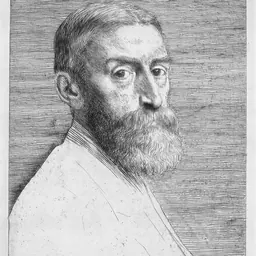
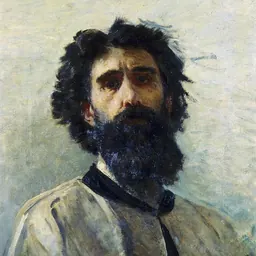
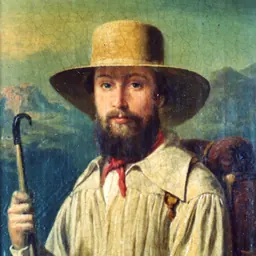
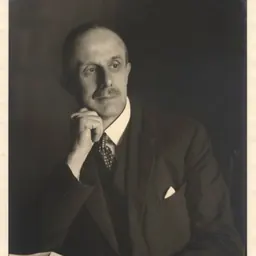
Contemporaries
People whose lives overlapped Ernesto Bellandi's


Frequently asked questions
Who was Ernesto Bellandi?
Italian painter
When was Ernesto Bellandi born?
Ernesto Bellandi was born in 1842 in Florence.
When did Ernesto Bellandi die?
Ernesto Bellandi died in 1916 in Sesto Fiorentino.
What was Ernesto Bellandi's occupation?
Ernesto Bellandi was a painter, decorator and illustrator.
What nationality was Ernesto Bellandi?
Ernesto Bellandi was Italian.
Sources & further reading
Cite this page
APA: Biography.guide. (2026). Ernesto Bellandi. https://biography.guide/ernesto-bellandi/
MLA: "Ernesto Bellandi." Biography.guide, https://biography.guide/ernesto-bellandi/.
Chicago: "Ernesto Bellandi." Biography.guide. https://biography.guide/ernesto-bellandi/.
Data last updated: 2026-09-20 · Spot an error? Report a correction.
Page generated 2026-09-27 05:17 UTC