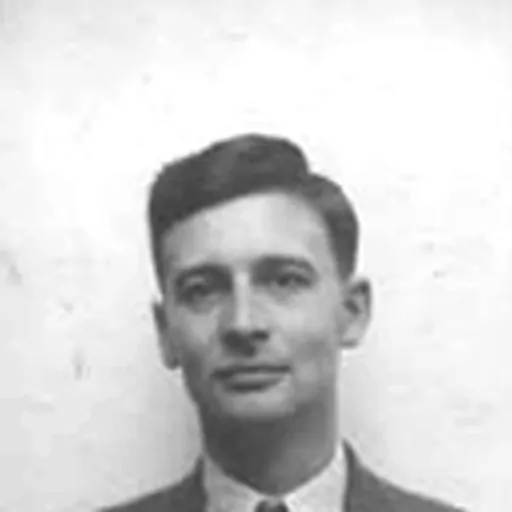
Ernest William Titterton
British-Australian nuclear physicist
About Ernest William Titterton
Lived 1916 – 1990 (aged 73). Ernest William Titterton was an Australian and British physicist and nuclear physicist.
Sir Ernest William Titterton (4 March 1916 – 8 February 1990) was a British nuclear physicist.
A graduate of the University of Birmingham, Titterton worked in a research position under Mark Oliphant, who recruited him to work on radar for the British Admiralty during the first part of the Second World War. In 1943, he joined the Manhattan Project's Los Alamos Laboratory, where he helped develop the first atomic bombs. He eventually became one of the laboratory's group leaders. He participated in the Operation Crossroads nuclear tests at the Bikini Atoll in 1946, where he performed the countdown for both tests. With the passage of the Atomic Energy Act of 1946, known as the McMahon Act, all British government employees had to leave. He was the last member of the British Mission to do so, in April 1947.
Returning to England, Titterton joined the Atomic Energy Research Establishment in Harwell, Oxfordshire, heading a group responsible for research with nuclear emulsions and cloud chambers. He investigated ternary fission, a comparatively rare type of nuclear fission in which the nucleus breaks into three pieces instead of two, and the photodisintegration of light nuclei by gamma rays. He was also a consultant to the Atomic Weapons Research Establishment (AWRE) at Aldermaston that designed and developed Britain's first nuclear weapons.
In August 1950, Titterton accepted an offer from Oliphant to become the foundation Chair of Nuclear Physics at the Australian National University (ANU) in Canberra. Over the next thirty years, Titterton held high positions on various science, defence and nuclear-related committees, institutes and councils in Australia. He helped build up the physics department at ANU through the acquisition of accelerators. As a member of the Atomic Weapons Tests Safety Committee (AWTSC), Titterton witnessed many of the British nuclear tests at Maralinga. His reputation was tarnished by the McClelland Royal Commission in 1984 and 1985, which accused him of loyalty to Britain instead of Australia. He was a strong public advocate of nuclear power in Australia, arguing that "nuclear power is the cheapest, cleanest and safest method of power production yet devised by man." the son of William Alfred and his wife Elizabeth . He had a younger brother, Maurice. He had a talent for music, singing with the choir and playing the organ at the Church of St Editha, Tamworth. While at the University of Birmingham, Titterton met Peggy Eileen Johnson, a laboratory assistant, who helped him build a prototype spark gap generator. They were married on 19 September 1942 at St John the Baptist in Hagley, Worcestershire. Together, they searched for delays between nuclear fission and the emission of prompt neutrons. A sizeable delay could make a nuclear chain reaction impractical. pleasantly surprised and impressed Brigadier General Leslie Groves by congratulating him on the food and accommodation. Titterton played the grand piano at dances and recitals at the Fuller Lodge, often accompanied by Richard Feynman on the drums.
During this time, Titterton continued to pursue his academic interests at the ANU. He had a 1.2 MeV Cockcroft-Walton accelerator installed so he could continue his work with nuclear emulsions. On study leave in 1954 he visited William Penney, a colleague from the Los Alamos Laboratory days who had become the Director of the AWRE at Aldermaston. On the voyages to and from England on the Orcades and , he wrote a book, Facing the Atomic Future (1956), in which he examined social, ethical and political issues surrounding nuclear power and nuclear weapons. an argument he repeated in a second book, with Frank Robotham, titled Uranium, Energy Source of the Future?, in which he put the case for nuclear power. He was appointed a Companion of the Order of St Michael and St George on 1 January 1957, and was created a knight bachelor on 1 January 1970.
British nuclear testing
On 16 September 1950, the prime minister of the United Kingdom, Clement Attlee sounded out his Australian counterpart, Robert Menzies about the prospect of conducting British nuclear weapons tests in Australia. Menzies was agreeable. In April 1952, the British government asked if Titterton could assist with the forthcoming test in the Montebello Islands of Western Australia, now codenamed Operation Hurricane, as he was one of the few people outside the United States who had experience in the planning and conduct of nuclear tests. On Oliphant's advice, the vice chancellor, Sir Douglas Copland, agreed to release Titterton. Two further nuclear tests were carried out in 1953 at Emu Field, South Australia, as part of Operation Totem. Titterton and other scientists from the ANU conducted neutron flux measurements with photographic emulsions and neuron-threshold detectors. In July 1955, in response to growing concerns about health hazards related to British nuclear tests, the government created the Atomic Weapons Tests Safety Committee (AWTSC), with the power to veto tests it felt were a danger to people, flora or fauna. Titterton was one of its members, along with Leslie H. Martin, W. A. S. Butement, C. E. Eddy, Philip Baxter and L. J. Dwyer. In this capacity, Titterton witnessed British nuclear tests at Maralinga, starting with Operation Mosaic in May and June 1956. He considered himself as "on the scrap heap of life", and claimed that "if euthanasia were legal I should opt for it tomorrow". His papers are held by the Australian Science and Technology Heritage Centre at the University of Melbourne.
Don’t just read it —
keep it.
Full-length biographies made to live with: read them, listen on the way to work, watch them tonight.
- E-book
- Audio
- Video
Instant download · yours to keep · every purchase keeps this site free
Important facts
People in Ernest William Titterton's life
Named in this biography and alive at the same time
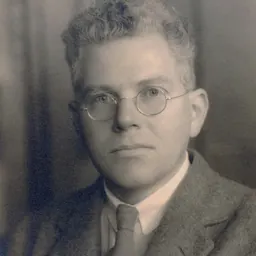

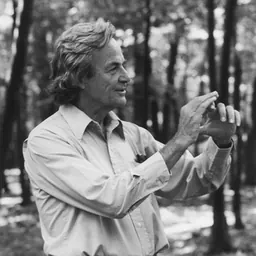





Related people
Same field, nearest in time
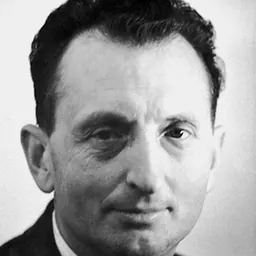


Contemporaries
People whose lives overlapped Ernest William Titterton's




Frequently asked questions
Who was Ernest William Titterton?
British-Australian nuclear physicist (1916–1990)
When was Ernest William Titterton born?
Ernest William Titterton was born on 4 March 1916 in England.
When did Ernest William Titterton die?
Ernest William Titterton died on 8 February 1990 in Canberra.
What was Ernest William Titterton's occupation?
Ernest William Titterton was a physicist and nuclear physicist.
What nationality was Ernest William Titterton?
Ernest William Titterton was Australian and British.
Sources & further reading
· Wikipedia: Ernest William Titterton
Cite this page
APA: Biography.guide. (2026). Ernest William Titterton. https://biography.guide/ernest-william-titterton/
MLA: "Ernest William Titterton." Biography.guide, https://biography.guide/ernest-william-titterton/.
Chicago: "Ernest William Titterton." Biography.guide. https://biography.guide/ernest-william-titterton/.
Data last updated: 2026-09-20 · Spot an error? Report a correction.
Portrait: Wikimedia Commons · author & licence
Page generated 2026-09-27 04:57 UTC