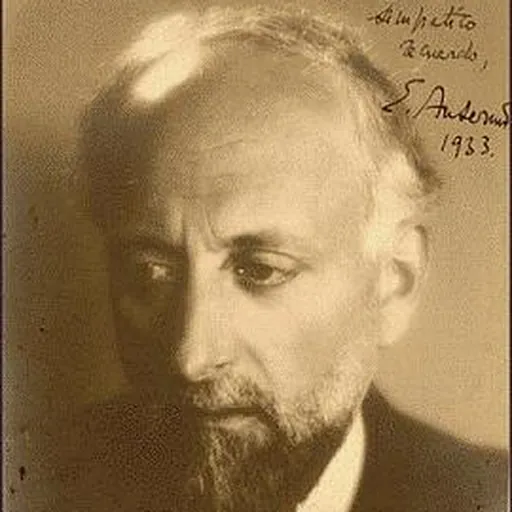
About Ernest Ansermet
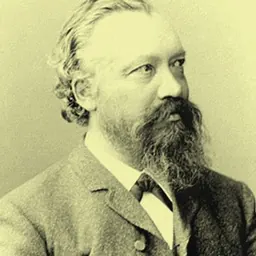
Lived 1883 – 1969 (aged 85). Ernest Ansermet was a Swiss conductor, musicologist, composer, musician and music arranger.
Ernest Alexandre Ansermet (; 11 November 1883 – 20 February 1969) was a Swiss conductor.
Biography Ansermet was born in Vevey,
After World War II, Ansermet and his orchestra rose to international prominence through a long-term contract with Decca Records. From that time until his death, he recorded most of his repertoire, often two or three times. His interpretations were widely regarded as admirably clear and authoritative, though the orchestral playing did not always reach the highest international standards, and they differed notably from those of other famous 20th-century specialists, notably Pierre Monteux and Stravinsky himself. Ansermet disapproved of Stravinsky's practice of revising his works, and always played the original versions. Although famous for performing much modern music by other composers such as Arthur Honegger and Frank Martin, he avoided altogether the music of Arnold Schoenberg and his associates, even criticizing Stravinsky when he began to use twelve-tone techniques in his compositions. In Ansermet's book, Les fondements de la musique dans la conscience humaine (1961), he sought to prove, using Husserlian phenomenology and partly his own mathematical studies, that Schoenberg's idiom was false and irrational. He labeled it a "Jewish idea" and went on to say that "the Jew is a me who speaks as though he were an I," that the Jew "suffers from thoughts doubly misformed", thus making him "suitable for the handling of money", and sums up with the statement that "historic creation of Western music" would have developed just as well "without the Jew". Ansermet's reputation suffered after the war because of his collaboration with the Nazis and he was boycotted in the new state of Israel.
In May 1954 Decca recorded Ansermet and the orchestra in Europe's first commercial stereophonic recordings. They went on to record the first stereo performance of the complete The Nutcracker by Tchaikovsky on LP (Artur Rodziński had already recorded a stereo performance on magnetic tape, but this had been released on LP only in mono). Ansermet also conducted early stereo recordings of Debussy's Nocturnes and the Prélude à l'après-midi d'un faune. Part of his recording of The Rite of Spring, augmented by a rehearsal recording unobtainable elsewhere, was used by Decca on the company's 1957 stereo demonstration LP, A Journey into Stereo Sound. The conductor's clear and methodical counting of beats is a distinct feature of this rehearsal sequence. In his last years he and his ensemble recorded works by Haydn, Beethoven and Brahms. In 1962, Ansermet made the first complete recording of Joseph Haydn's Paris symphonies with the OSR on Decca.
His last recording, of Stravinsky's The Firebird, was made in London with the New Philharmonia Orchestra in 1968, which included a recording of the rehearsal sessions issued as a memorial to him. Another late recording for Decca, also issued as a memorial album, was with L'Orchestre de la Suisse Romande, and was devoted to Albéric Magnard's Symphony No. 3 and Édouard Lalo's Scherzo for Orchestra.
Ansermet composed some piano pieces and compositions for orchestra, among them a symphonic poem entitled Feuilles de Printemps (Leaves of Spring). He also orchestrated Debussy's Six épigraphes antiques in 1939.
He died on 20 February 1969 in Geneva
Notable premieres In concert Stravinsky, Histoire du soldat, Lausanne, 28 September 1918 Stravinsky, Capriccio for Piano and Orchestra, composer as soloist, 6 December 1929 Stravinsky, Mass, 27 October 1948
On stage Manuel de Falla, The Three-Cornered Hat, Ballets Russes, Paris, 1919, a ballet for which Léonide Massine created the choreography and Pablo Picasso designed the sets and costumes. (Ansermet later recorded this in stereo.) Stravinsky, Pulcinella, Ballets Russes, Paris, 15 May 1920 Prokofiev, Chout, Ballets Russes, Paris, 1921 Stravinsky, Renard, Ballets Russes, Paris, 18 May 1922 Stravinsky, Les noces, Ballets Russes, Paris, 13 June 1923 Benjamin Britten, The Rape of Lucretia, Glyndebourne, 12 July 1946
On record Stravinsky, Capriccio for Piano and Orchestra, composer as soloist, May 1930
Writings Ansermet, Ernest. 1961. Les fondements de la musique dans la conscience humaine. 2 v. Neuchâtel: La Baconnière. New edition, edited by J.-Claude Piguet, Rose-Marie Faller-Fauconnet, et al. Neuchâtel: La Baconnière, 1987. Ansermet, Ernest. 1973. "L'apport de Paul Hindemith à la musique du XXe siècle." In Hommage à Paul Hindemith: 1895–1963 : l'homme et l'œuvre. Yverdon: Éditions de la Revue musicale de suisse romande. Ansermet, Ernest. 1983. Ecrits sur la musique. Edited by Jean-Claude Piguet. New rev. ed. Neuchâtel: La Baconnière.
Correspondence
Piguet, Jean-Claude (ed.) 1976. . Edited by Jean-Claude Piguet, with notes by Jacques Burdet. Neuchâtel: La Baconnière. Tappolet, Claude (ed.). 2006. . Geneva: Georg. Tappolet, Claude (ed.). 1999. . Geneva: Georg. Tappolet, Claude (ed.). 1998. . Preface by Philippe Dinkel, postface by Jean-Jacques Langendorf. Geneva: Georg Editeur. Tappolet, Claude (ed.). 1990–91. . Geneva, Switzerland: Georg. Tappolet, Claude (ed.). 1989a. . Preface by Maurice Zermatten. Geneva: Georg; Paris: Eshel. Tappolet, Claude (ed.). 1989b. Lettres de compositeurs suisses à Ernest Ansermet, 1906–1963 Avant-propos by Conrad Beck; postface by Julien-François Zbinden. Geneva: Georg. Tappolet, Claude (ed.). 1983. . Preface by René Dovaz. Geneva: Georg.
Don’t just read it —
keep it.
Full-length biographies made to live with: read them, listen on the way to work, watch them tonight.
- E-book
- Audio
- Video
Instant download · yours to keep · every purchase keeps this site free
Important facts
People in Ernest Ansermet's life
Named in this biography and alive at the same time



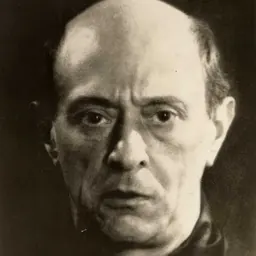
Related people
Same field, nearest in time

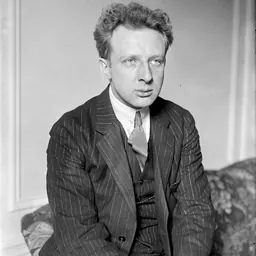
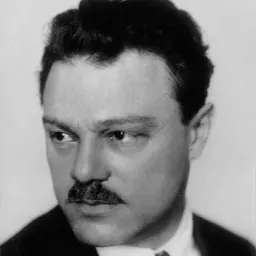


Contemporaries
People whose lives overlapped Ernest Ansermet's


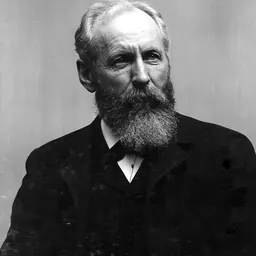

Frequently asked questions
Who was Ernest Ansermet?
Swiss conductor (1883–1969)
When was Ernest Ansermet born?
Ernest Ansermet was born on 11 November 1883 in Vevey.
When did Ernest Ansermet die?
Ernest Ansermet died on 20 February 1969 in Geneva.
What was Ernest Ansermet's occupation?
Ernest Ansermet was a conductor, musicologist, composer, musician and music arranger.
What nationality was Ernest Ansermet?
Ernest Ansermet was Swiss.
Sources & further reading
Cite this page
APA: Biography.guide. (2026). Ernest Ansermet. https://biography.guide/ernest-ansermet/
MLA: "Ernest Ansermet." Biography.guide, https://biography.guide/ernest-ansermet/.
Chicago: "Ernest Ansermet." Biography.guide. https://biography.guide/ernest-ansermet/.
Data last updated: 2026-09-22 · Spot an error? Report a correction.
Portrait: Wikimedia Commons · author & licence
Page generated 2026-09-27 05:03 UTC